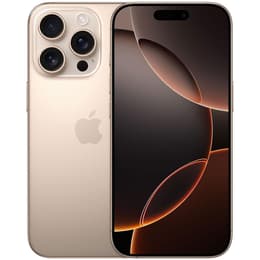

Google Pixel 7a vs iPhone 16 Pro

Google Pixel 7a
Google Pixel 7a
Starting at

Refurbished price:A$337.00

Versus A$749.00 new

See options
iPhone 16 Pro
iPhone 16 Pro
Starting at

Refurbished price:A$1,148.00

Versus A$1,999.00 new

See options

Ratings

The Google Pixel 7a, released in May 2023, and the iPhone 16 Pro, launched in September 2024, represent distinct approaches to smartphone design and functionality. While the Pixel 7a operates on the Android platform, offering a user-centric experience with Google's AI integrations, the iPhone 16 Pro runs on Apple's iOS, emphasizing a premium ecosystem and advanced hardware. The primary differentiators between these two devices lie in their operating system philosophies, display technologies, and camera system capabilities.

Scores

Durability

When considering the long-term usability of these devices, their release timelines and software support play a significant role.

  • Release Timeline: The Google Pixel 7a was released in May 2023, making it an earlier model compared to the iPhone 16 Pro, which launched in September 2024. This difference in release year impacts the duration of future software support.
  • OS Support and Updates: The Pixel 7a is expected to receive approximately five years of major OS upgrades and security updates from its release, starting with Android 13 and upgradable to Android 16. The iPhone 16 Pro comes pre-installed with iOS 18 and typically benefits from Apple's extended software support, often spanning five to six years or more, potentially offering a longer period of current OS features and security patches.
  • Repairability: The iPhone 16 Pro has demonstrated improved repairability, earning an iFixit score of 7 out of 10. This is attributed to a dual-entry design allowing access from both front and back, easier battery replacement, and software support for parts pairing in iOS 18. The Pixel 7a initially received an iFixit score of 4 out of 10, later uprated to 5 out of 10 after Google provided service manuals, indicating a moderate level of repair accessibility.

Release year

2022

2024

Compatible with latest Update

Yes

Yes

Foldable

No

No

Performance

The performance of a smartphone is crucial for daily tasks, from app usage to demanding multimedia. Both devices offer capable performance, but with different underlying architectures.

  • Processor Capabilities: The iPhone 16 Pro is equipped with Apple's A18 Pro chip, which provides robust processing power for demanding applications, advanced gaming, and complex computational tasks. The Google Pixel 7a features the Google Tensor G2, designed to optimize AI and machine learning tasks, contributing to smooth everyday operation and efficient handling of Google's software features.
  • System Responsiveness and Multitasking: Users of the iPhone 16 Pro generally report snappy performance and efficient multitasking, with the device maintaining fluidity even under heavy loads. The Pixel 7a delivers a responsive user experience for general navigation and app launching, though some users have noted slightly slower video export times compared to other devices in its class.
  • Storage and RAM: The iPhone 16 Pro offers a range of storage options, including 128GB, 256GB, 512GB, and 1TB, paired with 8GB of RAM, providing ample space and memory for various user needs. The Pixel 7a comes with 128GB of non-expandable internal storage and 8GB of RAM, which is sufficient for most users but offers less flexibility for those requiring extensive local storage.

Memory (GB)

8 GB

8 GB

Screen quality

The display is a primary interface for smartphone interaction, and both models offer distinct visual experiences.

  • Display Technology and Size: The iPhone 16 Pro features a larger 6.3-inch Super Retina XDR OLED display, known for its deep blacks, high contrast, and vibrant color reproduction. The Google Pixel 7a has a 6.1-inch OLED display, which also provides rich colors and good contrast for its category.
  • Resolution and Clarity: The iPhone 16 Pro offers a resolution of 2622 x 1206 pixels at 460 pixels per inch (ppi), delivering sharp and detailed visuals. The Pixel 7a provides a 2400 x 1080 pixel resolution, resulting in approximately 431 ppi, which ensures clear text and images for typical viewing distances.
  • Refresh Rate and Brightness: The iPhone 16 Pro incorporates ProMotion technology, offering an adaptive refresh rate up to 120Hz for smooth scrolling and animations, with typical brightness reaching 1000 nits and peak outdoor brightness up to 2000 nits. The Pixel 7a features a 90Hz refresh rate, providing a smoother experience than standard 60Hz displays, and supports HDR. However, its refresh rate may dynamically reduce to 60Hz in bright sunlight, potentially due to thermal management.

Resolution

1080 x 2400

1206 x 2622

Screen type

OLED

LTPO Super Retina XDR OLED

Audiovisual

Both smartphones are recognized for their camera capabilities, offering different strengths in photography and videography.

  • Camera System Configuration: The iPhone 16 Pro boasts a versatile triple-camera system on the rear, including a 48 MP wide lens with optical image stabilization (OIS), a 48 MP ultrawide lens, and a 12 MP telephoto lens capable of 5x optical zoom. It also includes a LiDAR scanner for enhanced depth sensing. The Pixel 7a features a dual-camera setup with a 64 MP wide lens (OIS) and a 13 MP ultrawide lens.
  • Photography Performance: The iPhone 16 Pro's upgraded camera system is noted for its ability to capture sharp, well-exposed photos, with improvements in ultrawide shots and the flexibility of ProRaw mode for advanced users. The Pixel 7a is widely praised for its exceptional camera quality within its segment, often producing images comparable to higher-end devices, particularly in everyday and low-light conditions, and excelling in computational photography.
  • Video Recording and Audio: The iPhone 16 Pro offers advanced video capabilities, including 4K recording at up to 120 frames per second, Dolby Vision HDR, and an Audio Mix feature for improved noise cancellation. The Pixel 7a supports 4K video recording at 30/60fps and 1080p at various frame rates, with solid stabilization for video capture.

Main camera

64 megapixels

48 megapixels

Front camera

13 megapixels

12 megapixels

Miscellaneous

Beyond core features, several practical elements contribute to the overall user experience of these devices.

  • Connectivity and Ports: The iPhone 16 Pro supports advanced connectivity standards, including Wi-Fi 7, Bluetooth 5.3, and 5G, and features a USB-C port that supports USB 3 speeds for faster data transfer up to 10 Gbps. The Pixel 7a includes Wi-Fi 6E, Bluetooth 5.3, 5G, and a USB-C 3.2 port.
  • Sensors and Biometrics: The iPhone 16 Pro relies on Face ID for secure facial recognition and authentication, alongside a suite of environmental sensors. The Pixel 7a offers both an under-display fingerprint sensor and face unlock for biometric security.
  • Build Materials and Durability: The iPhone 16 Pro features a premium titanium design with a Ceramic Shield front and a textured matte glass back, offering IP68 dust and water resistance, allowing submersion up to 6 meters for 30 minutes. The Pixel 7a is constructed with a Gorilla Glass 3 front, an aluminum frame, and a plastic back, providing IP67 dust and water resistance, protecting against submersion up to 1 meter for 30 minutes. The iPhone 16 Pro is slightly heavier at 199g compared to the Pixel 7a's 193.5g.

Weight

212 oz

199 oz

Screen size (in)

6.1

6.3

Network

5G

5G

SIM card

Physical SIM + eSIM

Physical SIM + eSIM

Carrier compatibility

Unlocked

Unlocked

Connector

USB-C

USB-C (USB 3)

The Google Pixel 7a and iPhone 16 Pro cater to different user priorities, each excelling in specific areas. User feedback for the Pixel 7a often highlights its exceptional camera performance for its price point and the seamless integration of Google's AI features, making it a strong contender for those who prioritize photography and a pure Android experience. However, some users have noted mixed battery life experiences and the display's refresh rate occasionally dropping in bright conditions.

The iPhone 16 Pro receives praise for its powerful performance, significantly improved repairability, and a highly advanced camera system with new video capabilities. Its larger, brighter, and more fluid 120Hz ProMotion display, coupled with a premium titanium build and enhanced durability, are also frequently cited as strong advantages. Some long-term users have reported solid battery life, though not consistently extending beyond a single day for heavy use.

Users prioritizing a cutting-edge display, top-tier performance for demanding tasks, and a highly versatile camera system with advanced video features may find the iPhone 16 Pro better suited to their needs. Its improved repairability and extended software support also contribute to a longer practical lifespan. Conversely, users who value an excellent camera experience in a more compact form factor, deeply integrated AI features, and the Android ecosystem may lean towards the Google Pixel 7a. Both devices offer quality-assured refurbished options, providing a sustainable choice for consumers looking to make an informed decision.

See all articles

Our recent comparisons