
Google Pixel 7 Pro vs iPhone 16

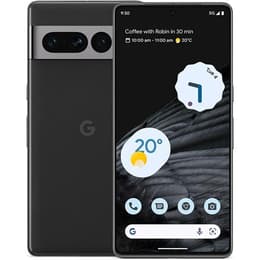
Google Pixel 7 Pro
Google Pixel 7 Pro
Starting at

Refurbished price:A$520.00

Versus A$1,219.00 new

See options
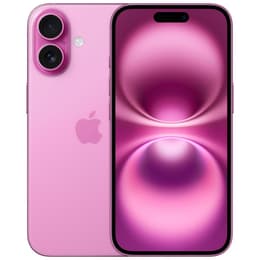
iPhone 16
iPhone 16
Starting at

Refurbished price:A$952.00

Versus A$1,399.00 new

See options

Ratings

The Google Pixel 7 Pro, released in October 2022, and the iPhone 16, launched in September 2024, represent distinct approaches to the premium smartphone experience. While both devices offer advanced capabilities, they differ significantly in their operating systems, camera philosophies, and overall design. The Pixel 7 Pro runs on Android, emphasizing Google's AI-driven features and computational photography, whereas the iPhone 16 operates on iOS, focusing on a streamlined user experience and a tightly integrated ecosystem.

Scores

Durability

The longevity of a smartphone is influenced by its release timeline, software support, and physical resilience. These two devices offer different profiles in terms of their expected practical lifespan and ease of maintenance.

  • Release Timeline: The Google Pixel 7 Pro was introduced in October 2022, making it an earlier model compared to the iPhone 16, which arrived in September 2024. This difference in release dates impacts their respective positions in the update cycle.
  • Software Longevity: Google typically provides five years of OS and security updates for its Pixel devices, meaning the Pixel 7 Pro can expect software support until late 2027. The iPhone 16, being a newer device, launched with iOS 18 and is anticipated to receive at least five years of major iOS updates, extending its software relevance further into the future. [21, 25, 31]
  • Repairability: The iPhone 16 has shown notable improvements in repairability, receiving a score of 7 out of 10 from iFixit, a significant increase over its predecessors. This is attributed to a design that allows easier access to internal components and more modular parts. [4, 6, 8, 9, 11] The Google Pixel 7 Pro, in contrast, received a repairability score of 5.5 out of 10 in some teardowns, with challenges noted for battery removal due to strong adhesive and a soldered charging port. [5, 18, 20, 42]

Release year

2022

2024

Compatible with latest Update

Yes

Yes

Foldable

No

No

Performance

Performance is a key differentiator, influencing how smoothly applications run, how quickly tasks are completed, and the overall responsiveness of the device. Both phones are equipped with powerful internal components designed for demanding usage.

  • Processing Power: The iPhone 16 features Apple's A18 chip, which provides substantial improvements in both raw performance and power efficiency compared to its predecessor. [1, 23, 25] This allows for smooth handling of demanding applications, complex multitasking, and graphics-intensive gaming. The Google Pixel 7 Pro is powered by the Google Tensor G2, an advanced processor designed to optimize Google's AI and machine learning capabilities, contributing to efficient on-device processing for features like speech recognition and computational photography. [10, 15, 31]
  • Multitasking and Responsiveness: The iPhone 16 comes with 8GB of RAM, which supports fluid multitasking and app management. [21, 23, 36] The Pixel 7 Pro offers 12GB of RAM, providing ample capacity for running numerous applications simultaneously without significant slowdowns. [10, 15, 31] Both devices deliver a responsive user experience, with apps loading quickly and transitions appearing seamless.
  • Battery Behavior: The iPhone 16 features a 3561 mAh battery, offering up to 22 hours of offline video playback and typically lasting 15-18 hours with mixed daily use. [12, 25, 36, 40, 41] The Pixel 7 Pro is equipped with a larger 5000 mAh battery, which generally provides solid battery life, often lasting a full day for many users. [15, 16, 34] However, some users have noted that its battery life, while good, might not be class-leading compared to some rivals. [16]

Memory (GB)

12 GB

8 GB

Screen quality

The display is the primary interface for user interaction, and both devices offer high-quality viewing experiences with distinct characteristics.

  • Display Technology and Resolution: The iPhone 16 features a 6.1-inch Super Retina XDR OLED display with a resolution of 2556x1179 pixels, resulting in a pixel density of 460 ppi. [1, 2, 17, 21, 22, 27] The Google Pixel 7 Pro boasts a larger 6.7-inch LTPO AMOLED display with a higher resolution of 1440 x 3120 pixels, yielding a pixel density of 512 ppi. [15, 34, 39, 46]
  • Brightness and Clarity: Both phones offer excellent brightness levels for outdoor visibility. The iPhone 16 reaches 1000 nits typical brightness and up to 2000 nits peak outdoor brightness. [1, 17, 22, 23] The Pixel 7 Pro also provides strong brightness, with a peak of 1500 nits, ensuring good readability in various lighting conditions. [15, 34] Both displays support HDR content for enhanced contrast and color.
  • Refresh Rate: A notable difference lies in the refresh rate. The Pixel 7 Pro features a 120 Hz refresh rate, contributing to smoother scrolling and more fluid animations. [15, 34, 39, 46] The standard iPhone 16 maintains a 60Hz refresh rate, which, while still providing a good experience, may not feel as smooth as higher refresh rate displays during fast-paced content or scrolling. [2, 23, 25]

Resolution

1440 x 3120

1179 x 2556

Screen type

LTPO AMOLED

Super Retina XDR OLED

Audiovisual

Camera capabilities are a significant factor for many users, and both the Pixel 7 Pro and iPhone 16 offer advanced systems with different strengths in image and video capture.

  • Rear Camera System: The Google Pixel 7 Pro features a versatile triple-camera setup: a 50MP wide main lens, a 48MP telephoto lens with 5x optical zoom, and a 12MP ultrawide lens with autofocus and macro capabilities. [3, 7, 15, 16, 19, 31, 43] This system is praised for its computational photography, delivering detailed images with vibrant colors and impressive zoom performance. [7, 16] The iPhone 16 comes with an advanced dual-camera system, including a 48MP Fusion Main camera that can also enable 2x telephoto shots through sensor cropping, and a 12MP Ultra Wide camera with autofocus and macro mode. [1, 2, 13, 22, 23, 26, 32]
  • Low-Light and Video Performance: Both devices excel in low-light conditions, with Google's Night Sight mode being particularly effective and fast. [16] The iPhone 16's camera also performs well in challenging lighting, producing clear and detailed photos. For video, the iPhone 16 supports 4K Dolby Vision recording up to 60fps and features Cinematic mode for depth-of-field effects, along with spatial video recording. [1, 21, 22] The Pixel 7 Pro also records 4K video up to 60fps and offers a Cinematic blur feature. [16, 19, 31]
  • Front Camera and Audio: The iPhone 16 includes a 12MP front camera with PDAF, capable of 4K video recording. [1, 21, 22] The Pixel 7 Pro has a 10.8MP front camera. [15, 34] Both phones offer stereo speakers for media consumption, with the iPhone 16 noted for its excellent sound quality and balanced audio output. [25]

Main camera

50 megapixels

48 megapixels

Front camera

10.8 megapixels

12 megapixels

Miscellaneous

Beyond core features, several practical elements contribute to the overall user experience, including connectivity, physical design, and additional functionalities.

  • Connectivity and Ports: The iPhone 16 supports Wi-Fi 7, Bluetooth 5.3, and 5G connectivity, along with Ultra Wideband (UWB) for precise location services. [2, 21, 22, 28] It features a USB-C port, replacing the older Lightning connector, which allows for universal charging and connection to various peripherals. [14, 21, 33, 38] However, the standard iPhone 16's USB-C port operates at USB 2.0 speeds. [35] The Pixel 7 Pro supports Wi-Fi 6e, Bluetooth, and 5G, and also includes a USB-C port. [15, 46]
  • Biometric Security: The iPhone 16 relies on Face ID for secure facial recognition. [1, 22, 25] The Pixel 7 Pro offers both an under-display fingerprint sensor and face unlock. [16]
  • Design and Durability Features: Both devices carry an IP68 rating for dust and water resistance, indicating robust protection against environmental elements. [2, 15, 21, 22, 25] The iPhone 16 features a Ceramic Shield front cover for enhanced drop protection. [21, 22, 37] The Pixel 7 Pro uses Corning Gorilla Glass Victus for its display protection. [15] The iPhone 16 is lighter at 170g and has dimensions of 147.6 x 71.6 x 7.8 mm, while the Pixel 7 Pro is heavier at 212g and measures 162.9 x 76.6 x 8.9mm. [2, 21, 22, 34]

Weight

212 oz

170 oz

Screen size (in)

67

6.1

SIM card

Physical SIM + eSIM

Physical SIM + eSIM

Carrier compatibility

Unlocked

Unlocked

Connector

USB-C

USB-C (USB 2)

User feedback for the Google Pixel 7 Pro often highlights its exceptional camera system, particularly its computational photography and zoom capabilities, as a major strength. [7, 16] Users also appreciate its clean Android experience and the integration of Google's AI features. Common criticisms sometimes point to its battery life not always matching the best in its class and the general processor performance not always seeing significant year-over-year leaps. [16]

For the iPhone 16, users frequently praise its refined design, improved battery life over its predecessor, and the enhanced camera performance, especially the bolder colors and sharper zoom. [23, 25, 26] The introduction of the Action Button and Camera Control button has also been well-received. However, the continued use of a 60Hz refresh rate on the standard model and the USB 2.0 data transfer speeds on its USB-C port are common points of critique. [23, 25, 35]

Users prioritizing an advanced and versatile camera system with strong AI integration and a larger, high-refresh-rate display may find the Google Pixel 7 Pro well-suited to their needs. Its robust software support also ensures a good lifespan. Conversely, users who value a highly integrated ecosystem, a slightly more compact and lighter design, and a strong focus on video capabilities and overall system fluidity may lean toward the iPhone 16. Its improved repairability also offers a practical advantage for long-term ownership. Both devices offer compelling features, and considering a quality-assured refurbished option for either model can be an eco-friendly alternative to extend their lifecycle.

See all articles

Our recent comparisons