
Google Pixel 7 Pro vs iPhone 14 Plus

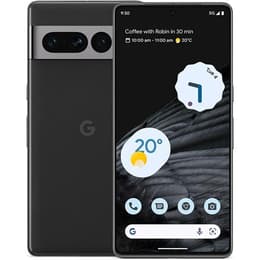
Google Pixel 7 Pro
Google Pixel 7 Pro
Starting at

Refurbished price:A$520.00

Versus A$1,219.00 new

See options
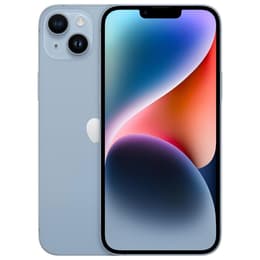
iPhone 14 Plus
iPhone 14 Plus
Starting at

Refurbished price:A$480.00

Versus A$1,249.00 new

See options

Ratings

The Google Pixel 7 Pro, released in October 2022, and the iPhone 14 Plus, launched in October 2022, are both prominent smartphones from their respective ecosystems. While both devices offer large displays and capable camera systems, they cater to different user preferences through their distinct operating systems and hardware philosophies. The Pixel 7 Pro operates on Android, emphasizing advanced computational photography and a highly customizable user experience, whereas the iPhone 14 Plus runs on iOS, focusing on seamless integration within the Apple ecosystem and robust battery performance.

Scores

Durability

When considering the long-term usability of these devices, both the Google Pixel 7 Pro and the iPhone 14 Plus offer substantial software support, contributing to their practical lifespan.

  • Software Updates: The Google Pixel 7 Pro is expected to receive five years of OS and security updates, extending its support until at least October 2027. The iPhone 14 Plus typically receives 5-7 years of major iOS updates, with an estimated support period until September 2028. This suggests a slightly longer software longevity for the iPhone 14 Plus.
  • Durability Features: Both devices feature an IP68 rating for dust and water resistance, indicating a similar level of protection against environmental elements. The iPhone 14 Plus incorporates a Ceramic Shield front cover, designed for enhanced drop performance.
  • Repairability: While specific repairability scores can vary, both devices are designed with modern smartphone construction, meaning professional repair services are generally recommended for significant hardware issues.

Release year

2022

2022

Compatible with latest Update

Yes

Yes

Foldable

No

No

Performance

The performance of a smartphone is crucial for daily tasks, app usage, and multitasking, with both the Pixel 7 Pro and iPhone 14 Plus delivering responsive experiences.

  • Processing Power: The Google Pixel 7 Pro is powered by Google's Tensor G2 processor, designed to handle demanding applications and facilitate advanced AI features. The iPhone 14 Plus utilizes the A15 Bionic chip, which was previously featured in the iPhone 13 Pro models, providing efficient and smooth operation across iOS applications.
  • Multitasking Capability: The Pixel 7 Pro comes with 12GB of RAM, which supports extensive multitasking and keeps numerous applications active in the background. The iPhone 14 Plus features 6GB of RAM, optimized by iOS for efficient app management and fluid transitions.
  • Storage Options: Both devices offer similar internal storage configurations, including 128GB, 256GB, and 512GB options, none of which are expandable.

Memory (GB)

12 GB

6 GB

Screen quality

The visual experience is a key differentiator, with both smartphones offering large, vibrant displays but with distinct characteristics.

  • Display Technology and Resolution: The Google Pixel 7 Pro features a 6.7-inch LTPO OLED display with a high resolution of 3120x1440 pixels (QHD+), resulting in sharp and detailed visuals. The iPhone 14 Plus also has a 6.7-inch Super Retina XDR OLED display, offering a resolution of 2778x1284 pixels.
  • Refresh Rate and Smoothness: The Pixel 7 Pro boasts an adaptive refresh rate that can dynamically adjust between 10Hz and 120Hz, providing smoother scrolling and more fluid animations. In contrast, the iPhone 14 Plus features a standard 60Hz refresh rate.
  • Brightness: For outdoor visibility, the Pixel 7 Pro can reach a peak brightness of up to 1500 nits for HDR content. The iPhone 14 Plus offers a typical maximum brightness of 800 nits and a peak HDR brightness of 1200 nits.

Resolution

1440 x 3120

1284 x 2778

Screen type

LTPO AMOLED

Super Retina XDR OLED

Audiovisual

Both devices are equipped with advanced camera systems designed to capture high-quality photos and videos, though they approach imaging with different strengths.

  • Rear Camera System: The Google Pixel 7 Pro features a versatile triple-camera setup, including a 50 MP main sensor, a 12 MP ultrawide lens with a wide field of view, and a 48 MP telephoto lens capable of 5x optical zoom and up to 30x Super Res Zoom. The iPhone 14 Plus comes with a dual 12MP rear camera system, comprising a main wide lens and an ultrawide lens.
  • Photography Features: The Pixel 7 Pro excels in computational photography with features like Night Sight for low-light conditions, Macro Focus for close-up shots, and Photo Unblur to enhance image clarity. The iPhone 14 Plus includes features such as Photonic Engine, Deep Fusion, Smart HDR 4, and Photographic Styles to optimize image quality.
  • Video Capabilities: Both phones support 4K video recording at various frame rates. The Pixel 7 Pro offers 10-bit HDR video recording, while the iPhone 14 Plus supports HDR video with Dolby Vision and includes an Action mode for smoother video capture. User reports suggest that while the Pixel 7 Pro has improved video, it can still exhibit more noise in low light compared to iPhones.

Main camera

50 megapixels

12 megapixels

Front camera

10.8 megapixels

12 megapixels

Miscellaneous

Beyond core specifications, several practical elements contribute to the overall user experience and daily functionality of these smartphones.

  • Connectivity: Both the Google Pixel 7 Pro and the iPhone 14 Plus support 5G cellular connectivity, ensuring access to faster mobile networks. The iPhone 14 Plus also features dual eSIM support.
  • Ports and Biometrics: The Pixel 7 Pro uses a USB-C port for charging and data transfer and includes an in-display fingerprint scanner alongside facial recognition for security. The iPhone 14 Plus retains Apple's Lightning port and relies on Face ID for secure authentication. Neither device includes a traditional 3.5mm headphone jack.
  • Physical Characteristics: The Pixel 7 Pro measures 162.9 x 76.6 x 8.9mm and weighs 212 grams. The iPhone 14 Plus is slightly lighter and thinner at 160.8 x 78.1 x 7.80 mm and 203 grams. Both devices feature stereo speakers for media consumption.

Weight

212 oz

203 oz

Screen size (in)

67

6,7

SIM card

Physical SIM + eSIM

Physical SIM + eSIM

Carrier compatibility

Unlocked

Unlocked

Connector

USB-C

Lightning

User feedback for the Google Pixel 7 Pro often highlights its exceptional camera performance, particularly its advanced computational photography features like Night Sight and Photo Unblur, which are frequently praised for delivering impressive results in various lighting conditions. Some users have noted that while the battery life is generally adequate, heavy usage can lead to more frequent charging, and charging speeds are not the fastest. The clean Android experience and timely software updates are also common points of appreciation.

For the iPhone 14 Plus, the most consistent praise revolves around its outstanding battery life, with many users reporting that it comfortably lasts a full day, and sometimes even two, under typical use. The large display is also well-received for media consumption and general browsing. A frequent criticism, however, is the standard 60Hz refresh rate of its display, which some users find less fluid compared to devices with higher refresh rates.

Users prioritizing a highly versatile camera system with advanced zoom capabilities and a customizable Android experience may find the Google Pixel 7 Pro better suited to their needs. Conversely, those who value exceptional battery longevity, a large display within the Apple ecosystem, and a consistent software experience may lean towards the iPhone 14 Plus. Both devices represent solid choices in their respective categories, and considering a quality-assured refurbished option for either model can be a sustainable choice for consumers.

See all articles

Our recent comparisons