
Google Pixel 7 Pro vs Motorola Edge 50

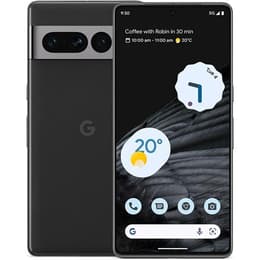
Google Pixel 7 Pro
Google Pixel 7 Pro
Starting at

Refurbished price:A$498.00

Versus A$1,219.00 new

See options
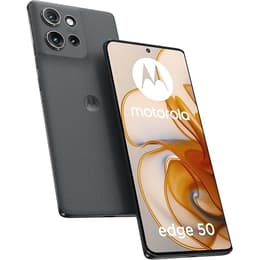
Motorola Edge 50
Motorola Edge 50
See options

The Google Pixel 7 Pro, released in October 2022, and the Motorola Edge 50 Pro, launched in April 2024, represent distinct approaches to the premium smartphone experience. While both devices offer advanced features, the Pixel 7 Pro emphasizes a refined software experience and computational photography, whereas the Motorola Edge 50 Pro focuses on a newer hardware platform and rapid charging capabilities. Both run on the Android operating system, providing users with a familiar and customizable interface.

Scores

Durability

When considering the longevity of these devices, their release timelines and software support policies are key factors.

  • Release Timeline: The Google Pixel 7 Pro was introduced in October 2022, making it an older model compared to the Motorola Edge 50 Pro, which launched in April 2024. This difference in release date directly impacts the remaining period of official software support. [1, 7]
  • OS Support: The Pixel 7 Pro initially offered three years of major OS upgrades and five years of security updates, with major OS support later extended to five years, meaning support until 2027. The Motorola Edge 50 Pro, being newer, promises three years of Android upgrades and four years of security updates from its launch. [1, 17, 40, 41]
  • Repairability: The Pixel 7 Pro received a repairability score of 5.5 out of 10 in teardowns, indicating some challenges in component replacement, particularly with the battery and charging port. Information on the Motorola Edge 50 Pro's repairability is less detailed, but generally, modern smartphones present similar challenges. [12, 20, 22, 28]

Release year

2022

2024

Compatible with latest Update

Yes

Yes

Foldable

No

No

Performance

Performance is a critical aspect for daily usability, encompassing everything from app responsiveness to battery endurance.

  • Processing Power: The Google Pixel 7 Pro is powered by Google's Tensor G2 chip, designed for efficient AI and machine learning tasks, contributing to features like advanced photo processing and voice recognition. The Motorola Edge 50 Pro features a Qualcomm Snapdragon 7 Gen 3 processor, which is described as a premium mid-range chip capable of handling demanding applications and multitasking smoothly without significant lag or heating. [1, 2, 3, 13, 40, 41]
  • Multitasking and Storage: The Pixel 7 Pro typically comes with 12GB of RAM and offers storage options up to 512GB. The Edge 50 Pro is available with 8GB or 12GB of RAM and 256GB of internal storage. Both configurations are sufficient for smooth multitasking and storing a substantial amount of data. [1, 2, 3, 5, 14, 17]
  • Battery Behavior: The Pixel 7 Pro houses a 5000 mAh battery, with real-world usage often yielding 6-8 hours of screen-on time, though heavy camera use can reduce this. It supports 30W wired and 23W wireless charging. The Motorola Edge 50 Pro has a 4500 mAh battery but compensates with exceptionally fast 125W wired charging, capable of reaching 100% in approximately 18 minutes, alongside 50W wireless and 10W reverse wireless charging. [1, 13, 14, 17, 29, 32, 36, 40, 41]

Memory (GB)

12 GB

12 GB

Screen quality

The visual experience is largely defined by the display, with both devices offering high-quality panels.

  • Display Technology and Resolution: The Google Pixel 7 Pro features a 6.7-inch QHD+ LTPO OLED display with a resolution of 3120 x 1440 pixels, providing sharp images and deep blacks. The Motorola Edge 50 Pro sports a 6.7-inch pOLED 3D curved display with a 1.5K resolution (1220x2712 pixels), also delivering vibrant colors and excellent contrast. [1, 2, 5, 7, 9, 10, 14, 19]
  • Refresh Rate and Brightness: The Pixel 7 Pro offers a variable refresh rate up to 120Hz, ensuring smooth scrolling and responsiveness. The Edge 50 Pro surpasses this with a 144Hz refresh rate, contributing to an even more fluid visual experience. The Motorola device also boasts a peak brightness of 2000 nits, making it highly visible in bright outdoor conditions, and is Pantone-certified for color accuracy. [1, 2, 7, 8, 14, 21]
  • Durability: Both phones incorporate protective glass on their displays. The Pixel 7 Pro uses Gorilla Glass Victus, while the Edge 50 Pro also features Gorilla Glass protection, enhancing resistance against scratches and drops. [1, 2, 27]

Resolution

1440 x 3120

1220x2712

Audiovisual

Both smartphones offer advanced camera systems, but with different strengths and features.

  • Rear Camera Systems: The Google Pixel 7 Pro features a versatile triple-camera setup: a 50MP wide main lens, a 12MP ultrawide lens, and a 48MP telephoto lens with 5x optical zoom. The Motorola Edge 50 Pro also has a triple-camera system, comprising a 50MP OIS primary sensor with a wide f/1.4 aperture, a 13MP ultrawide lens that doubles as a macro camera, and a 10MP telephoto lens with 3x optical zoom and OIS. [1, 2, 11, 19, 21, 23]
  • Photography Performance: The Pixel 7 Pro is renowned for its computational photography, offering features like Night Sight for low-light, Real Tone for accurate skin representation, Photo Unblur, and Cinematic Blur for video. The Edge 50 Pro's cameras are Pantone-validated for accurate skin tones and offer various modes including Portrait, Pro, Night Vision, and Auto-Macro. [1, 2, 11, 19, 21]
  • Video and Front Camera: Both devices are capable of recording 4K video at 30 or 60 frames per second. For selfies, the Pixel 7 Pro has a 10.8MP ultrawide front camera, while the Edge 50 Pro features a higher-resolution 50MP front camera with autofocus. [1, 2, 10, 19, 21]

Front camera

10.8 megapixels

32 megapixels

Miscellaneous

Beyond core specifications, several practical elements contribute to the overall user experience.

  • Connectivity and Ports: Both the Pixel 7 Pro and Motorola Edge 50 Pro support 5G connectivity and Wi-Fi 6E for fast and reliable wireless internet. They both utilize a USB-C port for charging and data transfer, with the Pixel 7 Pro featuring USB-C 3.2 and the Edge 50 Pro using USB-C 3.1. Neither device includes a traditional 3.5mm headphone jack. [1, 3, 8, 14, 16, 17]
  • Biometric Security: For secure unlocking, both smartphones incorporate an under-display optical fingerprint scanner. The Pixel 7 Pro also offers face recognition. [1, 7, 38]
  • Design and Build: The Pixel 7 Pro has dimensions of 162.9 x 76.6 x 8.9 mm and weighs 212g, featuring an aluminum finish and Gorilla Glass Victus. The Motorola Edge 50 Pro is slightly lighter and thinner at 161.23 x 72.4 x 8.19 mm and 186g, offering an aluminum frame and a vegan leather finish on some variants, along with IP68 dust and water resistance for both models. [1, 3, 5, 6, 7, 8, 14, 21, 27, 41]

Weight

212 oz

180 oz

Screen size (in)

67

6.7

SIM card

Physical SIM + eSIM

Physical SIM

Carrier compatibility

Unlocked

Unlocked

Connector

USB-C

USB-C

The Google Pixel 7 Pro and Motorola Edge 50 Pro cater to slightly different user priorities. The Pixel 7 Pro is often praised for its exceptional camera capabilities, particularly its computational photography features that enhance image quality and offer unique editing tools. Users also appreciate its clean Android experience and long-term software support. Some common criticisms, however, include mixed reports on battery life under heavy usage and a repairability score that suggests some difficulty in self-repair. [1, 12, 13, 20, 22, 28, 29, 39]

The Motorola Edge 50 Pro, being a newer device, garners praise for its vibrant 144Hz pOLED display, incredibly fast wired charging, and a premium design with IP68 water and dust resistance. Its camera system, validated by Pantone, is also noted for accurate color reproduction. Potential concerns might revolve around its slightly shorter software update commitment compared to the Pixel, though three years of OS updates is still substantial. [2, 7, 8, 14, 15, 21, 31, 40, 41]

Users prioritizing a cutting-edge camera experience with advanced AI features and a pure Android interface with extended software longevity may prefer the Google Pixel 7 Pro. Conversely, those who value a newer device with a faster refresh rate display, rapid charging, and a sleek design might find the Motorola Edge 50 Pro more appealing. Both devices offer a quality-assured refurbished option, providing an eco-friendly alternative for consumers looking to make a sustainable choice.
See all articles

Our recent comparisons