Galaxy S23 Ultra vs iPhone 16

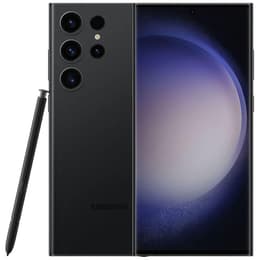
Galaxy S23 Ultra
Galaxy S23 Ultra
Starting at

Refurbished price:A$687.00

Versus A$2,288.00 new

See options
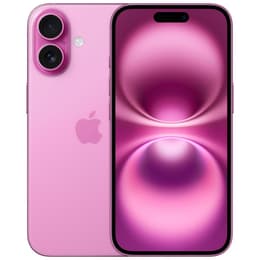
iPhone 16
iPhone 16
Starting at

Refurbished price:A$949.00

Versus A$1,399.00 new

See options

Ratings

The Samsung Galaxy S23 Ultra, released in February 2023, and the iPhone 16, launched in September 2024, represent distinct approaches to high-end smartphone design and functionality. While both devices offer premium experiences, they cater to different user preferences through their operating systems, camera systems, and unique features. The Galaxy S23 Ultra runs on Android, emphasizing versatility and a built-in stylus, whereas the iPhone 16 operates on iOS, focusing on a streamlined user experience and enhanced integration within its ecosystem.

Scores

Durability

When considering the long-term usability of these devices, their release timelines and software support policies are key factors.

  • Release Timeline: The Galaxy S23 Ultra was released in February 2023, making it an earlier model compared to the iPhone 16, which launched in September 2024. This difference in release date impacts their respective positions in the update cycle.
  • Software Longevity: Samsung has committed to providing four major Android OS updates and five years of security patches for the Galaxy S23 Ultra, meaning it is expected to receive updates up to Android 17 and security support until 2028. The iPhone 16, running iOS 18 at launch, typically benefits from Apple's longer software support, often extending to five to seven years of major iOS updates.
  • Repairability: The Galaxy S23 Ultra has been noted for its improved repairability, with some assessments giving it a high score of 9 out of 10, particularly highlighting easier battery removal. The iPhone 16 also shows significant advancements in repairability, achieving an iFixit score of 7 out of 10, which is a notable improvement over previous iPhone models. Both devices feature robust builds with Gorilla Glass Victus 2 on the S23 Ultra and Ceramic Shield on the iPhone 16, along with IP68 water and dust resistance.

Performance

Both smartphones deliver high-level performance, but their underlying architectures and real-world usage impacts differ.

  • Processing Power: The Galaxy S23 Ultra is equipped with a processor designed for demanding tasks, ensuring smooth operation for heavy applications and multitasking. The iPhone 16 features a current-generation chip that provides swift responsiveness and efficient handling of complex applications and gaming.
  • Multitasking and Storage: The Galaxy S23 Ultra offers configurations with up to 12GB of RAM, which supports extensive multitasking and keeps numerous applications active in the background without slowdowns. It also provides storage options up to 1TB. The iPhone 16 typically comes with 8GB of RAM and storage options up to 512GB, offering ample capacity for most users and ensuring a fluid experience across applications.
  • Battery Behavior: The Galaxy S23 Ultra is known for its substantial battery capacity, often providing over a full day of heavy use, with some tests indicating extended video playback times. The iPhone 16 also delivers strong battery performance, with user reports and tests suggesting it can comfortably last a full day for many users, and in some cases, up to 17 hours of video playback.

Memory (GB)

8 GB

8 GB

Screen quality

The visual experience on both devices is immersive, though they employ different display technologies and characteristics.

  • Display Technology and Size: The Galaxy S23 Ultra features a large 6.8-inch Dynamic AMOLED 2X display, offering deep blacks and vibrant colors with a curved edge design. The iPhone 16 comes with a 6.1-inch Super Retina XDR OLED display, known for its accurate color reproduction and high contrast.
  • Resolution and Refresh Rate: The S23 Ultra provides a QHD+ resolution of 3088 x 1440 pixels, resulting in a very sharp image, and an adaptive refresh rate of up to 120Hz for smooth scrolling and fluid animations. The iPhone 16 offers a resolution of 2556 x 1179 pixels and maintains a standard 60Hz refresh rate, which provides a consistent visual experience but lacks the fluidity of higher refresh rate displays.
  • Brightness: Both phones offer high peak brightness levels, with the Galaxy S23 Ultra reaching up to 1750 nits and the iPhone 16 up to 2000 nits, ensuring good visibility even in bright outdoor conditions.

Audiovisual

Both smartphones offer advanced camera systems, but they differ in their hardware configurations and photographic strengths.

  • Main Camera Capabilities: The Galaxy S23 Ultra boasts a 200-megapixel main sensor, which excels in capturing highly detailed images and performs well in low-light conditions by combining pixels. The iPhone 16 features a 48-megapixel main camera that utilizes a 'Fusion' technology for detailed photos and includes sensor-shift optical image stabilization for sharper results.
  • Versatility and Zoom: The S23 Ultra offers a comprehensive quad-camera setup, including a 12-megapixel ultrawide lens and two 10-megapixel telephoto lenses providing 3x and 10x optical zoom, allowing for significant magnification without loss of detail. The iPhone 16 includes a 12-megapixel ultrawide camera with autofocus and offers a 2x telephoto capability through its main sensor, suitable for everyday zoom needs.
  • Video Recording and Audio: The Galaxy S23 Ultra supports video recording up to 8K resolution at 30 frames per second, offering high-fidelity video capture. The iPhone 16 records video up to 4K at 60 frames per second and introduces spatial video capture, designed for immersive viewing experiences. Both devices provide quality microphone performance for calls and recording, and stereo speakers for media consumption.

Miscellaneous

Beyond core features, several practical elements distinguish these two devices in daily use.

  • Connectivity and Ports: Both the Galaxy S23 Ultra and iPhone 16 support 5G connectivity for fast mobile data. The S23 Ultra features Wi-Fi 6E and Bluetooth 5.3, while the iPhone 16 supports Wi-Fi 6 or 7 and Bluetooth 5.3. Both devices have a USB-C port, but the Galaxy S23 Ultra utilizes USB 3.2, offering faster data transfer speeds compared to the iPhone 16's USB 2.0.
  • Biometrics and Unique Features: The Galaxy S23 Ultra incorporates an under-display ultrasonic fingerprint sensor for secure unlocking, alongside facial recognition. A standout feature is the integrated S Pen, which allows for precise input, note-taking, and creative tasks. The iPhone 16 relies on Face ID for secure authentication. It introduces an Action Button, customizable for various functions, and a dedicated Camera Control button for quick access to photography features.
  • Physical Characteristics: The Galaxy S23 Ultra is a larger and heavier device, measuring 163.4 x 78.1 x 8.9 mm and weighing 233-234g, which contributes to its expansive screen and battery capacity. The iPhone 16 is more compact and lighter at 147.6 x 71.6 x 7.8 mm and 170g, making it easier for one-handed use.

Screen size (in)

6.8

6.1

Network

5G

5G

SIM card

Physical SIM + eSIM

Physical SIM + eSIM

Carrier compatibility

Unlocked

Unlocked

User feedback for the Galaxy S23 Ultra often praises its exceptional camera system, particularly the versatility of its zoom capabilities and the detail captured by the 200-megapixel sensor. Its long-lasting battery life and the integrated S Pen are also frequently highlighted as significant advantages for productivity and creative users. Some users, however, note its large size and weight as a potential drawback for those preferring a more compact device.

For the iPhone 16, common praise points include its fast and fluid performance, the reliability of its camera for everyday photography, and the improved repairability compared to earlier models. The introduction of the Action Button and Camera Control button has been well-received for adding practical functionality. A frequent criticism, however, is the retention of a 60Hz display, which some users find less smooth than higher refresh rate screens available on competing devices.

Users prioritizing a large, high-resolution display with a high refresh rate, extensive camera zoom capabilities, and the unique functionality of a built-in stylus may find the Galaxy S23 Ultra well-suited to their needs. Conversely, users who value a more compact design, a streamlined operating system, consistent performance, and enhanced repairability might lean towards the iPhone 16. Both devices offer robust build quality and strong software support, ensuring a reliable experience for several years. For those seeking an eco-friendly alternative, quality-assured refurbished options for both models provide a sustainable choice without compromising on performance.