Google Pixel 6a vs iPhone 16

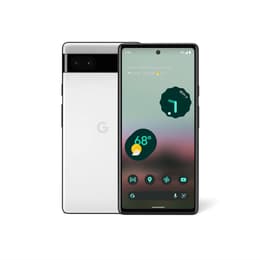
Google Pixel 6a
Google Pixel 6a
Starting at

Refurbished price:A$236.00

Versus A$569.00 new

See options
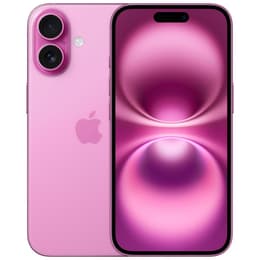
iPhone 16
iPhone 16
Starting at

Refurbished price:A$952.00

Versus A$1,399.00 new

See options

Ratings

The Google Pixel 6a, released in July 2022, and the iPhone 16, launched in September 2024, represent different approaches to smartphone design and functionality from their respective manufacturers. While both devices offer a compact form factor and capable performance, they cater to distinct user preferences through their operating systems and hardware philosophies. The Pixel 6a operates on Android, emphasizing Google's software integration and computational photography, whereas the iPhone 16 runs on iOS, focusing on a streamlined user experience, robust ecosystem, and advanced processing capabilities. A primary distinction lies in their release timelines, with the iPhone 16 benefiting from more recent technological advancements.

Scores

Durability

When considering the practical lifespan of these devices, their release timelines and software support policies are key factors. The Google Pixel 6a, released in July 2022, is expected to receive operating system updates until at least July 2025 and security updates until at least July 2027. This provides a solid period of support, though it is nearing its end for major OS upgrades. The iPhone 16, launched in September 2024, benefits from Apple's typically longer software support, ensuring many more years of iOS updates and security patches, extending its usable life significantly further into the future.

  • Software Longevity: The iPhone 16, as a more recently released device, offers a considerably longer period of guaranteed operating system and security updates compared to the Pixel 6a, which is approaching the end of its major OS update cycle.
  • Physical Durability: Both devices offer a degree of protection against environmental elements. The Pixel 6a features an IP67 rating for dust and water resistance and Corning Gorilla Glass 3 for screen protection. The iPhone 16 comes with Ceramic Shield on the front and an IP68 rating, indicating enhanced resistance to dust and water.
  • Repairability Considerations: While specific repairability scores can vary, the iPhone 16's battery is designed for easier removal, potentially simplifying future battery replacements.

Release year

2022

2024

Compatible with latest Update

Yes

Yes

Foldable

No

No

Performance

The performance of a smartphone is largely determined by its internal components and how efficiently its software utilizes them. The Google Pixel 6a is powered by Google's first-generation Tensor chip and includes 6GB of RAM, providing a responsive experience for everyday tasks and moderate multitasking. The iPhone 16, featuring Apple's A18 chip and 8GB of RAM, offers a more advanced and efficient processing architecture.

  • Processing Power: The iPhone 16's newer generation processor delivers enhanced speed and efficiency, resulting in smoother app loading, more fluid navigation, and superior performance in demanding applications and graphically intensive games compared to the Pixel 6a.
  • Multitasking Capability: With 8GB of RAM, the iPhone 16 handles multiple applications running simultaneously with greater ease, allowing for quicker switching between tasks without significant slowdowns. The Pixel 6a's 6GB of RAM is sufficient for most users but may show limitations with a high number of active background processes.
  • Storage Options: Both devices offer a base storage of 128GB. The iPhone 16 also provides options for 256GB and 512GB, offering more flexibility for users with extensive media libraries or numerous applications. The Pixel 6a is limited to 128GB of non-expandable internal storage.

Memory (GB)

6 GB

8 GB

Screen quality

The visual experience on a smartphone is heavily influenced by its display technology, resolution, and brightness. Both the Google Pixel 6a and the iPhone 16 feature 6.1-inch OLED displays, offering deep blacks and vibrant colors.

  • Display Technology and Clarity: Both phones utilize OLED technology, providing excellent contrast. The Pixel 6a has a 1080p resolution (2400x1080 pixels), while the iPhone 16 features a Super Retina XDR OLED display with a slightly higher resolution (1179 x 2556 pixels), contributing to sharp text and detailed images.
  • Brightness and Outdoor Visibility: The iPhone 16 offers significantly higher typical brightness of 1000 nits and a peak HDR brightness of up to 2000 nits, making it more comfortable to view in bright outdoor conditions compared to the Pixel 6a.
  • Refresh Rate: Both devices feature a standard 60Hz refresh rate. This provides a smooth experience for general use, though it does not offer the ultra-smooth scrolling and animation found on devices with higher refresh rates. The iPhone 16 also features thinner bezels, contributing to a more expansive viewing area.

Resolution

1080 x 2400

1179 x 2556

Screen type

OLED

Super Retina XDR OLED

Audiovisual

Both the Google Pixel 6a and the iPhone 16 are recognized for their camera capabilities, though they approach photography with different hardware and software strengths. The Pixel 6a relies on a dual-camera system and Google's computational photography for impressive still images. The iPhone 16, being a newer model, introduces updated sensors and features.

  • Rear Camera Systems: The Pixel 6a features a 12.2MP main camera with optical image stabilization (OIS) and a 12MP ultrawide lens. The iPhone 16 steps up with a 48MP main sensor with OIS and a 12MP ultrawide lens that supports macro photography. The iPhone 16 also features a vertical camera arrangement, enabling spatial video recording.
  • Photography Performance: The Pixel 6a is known for its consistent image quality and excellent low-light performance through its software processing. The iPhone 16, with its larger main sensor and newer processing, offers improved detail, dynamic range, and enhanced low-light capabilities, along with the ability to record spatial video.
  • Video Recording and Front Camera: Both phones are capable of recording 4K video. The Pixel 6a has an 8MP front-facing camera, while the iPhone 16 features a 12MP front camera, offering higher resolution for selfies and video calls. The iPhone 16 also introduces a new Capture button, allowing for quick photo and video capture with autofocus control.

Main camera

12.2 megapixels

48 megapixels

Front camera

8 megapixels

12 megapixels

Miscellaneous

Beyond core performance and display, several practical features contribute to the overall user experience, including connectivity, physical ports, and biometric security. The Google Pixel 6a and iPhone 16 offer modern connectivity options and distinct hardware implementations.

  • Connectivity and Ports: Both devices support 5G cellular networks. The Pixel 6a includes Wi-Fi 6/6E and Bluetooth 5.2, along with a USB-C 3.1 port for charging and data transfer. The iPhone 16 supports Wi-Fi 7 and features a USB-C port, though data transfer speeds for the base model are at USB 2.0.
  • Biometric Security and Additional Controls: The Pixel 6a utilizes an under-display fingerprint sensor for secure unlocking. The iPhone 16 relies on Face ID for facial recognition. Additionally, the iPhone 16 incorporates an Action button, which is customizable for quick access to various functions, and a new Capture button for camera control.
  • Physical Characteristics: The Pixel 6a weighs 178g and has dimensions of 152.2 x 71.8 x 8.7mm. The iPhone 16 is slightly lighter at 170g and has dimensions of 147.6 x 71.6 x 7.8mm, making it marginally more compact.

Weight

250 oz

170 oz

Screen size (in)

6.1

6.1

SIM card

Physical SIM + eSIM

Physical SIM + eSIM

Carrier compatibility

Unlocked

Unlocked

Choosing between the Google Pixel 6a and the iPhone 16 involves weighing the benefits of a mature, value-oriented Android device against a more recent, feature-rich iOS experience. Users often praise the Pixel 6a for its exceptional camera performance, particularly its computational photography capabilities that deliver consistent and high-quality images, even in challenging conditions. Its clean Android interface and timely software updates (within its support window) are also frequently highlighted. Some common criticisms of the Pixel 6a include its 60Hz display, which can feel less fluid compared to devices with higher refresh rates, and its battery life, which some heavy users find requires more frequent charging.

The iPhone 16, on the other hand, receives commendation for its powerful and efficient processor, ensuring smooth performance across all tasks, and its significantly longer software support timeline, which appeals to users who keep their devices for many years. Its improved camera system, including the new Capture button and spatial video capabilities, is also a strong point. User feedback often notes the iPhone 16's vibrant and bright display, even with a 60Hz refresh rate, and its robust build quality. Potential concerns might revolve around the continued 60Hz refresh rate on the base model, which some users might expect to be higher on a device of its generation.

Users prioritizing a device with a longer guaranteed software lifespan, cutting-edge performance for demanding applications, and advanced camera features, including spatial video, may find the iPhone 16 well-suited to their needs. Conversely, users who appreciate Google's specific approach to computational photography, prefer the Android ecosystem, and are looking for a device that still offers a capable experience for everyday use might lean towards the Pixel 6a. Both devices offer a quality experience, and for those considering a sustainable choice, opting for a quality-assured refurbished option for either model can be an eco-friendly alternative.
See all articles

Our recent comparisons