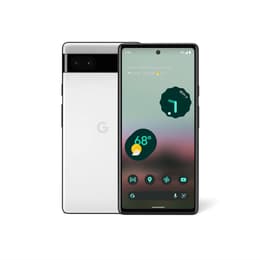
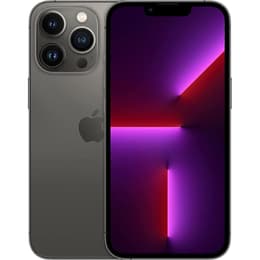

Google Pixel 6a vs iPhone 13 Pro

Google Pixel 6a
Google Pixel 6a
Starting at

Refurbished price:A$236.00

Versus A$569.00 new

See options
iPhone 13 Pro
iPhone 13 Pro
Starting at

Refurbished price:A$545.00

Versus A$1,539.00 new

See options

Ratings

The Google Pixel 6A, released in July 2022, and the iPhone 13 Pro, launched in September 2021, represent distinct approaches to smartphone design and functionality. While both devices offer capable performance and camera systems, they differ significantly in their operating systems, display technology, and overall user experience. The Pixel 6A operates on Android, emphasizing Google's software-centric features, whereas the iPhone 13 Pro runs on iOS, known for its integrated ecosystem and premium hardware.

Scores

Durability

When considering the long-term usability of these devices, several factors contribute to their expected lifespan, including software support and physical resilience.

  • Release Timeline: The iPhone 13 Pro was released in September 2021, making it approximately 10 months older than the Google Pixel 6A, which launched in July 2022. This difference in release dates impacts their respective software support windows.
  • Software Longevity: The Google Pixel 6A is expected to receive Android OS updates until at least July 2025 and security updates until at least July 2027, following an extended support plan. The iPhone 13 Pro typically receives iOS updates for approximately five to six years from its release, with some users anticipating support until around 2028. This suggests a potentially longer software support period for the iPhone 13 Pro.
  • Physical Durability: The iPhone 13 Pro features a Ceramic Shield front cover and a stainless steel frame, contributing to its robust build and IP68 dust and water resistance. The Pixel 6A uses Corning Gorilla Glass 3 on its display and has an aluminum frame with a plastic back, offering IP67 dust and water resistance. Both devices are designed to withstand everyday exposure to dust and splashes, though the iPhone 13 Pro offers a slightly higher degree of water immersion protection.

Release year

2022

2021

Compatible with latest Update

Yes

Yes

Foldable

No

No

Performance

The performance of a smartphone is crucial for daily tasks, from app navigation to demanding applications and gaming. Both devices offer smooth experiences, but with different underlying architectures.

  • Processor Capabilities: The Google Pixel 6A is powered by Google's Tensor chip, which enables smooth handling of demanding apps and multitasking, along with advanced AI features for tasks like live transcription. The iPhone 13 Pro features a current-generation processor that delivers high-end performance, ensuring applications load quickly and graphically intensive games run smoothly.
  • System Responsiveness: Users generally report that both phones offer a fluid and responsive experience for everyday use. The Pixel 6A is noted for its fast app loading and seamless switching between applications. The iPhone 13 Pro also provides a consistently smooth user interface, with quick app launches and efficient multitasking.
  • Battery Behavior: The Pixel 6A houses a 4410 mAh battery, with Google touting up to 24 hours of typical use and extended life with extreme battery saver modes. While the iPhone 13 Pro has a smaller battery capacity, its optimized software and efficient processor contribute to strong battery life, often lasting a full day even with heavy usage.

Memory (GB)

6 GB

6 GB

Screen quality

The display is a primary interface for smartphone interaction, and both the Pixel 6A and iPhone 13 Pro offer vibrant viewing experiences with distinct characteristics.

  • Display Technology and Clarity: Both devices feature 6.1-inch OLED displays, providing deep blacks and vibrant colors. The Pixel 6A offers a 2400 x 1080 pixel resolution, while the iPhone 13 Pro has a 2532 x 1170 pixel resolution, resulting in crisp image quality.
  • Refresh Rate: A key difference lies in the refresh rate. The Pixel 6A's display is capped at 60Hz. In contrast, the iPhone 13 Pro features ProMotion technology, offering an adaptive refresh rate that can go up to 120Hz, providing a noticeably smoother scrolling experience and more fluid animations, particularly in compatible apps.
  • Brightness Levels: The iPhone 13 Pro's display can reach a typical brightness of 1000 nits, making it highly visible outdoors in bright sunlight. The Pixel 6A also offers good brightness, with peak measurements around 778 nits with adaptive brightness on, which is generally sufficient for outdoor use, though it may require manual adjustment in very bright conditions.

Resolution

1080 x 2400

1170 x 2532

Screen type

OLED

Super Retina XDR OLED

Audiovisual

Both smartphones are recognized for their photographic capabilities, offering distinct strengths in image and video capture.

  • Camera System Configuration: The Google Pixel 6A features a dual-camera setup with a 12.2 MP wide main sensor and a 12 MP ultrawide sensor. The iPhone 13 Pro boasts a more versatile triple-camera system, including 12 MP wide, 12 MP ultrawide, and 12 MP telephoto lenses, along with a LiDAR scanner.
  • Photography Performance: The Pixel 6A is praised for its computational photography, producing excellent shots with accurate exposure, white balance, and healthy contrast, even with older sensor hardware. Its Night Sight mode is effective in low-light conditions. The iPhone 13 Pro's camera system delivers impressive image quality with vibrant colors and detail, excelling in various lighting conditions, and its larger sensors capture more light. The telephoto lens on the iPhone 13 Pro allows for 3x optical zoom and improved portrait shots.
  • Video Recording and Audio: The Pixel 6A can record 4K video at up to 60 frames per second, with good stabilization and respectable audio capture. The iPhone 13 Pro also supports 4K video recording at up to 60 frames per second across all its cameras, offering impressive dynamic range and microphone quality suitable for vlogging.

Main camera

12.2 megapixels

12 megapixels

Front camera

8 megapixels

12 megapixels

Miscellaneous

Beyond core features, several practical elements contribute to the overall user experience and daily convenience of these devices.

  • Connectivity Options: Both devices support 5G connectivity, ensuring access to faster mobile networks. They also include modern Wi-Fi standards and Bluetooth for wireless connections.
  • Port Types and Biometrics: The Google Pixel 6A utilizes a USB-C port for charging and data transfer and features an in-display fingerprint sensor for secure unlocking. The iPhone 13 Pro uses Apple's proprietary Lightning port and relies on Face ID for biometric authentication.
  • Design and Handling: The Pixel 6A has a 6.1-inch display and a relatively compact form factor, making it easy for one-handed use and pocketability. It features a recycled aluminum frame and a plastic back. The iPhone 13 Pro also has a 6.1-inch display and a premium build with a stainless steel frame and glass back, weighing slightly more due to its materials.

Weight

250 oz

203 oz

Screen size (in)

6.1

6,1

SIM card

Physical SIM + eSIM

Physical SIM + eSIM

Carrier compatibility

Unlocked

Unlocked

The Google Pixel 6A and iPhone 13 Pro cater to different user preferences, each offering a compelling smartphone experience. Users often praise the Pixel 6A for its exceptional camera performance, particularly its computational photography capabilities that deliver consistent and high-quality images, even in challenging conditions. Its clean Android software experience and the inclusion of Google's Tensor chip for efficient AI tasks are also frequently highlighted. However, some users note the 60Hz display as a point of criticism, especially when compared to devices with higher refresh rates.

The iPhone 13 Pro receives acclaim for its premium build quality, the smooth and adaptive 120Hz ProMotion display, and its versatile triple-camera system that excels in both photography and video recording. Its robust performance and strong battery life are consistently lauded by users. A common point of discussion for the iPhone 13 Pro is its reliance on the Lightning port, which some users find less convenient than the more widely adopted USB-C standard.

Users prioritizing an advanced camera system with strong computational photography, a pure Android experience, and a slightly more recent release may find the Google Pixel 6A well-suited to their needs. Conversely, those who value a premium design, a highly fluid display, a comprehensive camera setup with telephoto capabilities, and the integrated iOS ecosystem will likely lean towards the iPhone 13 Pro. Both devices offer a quality-assured refurbished option, providing an eco-friendly alternative for consumers.

See all articles

Our recent comparisons