Compare models
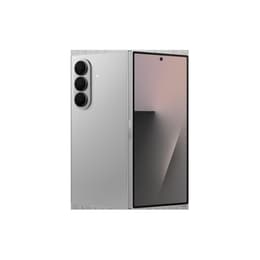
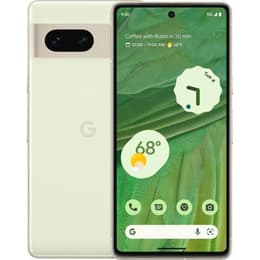
Galaxy Z Fold7 vs Google Pixel 7
- 1-year warranty
- Free standard shipping
- Free 30-day returns
Differences at a glance
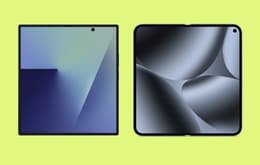
The Samsung Galaxy Z Fold7 (2025) and the Google Pixel 7 (2022) represent entirely different approaches to smartphone engineering, contrasting an advanced book-style foldable device with a traditional slate form factor. While the Galaxy Z Fold7 provides an expansive dual-screen workspace and cutting-edge hardware, the Google Pixel 7 focuses on a streamlined single-screen experience driven by intuitive software. Both running on the Android operating system, these devices cater to vastly distinct user preferences regarding physical design, daily utility, and structural versatility.
Available Models
Colour
Storage
Scores
Durability
When examining longevity, these devices differ significantly in their release timelines, software update windows, and physical durability architectures.
- Release timeline and support: The Galaxy Z Fold7 benefits from an extended software support window spanning multiple years, while the Google Pixel 7 operates on an earlier release schedule with a mature update history.
- Physical durability: The Pixel 7 utilizes a traditional glass-and-aluminum slate build designed to resist daily wear, whereas the Z Fold7 features an intricate hinge mechanism and a foldable inner screen requiring more mindful day-to-day handling.
- Expected practical lifespan: Software longevity remains high for both models, though users should weigh the structural complexities of a foldable frame against the long-term resilience of a conventional unibody phone.
Release year
2025
2022
Operating system
Android
Android
Foldable
Yes
No
Performance
System performance and daily resource management vary considerably, reflecting the generation gap and hardware design philosophies of each device.
- Multitasking and daily tasks: The Galaxy Z Fold7 handles demanding multi-app workflows, heavy gaming, and split-screen usage effortlessly, while the Pixel 7 smoothly manages routine browsing, messaging, and standard application switching.
- Storage capacity: The Z Fold7 offers higher baseline storage tiers suitable for large media libraries, whereas the Pixel 7 provides standard storage capacities configured for everyday cloud and local file management.
- Battery behavior: The Pixel 7's compact single-screen layout delivers predictable daily endurance, while the Z Fold7 manages power distribution across two distinct displays depending on whether the inner or outer screen is active.
Screen quality
Display technology represents one of the most prominent points of divergence between these two mobile concepts.
- Display configuration: The Galaxy Z Fold7 features a flexible inner OLED panel that unfolds into a tablet-sized workspace alongside a wide cover display, while the Pixel 7 employs a single flat OLED screen with a standard aspect ratio.
- Brightness and outdoor clarity: Both models achieve high peak brightness levels to maintain visibility under direct sunlight, utilizing adaptive refresh rates up to 120Hz on the Samsung and 90Hz on the Google device for smooth scrolling.
- Viewing experience: The Z Fold7 excels at media consumption and document editing on a expansive canvas, whereas the Pixel 7 offers a compact, pocket-friendly viewing area optimized for single-handed use.
Resolution
1968x2184
1080 x 2400
Audiovisual
Imaging capabilities and media output cater to different photography habits and content creation styles.
- Camera systems: The Galaxy Z Fold7 houses a versatile multi-lens rear array including high-resolution primary sensors, while the Pixel 7 relies on a dual-rear camera configuration paired with advanced computational photography software.
- Everyday and low-light capture: Both devices deliver sharp, balanced photos in diverse lighting conditions, with Google leaning heavily on automated image processing and Samsung offering flexible shooting angles made possible by the foldable chassis.
- Audio and media output: Stereo speakers on both models provide clear sound for calls and video playback, though the larger acoustic chambers on larger form factors can slightly alter spatial depth during media playback.
Miscellaneous
Physical handling, connectivity standards, and everyday convenience features shape the practical experience of carrying and using each phone.
- Connectivity: Both models support modern 5G cellular networks, Wi-Fi standards, and Bluetooth protocols for reliable peripheral pairing and data transfer.
- Biometrics and sensors: The Pixel 7 utilizes an under-display optical fingerprint sensor and facial recognition, while the Z Fold7 integrates a side-mounted fingerprint scanner into its slim profile.
- Dimensions and handling: The Pixel 7 presents a familiar, weighted slate feel in the hand, whereas the Z Fold7 offers a remarkably thin folded profile that expands into a much wider device when opened.
Weight
215 oz
212 oz
Screen size (in)
8.0
6.3
Network
5G
5G
SIM card
Dual Physical SIM + eSIM
Physical SIM + eSIM
Carrier compatibility
Unlocked
Unlocked
What the community thinks
User feedback from online communities highlights distinct patterns of praise and common concerns for both smartphones. Owners of the Google Pixel 7 frequently commend its reliable everyday camera performance, clean software interface, and comfortable single-handed ergonomics, though some note that battery endurance can decline under sustained heavy navigation or video streaming. Conversely, Galaxy Z Fold7 users widely appreciate the multitasking freedom and expansive screen estate for productivity, while noting that the physical weight and maintenance of a foldable display require deliberate adjustment.
Users prioritizing productivity, split-screen multitasking, and a tablet-like viewing area will find the Galaxy Z Fold7 well-suited to their workflow. On the other hand, users favoring a traditional, pocketable form factor with straightforward handling and robust everyday software will lean toward the Google Pixel 7. Selecting either model as a quality-assured refurbished option provides a sustainable choice that reduces electronic waste while delivering reliable, tested hardware. Ultimately, the right choice depends on whether a versatile multi-screen layout or a classic smartphone design best serves your daily routine.