
Galaxy Z Fold4 vs Google Pixel 7a

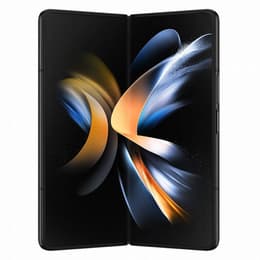
Galaxy Z Fold4
Galaxy Z Fold4
Starting at

Refurbished price:A$734.00

Versus A$3,628.00 new

See options
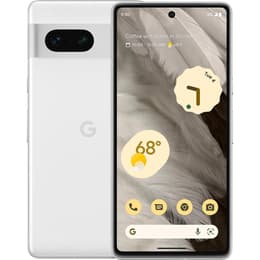
Google Pixel 7a
Google Pixel 7a
Starting at

Refurbished price:A$337.00

Versus A$749.00 new

See options

Ratings

The Samsung Galaxy Z Fold4, released in August 2022, and the Google Pixel 7A, launched in May 2023, represent distinct approaches to modern smartphones. The Z Fold4 offers a unique foldable design that transforms a standard smartphone into a tablet-like experience, while the Pixel 7A provides a more traditional, compact smartphone form factor with a strong emphasis on camera capabilities and a streamlined Android experience. Both devices run on the Android operating system, offering access to a vast ecosystem of applications and services.

Scores

Durability

The Galaxy Z Fold4, released in August 2022, is expected to receive four major Android OS updates and five years of security updates, extending its software support until around 2027. The Pixel 7A, launched in May 2023, is also promised five years of security updates and three major Android OS updates, ensuring support until approximately 2028.

  • Software Longevity: The Z Fold4 offers a slightly longer period of major Android OS updates compared to the Pixel 7A, potentially providing an extra year of new Android features.
  • Physical Durability: The Z Fold4 features an Armor Aluminum frame and Gorilla Glass Victus+ on its cover screen and back, with an IPX8 water resistance rating, though it lacks dust resistance. The Pixel 7A has an IP67 dust and water resistance rating and Gorilla Glass 3 on its front, with users reporting good overall resilience despite a plastic back.
  • Practical Lifespan: Both devices are built to last several years with regular software and security updates. The Z Fold4's foldable screen introduces a unique durability consideration, while the Pixel 7A's more conventional design may offer a simpler long-term physical maintenance profile.

Release year

2022

2022

Compatible with latest Update

Yes

Yes

Operating system

Android

Android

Foldable

Yes

No

Performance

When evaluating performance, both devices offer capable experiences for daily use, though they cater to different demands.

  • Processing Power: The Galaxy Z Fold4 is equipped with a powerful current-generation processor and 12GB of RAM, enabling smooth multitasking, demanding applications, and high-fidelity gaming. The Pixel 7A features a capable processor designed for efficient AI tasks and 8GB of RAM, providing a responsive experience for everyday apps and Google's advanced software features.
  • Battery Behavior: The Z Fold4 houses a 4400 mAh battery, which generally provides a full day of moderate use, though heavy use of its larger inner display can lead to more frequent charging. The Pixel 7A comes with a 4385 mAh battery, also typically offering a full day of use for most users.
  • Storage Options: The Z Fold4 offers flexible storage configurations, including 256GB, 512GB, and 1TB options. The Pixel 7A is available with 128GB of internal storage.

Memory (GB)

12 GB

8 GB

Screen quality

The display experience is a primary differentiator between these two smartphones, offering distinct visual and interactive characteristics.

  • Display Technology and Size: The Galaxy Z Fold4 features a large 7.6-inch foldable Dynamic AMOLED 2X main display and a 6.2-inch Dynamic AMOLED 2X cover display, both offering vibrant colors and deep blacks. The Pixel 7A has a 6.1-inch OLED display, known for its rich contrast and color accuracy.
  • Resolution and Clarity: The Z Fold4's main display has a resolution of 2176 x 1812 pixels, while its cover screen is 904 x 2316 pixels, providing sharp visuals. The Pixel 7A offers a 1080 x 2400 pixel resolution, resulting in clear and detailed images.
  • Refresh Rate and Brightness: Both the Z Fold4's main and cover displays support an adaptive 120Hz refresh rate for smooth scrolling and animations, with peak brightness up to 1200 nits on the main screen. The Pixel 7A features a 90Hz refresh rate for a fluid experience and can reach up to 1000 nits peak brightness.

Resolution

1812 x 2176

1080 x 2400

Screen type

Foldable Dynamic AMOLED 2X

OLED

Audiovisual

Both devices offer strong camera capabilities, but with different strengths and configurations tailored to their respective designs.

  • Rear Camera Systems: The Galaxy Z Fold4 features a versatile triple-camera setup, including a 50 MP main sensor with optical image stabilization (OIS), a 12 MP ultrawide lens, and a 10 MP telephoto lens with 3x optical zoom and OIS. The Pixel 7A comes with a dual-camera system, featuring a 64 MP main sensor with OIS and a 13 MP ultrawide lens.
  • Photography Performance: The Z Fold4 provides a comprehensive photography experience with its telephoto lens for zoomed shots and good overall image quality. The Pixel 7A is highly regarded for its computational photography, delivering excellent image quality, particularly in everyday and challenging lighting conditions, often leveraging its processor for enhanced results.
  • Video and Audio: The Z Fold4 can record video up to 8K at 24fps and 4K at 60fps, offering high-resolution video capture. The Pixel 7A records video up to 4K at 60fps. Both devices include stereo speakers for media consumption.

Main camera

50 megapixels

64 megapixels

Front camera

4 megapixels

13 megapixels

Miscellaneous

Beyond core features, several practical elements contribute to the overall user experience and daily convenience of these devices.

  • Connectivity and Ports: Both the Galaxy Z Fold4 and the Pixel 7A support 5G connectivity, Wi-Fi 6E, and Bluetooth 5.2 or 5.3 respectively, ensuring modern wireless communication. Both utilize a USB-C port for charging and data transfer.
  • Biometric Security: The Z Fold4 features a side-mounted fingerprint sensor and face recognition for secure unlocking. The Pixel 7A offers an under-display fingerprint sensor and face unlock.
  • Physical Characteristics: The Z Fold4 is a heavier device at 263g due to its foldable mechanism and larger screens, with dimensions that vary significantly between its folded and unfolded states. The Pixel 7A is more compact and lighter at 193.5g, offering a more traditional smartphone feel. The Z Fold4 uses an aluminum frame and glass panels, while the Pixel 7A has an aluminum frame with a plastic back and glass front.

Weight

263 oz

212 oz

Screen size (in)

7.6

6.1

Network

5G

5G

SIM card

Physical SIM + eSIM

Physical SIM + eSIM

Carrier compatibility

Unlocked

Unlocked

Users often praise the Galaxy Z Fold4 for its innovative foldable display, which provides an expansive canvas for multitasking and media consumption, effectively combining a phone and a small tablet into one device. Its premium build and comprehensive camera system are also frequently highlighted. Some common criticisms include the visible crease on the main display and its relatively heavier and thicker form factor when folded.

The Google Pixel 7A receives consistent acclaim for its exceptional camera performance, often rivaling more expensive smartphones, and its clean, user-friendly Android experience with timely software updates. Its compact size and solid everyday performance are also well-regarded. Criticisms sometimes point to its thicker bezels and slower charging speeds compared to some competitors.

For users prioritizing a large, adaptable screen for productivity and immersive media, the Galaxy Z Fold4 is well-suited, offering a unique form factor that blends phone and tablet functionality. Those who value a streamlined software experience, a highly capable camera for everyday photography, and a more traditional, compact smartphone design may find the Google Pixel 7A aligns better with their needs. Both devices represent quality choices in the Android ecosystem, and considering a quality-assured refurbished option can be an eco-friendly alternative for either model.
See all articles

Our recent comparisons