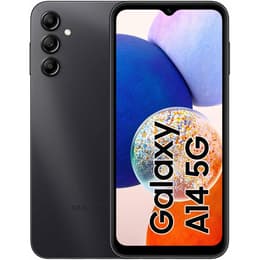


Galaxy A14 5G vs Google Pixel 7

Galaxy A14 5G
Galaxy A14 5G
Starting at

Refurbished price:A$220.00

Versus A$280.00 new

See options
Google Pixel 7
Google Pixel 7
Starting at

Refurbished price:A$348.00

Versus A$879.00 new

See options

The Samsung Galaxy A14 5G, released in January 2023, and the Google Pixel 7, launched in October 2022, are both Android smartphones offering distinct user experiences. While the Galaxy A14 5G focuses on essential features and extended battery life, the Pixel 7 prioritises advanced camera capabilities and a more powerful processing experience. Both devices run on the Android operating system, but they cater to different user needs through their hardware and software approaches.

Scores

Durability

The longevity of a smartphone is influenced by its release date, software support, and physical durability. These factors determine how long a device remains functional and secure for daily use.

  • Release Timeline: The Google Pixel 7 was released in October 2022, making it slightly older than the Samsung Galaxy A14 5G, which launched in January 2023. This difference means the Pixel 7 will reach its end-of-support timeline a few months earlier than the A14 5G.
  • Software Support: The Pixel 7 is set to receive five years of OS and security updates, extending its support until October 2027, potentially including Android 18. In contrast, the Galaxy A14 5G is promised two major OS upgrades (up to Android 15) and four years of quarterly security updates, lasting until 2027. This indicates a longer period of major Android version updates for the Pixel 7.
  • Physical Durability: The Pixel 7 features Corning Gorilla Glass Victus on both its front and back, along with an aluminium frame and an IP68 rating for dust and water resistance, suggesting a more robust build. The Galaxy A14 5G has a plastic body and lacks an official IP rating, making it potentially less resistant to environmental elements.

Release year

2023

2022

Compatible with latest Update

Yes

Yes

Foldable

No

No

Performance

Performance in smartphones is about how smoothly they handle daily tasks, from opening apps to managing multiple processes and running demanding applications.

  • Processing Power: The Google Pixel 7 is equipped with the Google Tensor G2 processor, designed for efficient AI and machine learning tasks, contributing to a responsive user experience and advanced computational photography. The Galaxy A14 5G uses either a MediaTek Dimensity 700 or Samsung Exynos 1330 processor, which provides stable performance for everyday tasks but may exhibit occasional minor lag when switching between apps or during more intensive use.
  • Multitasking and Storage: The Pixel 7 comes with 8GB of RAM and offers 128GB or 256GB of internal storage, which is suitable for extensive multitasking and storing numerous applications and media. The Galaxy A14 5G is available with 4GB, 6GB, or 8GB of RAM and 64GB or 128GB of storage, with the added benefit of microSD expansion up to 1TB, offering flexibility for users who require more storage for files and photos.
  • Real-world Responsiveness: Users generally report the Pixel 7 as being fast and smooth for most operations, though some note it can get warm under strenuous conditions. The Galaxy A14 5G is described as capable for basic tasks like web browsing and messaging, but some users have experienced slower app loading times and stuttering, particularly with more demanding applications.

Memory (GB)

4 GB

8 GB

Screen quality

The display is a primary interface for any smartphone, and its quality significantly impacts the viewing and interaction experience.

  • Display Technology and Clarity: The Google Pixel 7 features a 6.3-inch AMOLED display with a resolution of 1080x2400 pixels, providing vibrant colours, deep blacks, and a pixel density of approximately 416 PPI for sharp visuals. The Samsung Galaxy A14 5G has a larger 6.6-inch PLS LCD screen with a 1080x2408 pixel resolution and around 399 PPI, offering clear images but with less contrast and vibrancy compared to AMOLED technology.
  • Brightness and Refresh Rate: The Pixel 7's AMOLED display can reach up to 1000 nits in High Brightness Mode (HBM) and 1400 nits peak brightness, ensuring good visibility even in bright outdoor conditions, and features a 90Hz refresh rate for smooth scrolling. The Galaxy A14 5G's PLS LCD peaks at around 500 nits, which may be challenging to view under direct sunlight, but it also offers a 90Hz refresh rate for a fluid visual experience.
  • Screen Protection: The Pixel 7 benefits from Corning Gorilla Glass Victus protection, offering enhanced resistance against scratches and drops. The Galaxy A14 5G does not specify a particular glass protection type in available information, suggesting a standard level of screen durability.

Resolution

1080 x 2408

1080 x 2400

Screen type

PLS LCD

AMOLED

Audiovisual

Camera capabilities are a key differentiator for many users, impacting the quality of photos and videos captured in various conditions.

  • Rear Camera System: The Google Pixel 7 features a dual-camera setup with a 50 MP wide-angle main lens (with OIS and Dual-Pixel PDAF) and a 12 MP ultrawide lens, known for its advanced computational photography that produces detailed and colour-accurate images. The Samsung Galaxy A14 5G comes with a triple-camera system, including a 50 MP main lens (with PDAF), a 2 MP macro lens, and a 2 MP depth sensor, offering versatility for different types of shots.
  • Photography Performance: The Pixel 7 is widely praised for its camera performance, particularly its ability to capture excellent photos in various lighting conditions, including low light, due to its software processing. The Galaxy A14 5G's main camera is considered capable for everyday photography and selfies, though some users report mixed results and slower photo capture speeds.
  • Video Recording and Audio: The Pixel 7 supports 4K video recording at 30 frames per second, providing high-resolution video capture. The Galaxy A14 5G records video at 1080p at 30 frames per second. For audio, the Pixel 7 includes stereo speakers, enhancing the media consumption experience. The Galaxy A14 5G typically features a single speaker, which may offer a less immersive audio experience.

Main camera

50 megapixels

50 megapixels

Front camera

13 megapixels

10.8 megapixels

Miscellaneous

Beyond core features, several practical elements contribute to the overall user experience and daily convenience of a smartphone.

  • Connectivity and Ports: Both devices support 5G connectivity, ensuring access to faster mobile networks. The Galaxy A14 5G includes a 3.5mm headphone jack, which is absent on the Pixel 7, catering to users who prefer wired audio accessories. Both utilise USB-C for charging and data transfer.
  • Biometric Security: The Pixel 7 features an under-display optical fingerprint scanner and face recognition for unlocking. User feedback on the Pixel 7's fingerprint sensor has been mixed, with some reporting unreliability. The Galaxy A14 5G uses a side-mounted fingerprint sensor, which is generally reported as quick and reliable. Both devices include NFC for contactless payments.
  • Design and Handling: The Pixel 7 has a more compact design, measuring 155.6 x 73.2 x 8.7 mm and weighing 197g, with a glass and aluminium construction. The Galaxy A14 5G is larger at 167.7 x 78 x 9.1 mm and features a plastic body, which some users find less premium but potentially more durable against minor impacts.

Weight

201 oz

212 oz

Screen size (in)

6.6

6.3

SIM card

Physical SIM

Physical SIM + eSIM

Carrier compatibility

Unlocked

Unlocked

The Samsung Galaxy A14 5G and Google Pixel 7 offer distinct advantages, making them suitable for different user profiles. The Pixel 7 is frequently praised for its exceptional camera capabilities, with users highlighting its computational photography as a significant strength. Its consistent software updates and premium build quality are also noted positively. However, common criticisms include inconsistent fingerprint sensor performance, battery life that requires frequent charging for heavy users, and a tendency to warm up during intensive tasks.

The Galaxy A14 5G receives commendation for its long-lasting battery, with many users reporting it can comfortably last a full day or more. Its inclusion of a microSD card slot and a 3.5mm headphone jack are also appreciated features. On the other hand, some users have expressed concerns about its processing speed, noting occasional lags and slower app loading times, and its display brightness can be a limitation in bright outdoor environments.

Users prioritising advanced camera performance, a more compact design, and a longer period of major Android OS updates may prefer the Google Pixel 7. Its robust build with Gorilla Glass Victus and IP68 rating also offers enhanced durability. Conversely, users who value extended battery life, expandable storage, and the convenience of a headphone jack, and who primarily engage in everyday tasks, may find the Samsung Galaxy A14 5G better suited to their needs. Both devices represent solid choices within their respective offerings, and considering a quality-assured refurbished option can provide an eco-friendly alternative for either model.

See all articles

Our recent comparisons