Galaxy Z Fold6 vs Motorola Razr 40 Ultra

Galaxy Z Fold6
Galaxy Z Fold6
Starting at

Refurbished price:A$1,088.24

Versus A$2,749.00 new

See options
Motorola Razr 40 Ultra
See options

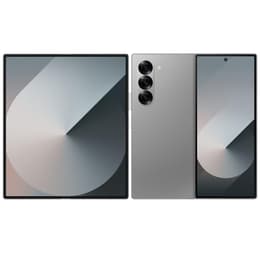
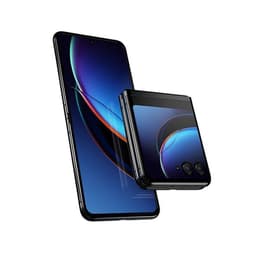
The Samsung Galaxy Z Fold6, released in July 2024, and the Motorola Razr 40 Ultra, launched in June 2023, represent distinct approaches to the foldable smartphone market. While both devices offer the versatility of a folding screen, they differ significantly in their form factor and intended user experience. The Galaxy Z Fold6 unfolds like a book, transforming from a traditional smartphone into a tablet-sized display, whereas the Motorola Razr 40 Ultra features a clamshell design, folding in half to become a compact, pocketable device. Both operate on the Android platform, offering a range of functionalities tailored to their unique designs.

Scores

Durability

When considering the long-term usability of these foldable devices, several factors contribute to their expected lifespan, including software support and physical durability.

  • Software Longevity: The Samsung Galaxy Z Fold6 offers a substantial commitment to software updates, with seven years of Android operating system upgrades and security patches from its release. This extended support ensures the device remains current with the latest features and security enhancements for a considerable period. In contrast, the Motorola Razr 40 Ultra typically receives three years of Android OS updates and four years of bi-monthly security updates, providing a shorter, though still respectable, support window.
  • Physical Durability: The Galaxy Z Fold6 features an IP48 rating, indicating resistance to water immersion up to 1.5 meters for 30 minutes and protection against solid objects larger than 1mm. This marks an improvement in dust resistance over previous models. Its hinge is rated for 200,000 folds, suggesting robust mechanical endurance. The Motorola Razr 40 Ultra carries an IP52 rating, offering splash and dust resistance, meaning it can withstand light splashes of water and some dust ingress. While both devices incorporate durable materials like Gorilla Glass Victus, the Z Fold6's higher water resistance rating provides a greater degree of protection against liquid exposure.
  • Practical Lifespan: Users seeking the longest possible software support and a higher degree of water resistance may find the Galaxy Z Fold6 more aligned with their needs. The Razr 40 Ultra, while durable for everyday use, has a shorter guaranteed update cycle and less comprehensive water protection.

Release year

2024

2023

Compatible with latest Update

Yes

Yes

Operating system

Android

Android

Foldable

Yes

Yes

Performance

The performance of a smartphone is crucial for daily tasks, from basic navigation to demanding applications and multitasking. Both devices offer capable hardware, but with different levels of processing power and memory configurations.

  • Processing Power: The Samsung Galaxy Z Fold6 is equipped with a current-generation processor, designed to handle intensive applications, complex multitasking, and graphic-heavy gaming smoothly and efficiently. This allows for a responsive user experience even under heavy load. The Motorola Razr 40 Ultra utilizes a previous-generation flagship processor, which provides strong performance for everyday use, social media, and moderate gaming. While capable, it may not match the raw processing headroom of the Z Fold6 for the most demanding tasks.
  • Multitasking and Storage: The Galaxy Z Fold6 typically comes with 12GB of RAM, facilitating seamless transitions between numerous open applications and efficient background processes. Storage options range from 256GB up to 1TB, providing ample space for files and applications. The Razr 40 Ultra is available with 8GB or 12GB of RAM and storage options of 256GB or 512GB. While 8GB is sufficient for most users, those who frequently juggle many applications or require extensive local storage might find the Z Fold6's configurations more accommodating.
  • Battery Behavior: The Galaxy Z Fold6 houses a 4400 mAh battery, generally providing a full day of mixed usage, with some users reporting around 9-10 hours of screen-on time. It supports fast wired and wireless charging. The Motorola Razr 40 Ultra has a 3800 mAh battery, which, despite its smaller capacity, can also last a full day for many users, particularly when leveraging its efficient external display for quick interactions. It also supports fast wired and wireless charging.

Memory (GB)

12 GB

8 GB

Screen quality

The display is a primary interaction point for any smartphone, and foldable devices offer unique screen experiences. Both the Galaxy Z Fold6 and the Razr 40 Ultra feature vibrant displays, but their sizes, technologies, and refresh rates cater to different preferences.

  • Main Display Technology and Size: The Samsung Galaxy Z Fold6 features a large 7.6-inch Dynamic AMOLED 2X main display when unfolded, offering deep blacks, vibrant colors, and a high resolution for a detailed viewing experience. The Motorola Razr 40 Ultra, in its unfolded state, presents a 6.9-inch pOLED main display. Both technologies deliver excellent visual quality, but the Z Fold6 provides a significantly larger canvas, more akin to a small tablet.
  • Refresh Rate and Brightness: Both devices offer high refresh rates for smooth scrolling and responsive interactions. The Z Fold6's main and cover displays feature a 120Hz refresh rate. The Razr 40 Ultra's main display can reach up to 165Hz, though it often operates at 120Hz in practice, while its cover display supports up to 144Hz. For brightness, the Razr 40 Ultra's main display can reach a peak of 1400 nits, ensuring good visibility in various lighting conditions, including direct sunlight. The Z Fold6 also offers high peak brightness, contributing to clear outdoor visibility.
  • External Display Utility: A key differentiator is the external display. The Razr 40 Ultra boasts a large 3.6-inch pOLED cover screen that is highly functional, capable of running full applications and providing extensive utility without needing to open the device. The Galaxy Z Fold6's 6.3-inch cover display is also highly usable, offering a more traditional smartphone experience when folded, and is wider than previous Fold models.

Resolution

1856 x 2160

1080 x 2640

Screen type

Foldable Dynamic LTPO AMOLED 2X

Foldable LTPO AMOLED

Audiovisual

The camera systems on both foldable smartphones are designed to capture moments, but they offer different capabilities and versatility for photography and videography.

  • Rear Camera Systems: The Samsung Galaxy Z Fold6 features a versatile triple-camera setup on its rear, including a 50MP wide-angle main sensor with optical image stabilization (OIS), a 12MP ultrawide lens, and a 10MP telephoto lens with 3x optical zoom and OIS. This configuration provides flexibility for various shooting scenarios, from expansive landscapes to distant subjects. The Motorola Razr 40 Ultra comes with a dual-camera system on its rear, comprising a 12MP main camera with a wide f/1.5 aperture and OIS, alongside a 13MP ultrawide lens that also functions as a macro camera.
  • Photography Performance: The Z Fold6's camera system is generally praised for its ability to produce detailed images across different lighting conditions and its versatile zoom capabilities. The Razr 40 Ultra's main camera performs well in good lighting, capturing vibrant and detailed photos, and its wide aperture assists in low-light situations. However, some users note that the Razr 40 Ultra may struggle with capturing sharp images of moving subjects.
  • Video and Selfies: For video recording, the Galaxy Z Fold6 supports up to 8K resolution at 30 frames per second, offering high-quality video capture. The Razr 40 Ultra records video up to 4K. Both devices offer front-facing cameras for selfies and video calls. A notable feature of the Razr 40 Ultra is the ability to use its higher-quality rear cameras for selfies by utilizing the large external display as a viewfinder. Both phones feature stereo speakers for an enhanced audio experience during media consumption.

Main camera

50 megapixels

12 megapixels

Front camera

4 megapixels

32 megapixels

Miscellaneous

Beyond the core components, several practical elements contribute to the overall user experience and differentiate these foldable smartphones.

  • Connectivity and Ports: Both the Galaxy Z Fold6 and the Motorola Razr 40 Ultra support 5G connectivity for fast mobile data speeds, along with modern Wi-Fi standards (Wi-Fi 6E) and Bluetooth for wireless accessories. Both devices utilize a USB-C port for charging and data transfer. Neither device includes a traditional headphone jack.
  • Biometric Security: For secure access, both smartphones incorporate a side-mounted fingerprint reader. They also offer face recognition capabilities, providing convenient unlocking options.
  • Design and Handling: The Galaxy Z Fold6, with its book-like form factor, is heavier at 239g and thicker when folded, offering a larger screen area for productivity and media consumption when unfolded. Its design has been refined to be thinner and lighter than previous generations. The Motorola Razr 40 Ultra, a clamshell foldable, is lighter, ranging from 184.5g to 188.5g, and more compact when folded, making it highly pocketable. The Razr 40 Ultra also offers models with a vegan leather back, providing a distinct tactile feel. The Galaxy Z Fold6 supports S Pen input, though the pen is sold separately and does not have an integrated storage slot.

Weight

239 oz

1 oz

Screen size (in)

7.6

6.9

Network

5G

5G

SIM card

Dual Physical SIM + eSIM

Dual Physical SIM

Carrier compatibility

Unlocked

Unlocked

The Samsung Galaxy Z Fold6 and the Motorola Razr 40 Ultra cater to different user needs within the foldable smartphone segment. User feedback for the Galaxy Z Fold6 often highlights its expansive main display as a significant advantage for multitasking and media consumption, effectively bridging the gap between a smartphone and a tablet. Its robust software support policy is also a frequently praised aspect, offering long-term relevance and security. Some users, however, note that while improved, the crease on the main display is still present, and battery life, while generally good, might not always meet the expectations set by its larger form factor.

For the Motorola Razr 40 Ultra, the large and highly functional external display is a consistent point of praise, allowing users to perform many tasks without opening the phone, which contributes to its perceived battery efficiency. Its compact, pocketable design when folded is also a key appeal. Criticisms sometimes revolve around its camera performance, which, while capable, may not always match the versatility or low-light prowess of some traditional flagship smartphones. Additionally, its shorter software update commitment is a consideration for users prioritizing extended support.

Users prioritizing a large, tablet-like screen for productivity, extensive multitasking, and a longer software support window may find the Samsung Galaxy Z Fold6 better suited to their requirements. Conversely, individuals who value a highly compact, stylish device with a very functional external screen for quick interactions and portability might lean towards the Motorola Razr 40 Ultra. Both devices offer unique benefits, and choosing between them depends on whether a larger, more versatile internal display or a highly pocketable, fashion-forward design with a capable external screen is the priority. For those considering these advanced devices, exploring quality-assured refurbished options can provide an eco-friendly alternative.

See all articles

Our recent comparisons