Galaxy Z Fold6 vs iPhone 14

Galaxy Z Fold6
Galaxy Z Fold6
Starting at

Refurbished price:A$1,088.24

Versus A$2,749.00 new

See options
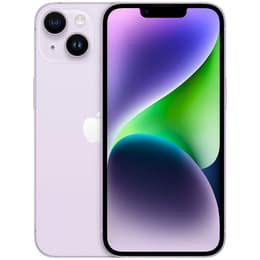
iPhone 14
iPhone 14
Starting at

Refurbished price:A$468.00

Versus A$1,049.00 new

See options

Ratings

The Samsung Galaxy Z Fold6, a foldable smartphone released in July 2024, and the Apple iPhone 14, a traditional slab smartphone launched in September 2022, represent distinct approaches to mobile technology. While the Z Fold6 offers a versatile, expansive screen experience through its innovative folding design, the iPhone 14 provides a streamlined, conventional smartphone experience. Both devices operate on their respective mature ecosystems, Android for the Z Fold6 and iOS for the iPhone 14, each offering a unique software environment.

Scores

Durability

The expected practical lifespan of a smartphone is influenced by its initial release date, software support, and physical resilience.

  • Release Timeline: The Galaxy Z Fold6, having been released in July 2024, benefits from a more recent launch compared to the iPhone 14, which debuted in September 2022. This difference in release dates means the Z Fold6 is a newer device in the market.
  • Software Longevity: Samsung has committed to providing seven years of operating system updates for the Galaxy Z Fold6, ensuring extended software support. The iPhone 14, running on iOS, typically receives major software updates for approximately five to six years from its release, meaning its software support will conclude sooner than that of the Z Fold6.
  • Physical Durability: The iPhone 14 features a Ceramic Shield front cover and an IP68 rating for dust and water resistance, indicating a high level of protection against submersion. The Galaxy Z Fold6, with its foldable design, has an IP48 rating, offering dust protection and water resistance, though its inner display uses Ultra Thin Glass (UTG) which, while improved, is still more susceptible to scratches than traditional smartphone glass.

Release year

2024

2022

Compatible with latest Update

Yes

Yes

Operating system

Android

iOS

Foldable

Yes

No

Performance

Performance in daily use is a key factor, impacting how smoothly applications run and how efficiently tasks are handled.

  • Processing Power: The Galaxy Z Fold6 is equipped with a current-generation processor, allowing it to handle demanding applications, intensive multitasking, and advanced mobile gaming with notable responsiveness. The iPhone 14 utilizes a previous-generation processor, which still delivers smooth performance for everyday tasks and most applications, but may show limitations with the most graphically intensive games or future high-demand software.
  • Multitasking Capability: With 12 GB of RAM, the Galaxy Z Fold6 offers substantial capacity for running multiple applications simultaneously and switching between them without interruption. The iPhone 14, featuring 6 GB of RAM, manages multitasking effectively for typical user scenarios, though the Z Fold6 provides more headroom for power users.
  • Storage Options: Both devices offer a range of internal storage capacities to suit different user needs. The Galaxy Z Fold6 is available with 256 GB, 512 GB, or 1 TB of storage, while the iPhone 14 comes in 128 GB, 256 GB, and 512 GB configurations.

Memory (GB)

12 GB

6 GB

Screen quality

The display is the primary interface for interaction, and its quality significantly influences the user experience.

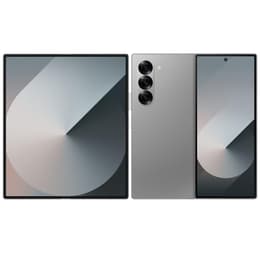
  • Display Technology and Size: The Galaxy Z Fold6 features two Dynamic AMOLED 2X displays: a 7.6-inch main foldable screen and a 6.3-inch cover screen, both offering vibrant colors and deep blacks. The iPhone 14 has a single 6.1-inch Super Retina XDR OLED display, also known for its color accuracy and contrast. The Z Fold6's foldable design provides a much larger canvas for content consumption and productivity when unfolded.
  • Refresh Rate and Brightness: Both the main and cover displays of the Galaxy Z Fold6 feature an adaptive 120Hz refresh rate, contributing to smoother scrolling and more fluid animations. These screens also boast a peak brightness of up to 2600 nits, ensuring good visibility in various lighting conditions. The iPhone 14's display operates at a 60Hz refresh rate and offers a peak brightness of 1200 nits for HDR content, providing a clear viewing experience but without the same level of fluidity or extreme brightness.
  • Resolution and Clarity: The Galaxy Z Fold6's main display has a resolution of 2160 x 1856 pixels, while its cover screen is 2376 x 968 pixels. The iPhone 14 features a 2532 x 1170-pixel resolution at 460 pixels per inch. Both devices offer sharp and clear visuals for text and images.

Resolution

1856 x 2160

1170 x 2532

Screen type

Foldable Dynamic LTPO AMOLED 2X

Super Retina XDR OLED

Audiovisual

Camera capabilities are a significant consideration for many users, influencing the quality of photos and videos captured.

  • Rear Camera Systems: The Galaxy Z Fold6 is equipped with a versatile triple-camera system on the rear, including a 50 MP wide-angle lens with optical image stabilization (OIS), a 12 MP ultra-wide lens, and a 10 MP telephoto lens with 3x optical zoom and OIS. The iPhone 14 features a dual-camera system with a 12 MP main wide-angle lens with sensor-shift OIS and a 12 MP ultra-wide lens. The Z Fold6 offers greater flexibility with its dedicated telephoto lens for zoomed shots.
  • Front-Facing Cameras: The Z Fold6 includes a 10 MP camera on its cover screen and a 4 MP under-display camera on its main foldable screen, providing options for selfies and video calls in different form factors. The iPhone 14 has a 12 MP TrueDepth front camera with autofocus, designed for clear selfies and secure facial recognition.
  • Video Recording and Features: Both devices are capable of high-quality video recording. The Galaxy Z Fold6 supports 8K video recording at 30 frames per second from its main camera and 4K at 60 frames per second from most cameras. It also includes AI-based image processing and features like Nightography and Pro mode. The iPhone 14 offers 4K Dolby Vision HDR video recording up to 60 frames per second, along with Cinematic mode for depth-of-field effects and Action mode for stabilized footage.

Main camera

50 megapixels

12 megapixels

Front camera

4 megapixels

12 megapixels

Miscellaneous

Beyond core features, several practical elements contribute to the overall user experience and device utility.

  • Connectivity and Ports: Both devices support 5G connectivity and Wi-Fi 6 for fast wireless internet access. The Galaxy Z Fold6 uses a USB-C port for charging and data transfer, aligning with a widely adopted standard. The iPhone 14 continues to use Apple's proprietary Lightning port.
  • Biometric Security: The Galaxy Z Fold6 typically incorporates a side-mounted fingerprint sensor for secure unlocking. The iPhone 14 relies on Face ID, Apple's facial recognition system, for biometric authentication.
  • Dimensions and Handling: When folded, the Galaxy Z Fold6 measures 153.5 x 68.1 x 12.1 mm and weighs 239 g, offering a compact yet thicker profile. Unfolded, it becomes a larger, thinner tablet-like device. The iPhone 14 is a more traditional smartphone at 146.7 x 71.5 x 7.8 mm and 172 g, making it lighter and more pocketable.

Weight

239 oz

172 oz

Screen size (in)

7.6

6,1

Network

5G

5G

SIM card

Dual Physical SIM + eSIM

Physical SIM + eSIM

Carrier compatibility

Unlocked

Unlocked

The Samsung Galaxy Z Fold6 and iPhone 14 cater to different user preferences, each excelling in distinct areas. User feedback for the Z Fold6 often praises its innovative foldable display, which transforms a compact device into a large screen for enhanced productivity and media consumption. Its advanced processor and extensive RAM are frequently highlighted for delivering a smooth and powerful experience, especially for demanding applications and multitasking. Criticisms sometimes revolve around its folded thickness and the inherent durability considerations of a foldable screen, though improvements are noted with each generation.

The iPhone 14 is generally lauded for its consistent performance, reliable camera system, and the intuitive nature of its iOS operating system. Users appreciate its robust build quality and dependable battery life for a full day of use. Common observations include its 60Hz display refresh rate, which some users find less fluid compared to higher refresh rate screens, and the continued use of the Lightning port.

Users prioritizing a large, versatile display for productivity, media, and a cutting-edge form factor, coupled with long-term software support, may find the Galaxy Z Fold6 well-suited to their needs. Its powerful internals and advanced camera system also appeal to those seeking a high-performance Android device. Conversely, users who value a traditional, compact smartphone experience with a highly polished operating system, strong ecosystem integration, and proven durability will likely lean towards the iPhone 14. Both devices offer compelling features, and for those considering a quality-assured refurbished option, both models are available, providing an eco-friendly alternative to new purchases.

See all articles

Our recent comparisons