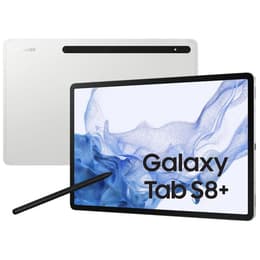
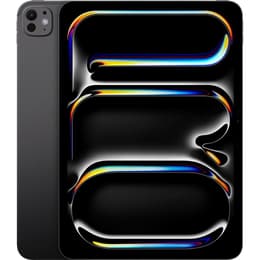

Galaxy Tab S8 (11.0", 2022) vs iPad Pro (2024, M4 series)

Galaxy Tab S8 (11.0", 2022)
Starting at

Refurbished price:A$632.00

Versus A$639.00 new

See options
iPad Pro (2024, M4 series)
Starting at

Refurbished price:A$1,359.00

Versus A$1,617.83 new

See options

The Samsung Galaxy Tab S8, released in 2022, and the Apple iPad Pro M4 series, launched in 2024, represent two distinct approaches to high-performance tablets. While both devices offer premium experiences for productivity and entertainment, they differ significantly in their operating systems, display technologies, and overall performance capabilities. The Galaxy Tab S8 operates on Android, providing a versatile ecosystem, whereas the iPad Pro M4 runs on iPadOS, known for its optimized applications and integration within the Apple ecosystem.

Scores

Durability

The expected lifespan of a tablet is influenced by factors such as software support, physical durability, and ease of repair. These elements contribute to how long a device remains functional and secure for daily use.

  • Software Longevity: The Galaxy Tab S8, released in February 2022, was promised four major Android OS updates and five years of security updates, with OS updates expected to conclude around 2026 and security updates extending into 2027. The iPad Pro M4, launched in May 2024, typically receives iPadOS updates for a period of five to seven years from its release, suggesting a longer period of manufacturer support.
  • Repairability: The Galaxy Tab S8 received a repairability score of 5.5 out of 10. The iPad Pro M4 received a score of 5 out of 10 from iFixit, noting that while internal components are accessible, the ultra-thin design and the risk of damaging the expensive display during screen removal make repairs difficult. However, the M4 iPad Pro features improved access for battery replacement compared to previous iPad generations.
  • Physical Durability: Both devices feature aluminum frames, contributing to their structural integrity. The Galaxy Tab S8 Ultra, a larger variant, demonstrated resilience in durability tests, suggesting a robust build across the series. The 11-inch iPad Pro M4 is notably thinner and lighter, which can influence its perceived portability and handling.

Release year

2022

2024

Compatible with latest Update

Yes

Yes

Operating system

Android

iPadOS

Performance

Performance is a key differentiator, with both tablets offering robust capabilities for various tasks, though with varying levels of raw processing power and efficiency.

  • Processing Power: The Galaxy Tab S8 is powered by a Qualcomm Snapdragon 8 Gen 1 processor, which provides strong performance for everyday tasks, multitasking, and gaming. The iPad Pro M4 features the Apple M4 chip, designed to deliver high performance and efficiency, making it well-suited for demanding creative applications, complex workflows, and advanced gaming.
  • System Responsiveness: Users of the Galaxy Tab S8 generally report a smooth and responsive experience for daily use. The iPad Pro M4 is noted for its fast app launches, seamless transitions between tasks, and ability to handle intensive workloads without significant slowdowns.
  • Storage and Memory: Both tablets offer various storage configurations. The iPad Pro M4 offers up to 16GB of RAM in higher storage configurations, while the Galaxy Tab S8 offers up to 12GB of RAM, impacting their capacity for extensive multitasking and handling large files.

Memory (GB)

8 GB

8 GB

Screen quality

The display is a primary interface for tablets, influencing everything from media consumption to detailed creative work. Differences in display technology and specifications can significantly alter the visual experience.

  • Display Technology: The Galaxy Tab S8 features an 11-inch LTPS TFT LCD panel. This technology provides clear visuals and is considered bright and vivid by users. The iPad Pro M4 utilizes a Tandem OLED display, marketed as Ultra Retina XDR, which delivers deep blacks, vibrant colors, and high contrast.
  • Resolution and Clarity: The Galaxy Tab S8 offers a resolution of 2560x1600 pixels. The 11-inch iPad Pro M4 has a 2420x1668 pixel resolution. Both displays offer excellent resolution for sharp text and detailed images.
  • Brightness and Refresh Rate: Both tablets feature a 120Hz refresh rate, contributing to smoother scrolling and more fluid motion on screen. The iPad Pro M4 offers significantly higher peak brightness, reaching 1000 nits for SDR content and up to 1600 nits for HDR content, which is beneficial for outdoor use and HDR media.

Resolution

1600x2560

2420 x 1668

Pixel density

280ppp

264ppp

Audiovisual

Tablet cameras are often used for video calls, document scanning, and occasional photography, with both devices offering capable systems.

  • Camera System: The Galaxy Tab S8 features a dual rear camera setup with a 13MP wide lens and a 6MP ultrawide lens, alongside a 12MP ultrawide front-facing camera. The iPad Pro M4 includes a 12MP wide rear camera with a LiDAR Scanner and a 12MP ultrawide front camera, which is repositioned to the landscape orientation.
  • Photography Performance: The Tab S8's cameras perform well in decent lighting conditions, with the front camera offering an auto-framing feature for video calls. However, its low-light performance can be a limitation. The iPad Pro M4's rear camera is considered capable for general use, but its image quality is not on par with dedicated smartphone cameras. The front camera, while useful for Face ID and video conferencing, has been described by some users as grainy.
  • Video Capabilities: Both tablets are capable of recording video at up to 4K resolution. The iPad Pro M4's camera system supports features like 4K ProRes video capture, catering to creative professionals.

Miscellaneous

Beyond core performance and display, several practical elements contribute to the overall user experience and suitability for different needs.

  • Connectivity and Ports: Both tablets support modern wireless standards, including Wi-Fi 6E and Bluetooth 5.2 (Tab S8) or 5.3 (iPad Pro M4), with optional 5G connectivity. The Galaxy Tab S8 uses a USB-C 3.2 port, while the iPad Pro M4 features a USB-C port with Thunderbolt / USB 4 support, offering faster data transfer speeds and broader external display compatibility.
  • Stylus and Biometrics: The Galaxy Tab S8 includes the S Pen stylus in the box, which is praised for its functionality and integration with the tablet's software. The Apple Pencil Pro and Apple Pencil (USB-C) are sold separately for the iPad Pro M4. For security, the Tab S8 uses a side-mounted fingerprint sensor, while the iPad Pro M4 features Face ID.
  • Design and Handling: The Galaxy Tab S8 measures 6.3mm thick and weighs 503g. The 11-inch iPad Pro M4 is notably thinner at 5.3mm and weighs 444g, making it one of the thinnest and lightest tablets available. Both devices feature an aluminum build.

Weight

507 oz

444 oz

Screen size (in)

11.0

11

Network

Wi-Fi + 5G

Wi-Fi

Carrier compatibility

Unlocked

Without SIM Port

User sentiment for the Galaxy Tab S8 often highlights its value proposition, particularly the inclusion of the S Pen and the versatility offered by Android's DeX mode for a desktop-like experience. Its vibrant LCD screen and solid battery life are also frequently mentioned as positives. However, some users note that the Android app ecosystem is not always as optimized for tablets as iPadOS, and its low-light camera performance can be a limitation.

The iPad Pro M4 receives considerable acclaim for its stunning OLED display, which offers deep blacks and vibrant colors, making it ideal for creative professionals and media enthusiasts. Its raw processing power is consistently praised for handling demanding tasks with ease. Criticisms sometimes revolve around the camera quality, which some users find to be less impressive than smartphone cameras, and the additional cost of essential accessories like the Apple Pencil.

Users prioritizing an included stylus, the flexibility of the Android ecosystem, and a capable tablet for general productivity and entertainment may find the Galaxy Tab S8 well-suited to their needs. Conversely, users who require maximum performance for professional creative work, a superior display technology, and deep integration within the Apple ecosystem will likely lean towards the iPad Pro M4. Both devices offer compelling experiences, and considering a quality-assured refurbished option can provide an eco-friendly alternative for either choice.


See all articles

Our recent comparisons