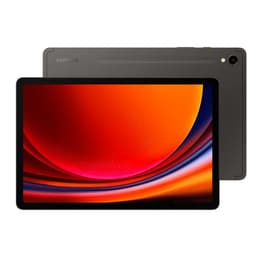
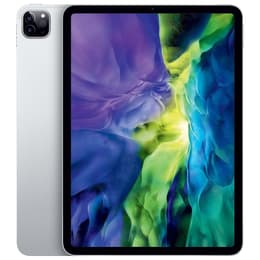

Galaxy Tab S9 (11.0", 2023) vs iPad Pro (2020, A12 series)

Galaxy Tab S9 (11.0", 2023)
Starting at

Refurbished price:A$869.00

Versus A$2,427.00 new

See options
iPad Pro (2020, A12 series)
Starting at

Refurbished price:A$753.00

Versus A$899.00 new

See options

The Samsung Galaxy Tab S9, released in 2023, and the Apple iPad Pro 2020, launched in March 2020, are both premium tablets designed for productivity and entertainment. While the Galaxy Tab S9 runs on Android with Samsung's One UI, the iPad Pro operates on Apple's iPadOS, offering distinct software experiences. Key differences lie in their display technology, processing power, and ecosystem integration, catering to varied user preferences.

Scores

Durability

When considering the longevity of these devices, their release timelines and software support policies are important factors. The Galaxy Tab S9, being a newer device, benefits from a more extended support window compared to the iPad Pro 2020.

  • Software Updates: The Galaxy Tab S9 is expected to receive four major Android OS updates, potentially up to Android 17, along with five years of security updates from its 2023 release. The iPad Pro 2020, having been released earlier, has already received several iPadOS updates, and while Apple is known for long-term support, its update cycle will conclude sooner than the Tab S9's.
  • Physical Durability: The Galaxy Tab S9 features an IP68 rating for water and dust resistance, a notable advantage for users seeking enhanced protection against environmental elements. The iPad Pro 2020 does not carry an official IP rating. User reports for the iPad Pro 2020 have occasionally highlighted concerns regarding its structural integrity, with some instances of bending under pressure.
  • Repairability: The Galaxy Tab S9 has a moderate repairability score, with aspects like an accessible battery being positive, though screen removal involves adhesive. The iPad Pro 2020 generally presents a lower repairability score, often due to the extensive use of adhesive and the delicate process required for screen removal.

Release year

2023

2020

Compatible with latest Update

Yes

Yes

Operating system

Android

iPadOS

Performance

Both tablets offer robust performance for a wide range of tasks, though they achieve this through different hardware architectures and operating system optimizations.

  • Processing Power: The Galaxy Tab S9 is equipped with a current-generation processor, enabling smooth multitasking, efficient handling of demanding applications, and responsive gaming experiences. The iPad Pro 2020, powered by its own custom-designed chip, also delivers strong performance for creative tasks, complex computations, and fluid navigation within its ecosystem. While both are capable, the newer processor in the Tab S9 generally offers an advantage in raw computational speed and efficiency for modern applications.
  • Multitasking and Responsiveness: The Galaxy Tab S9, with its available RAM configurations, handles multiple applications simultaneously without significant slowdowns, providing a fluid user experience. The iPad Pro 2020, with its optimized iPadOS, also excels at multitasking, allowing users to switch between apps and utilize split-screen views effectively.
  • Storage Options: The Galaxy Tab S9 offers internal storage options that can be expanded via a microSD card, providing flexibility for users who require additional space for media and documents. The iPad Pro 2020 provides various internal storage configurations, but it does not support expandable storage.

Memory (GB)

12 GB

6 GB

Screen quality

The visual experience on both tablets is a highlight, though they employ different display technologies that result in distinct characteristics.

  • Display Technology: The Galaxy Tab S9 features an 11-inch Dynamic AMOLED 2X display, known for its deep blacks, high contrast, and vibrant color reproduction. The iPad Pro 2020 utilizes an 11-inch Liquid Retina IPS LCD display, which offers accurate colors and wide viewing angles.
  • Resolution and Clarity: The Galaxy Tab S9 has a resolution of 2560 x 1600 pixels, providing sharp and detailed visuals. The iPad Pro 2020 offers a resolution of 2388 x 1668 pixels, also delivering clear and crisp images.
  • Brightness and Refresh Rate: Both tablets feature a 120Hz refresh rate, contributing to smoother scrolling and more fluid animations. The Galaxy Tab S9's AMOLED panel can achieve high brightness levels, particularly for HDR content, enhancing outdoor visibility and media consumption. The iPad Pro 2020's display also offers good brightness and features True Tone technology, which adjusts the display's white balance to match the ambient light.

Resolution

1600 x 2560

2388 x 1668

Screen type

Dynamic AMOLED 2X

Liquid Retina display

Pixel density

280ppp

264ppp

Audiovisual

While tablets are not typically primary photography devices, both models offer capable camera systems for video calls, document scanning, and casual photography.

  • Rear Camera System: The Galaxy Tab S9 includes a 13MP wide-angle rear camera. The iPad Pro 2020 features a dual-camera system on the rear, consisting of a 12MP wide lens and a 10MP ultrawide lens, complemented by a LiDAR Scanner for enhanced depth sensing and augmented reality applications.
  • Front Camera Performance: For video conferencing and selfies, the Galaxy Tab S9 is equipped with a 12MP ultrawide front camera. The iPad Pro 2020 also has a 12MP ultrawide front camera, which is well-suited for video calls and facial recognition features.
  • Video Recording and Audio: Both tablets are capable of recording high-quality video. The Galaxy Tab S9 features quad stereo speakers tuned by AKG and supports Dolby Atmos, providing an immersive audio experience. The iPad Pro 2020 also offers a four-speaker audio system and improved onboard microphones for clearer audio capture.

Miscellaneous

Beyond core specifications, several practical features and design elements differentiate these two tablets, influencing their overall user experience.

  • Connectivity: The Galaxy Tab S9 supports Wi-Fi 6E and Bluetooth 5.3, offering advanced wireless connectivity options. The iPad Pro 2020 supports Wi-Fi 6 and Bluetooth 5.0. Both offer 5G connectivity in their cellular variants.
  • Ports and Accessories: Both tablets feature a USB-C port for charging and data transfer. The Galaxy Tab S9 comes bundled with an S Pen, which is water and dust resistant, enhancing its productivity and creative capabilities. The iPad Pro 2020 supports the Apple Pencil (2nd generation) and the Magic Keyboard, which are sold separately.
  • Biometric Security and Design: The Galaxy Tab S9 incorporates an under-display fingerprint sensor for secure unlocking. The iPad Pro 2020 utilizes Face ID for biometric authentication. In terms of physical design, both tablets are slim and constructed with premium materials, though the Galaxy Tab S9 is slightly heavier than the iPad Pro 2020.

Weight

129 oz

471 oz

Screen size (in)

11.0

11

Network

Wi-Fi

Wi-Fi

Carrier compatibility

Unlocked

Without SIM Port

Choosing between the Galaxy Tab S9 and the iPad Pro 2020 depends largely on individual priorities and ecosystem preferences. Users often praise the Galaxy Tab S9 for its vibrant AMOLED display, included S Pen, and robust Android ecosystem, which offers greater customization and expandable storage. Some users, however, have reported occasional software glitches or Wi-Fi connectivity issues.

The iPad Pro 2020 is frequently lauded for its powerful performance, the extensive selection of tablet-optimized applications in the App Store, and the intuitive iPadOS experience. Criticisms sometimes point to its older processor compared to newer models and its relatively lower repairability score.

Users prioritizing a cutting-edge display, an included stylus, and the flexibility of the Android operating system with expandable storage may find the Galaxy Tab S9 well-suited to their needs. Conversely, users who value a highly optimized app ecosystem, consistent performance for creative workflows, and the long-term software support typically associated with Apple devices might lean towards the iPad Pro 2020. Both tablets represent strong choices in the premium tablet segment, and considering a quality-assured refurbished option for either device can be an eco-friendly alternative for making an informed decision.


See all articles

Our recent comparisons