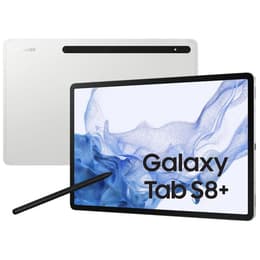
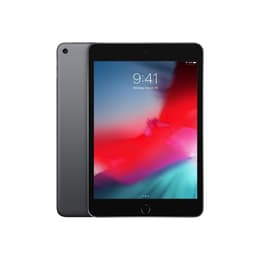

Galaxy Tab S8 (11.0", 2022) vs iPad mini 5 (2019, A12 series)

Galaxy Tab S8 (11.0", 2022)
Starting at

Refurbished price:A$632.00

Versus A$639.00 new

See options
iPad mini 5 (2019, A12 series)
Starting at

Refurbished price:A$328.00

Versus A$649.00 new

See options

The Samsung Galaxy Tab S8, released in 2022, and the Apple iPad Mini 5th Generation, launched in 2019, represent distinct approaches to the tablet experience. While the Galaxy Tab S8 offers a larger display and runs on Android, the iPad Mini 5 provides a more compact form factor powered by Apple's iPadOS. These devices cater to different user preferences, primarily differing in their operating systems, screen sizes, and overall design philosophies.

Scores

Durability

When considering the long-term usability of these tablets, their release timelines and software support are key factors. The Galaxy Tab S8, being a 2022 release, benefits from a more recent hardware platform and a longer projected software support window compared to the 2019 iPad Mini 5.

  • Software Updates: The Galaxy Tab S8 is expected to receive major Android OS updates for several more years, typically 4-5 years from release, with security updates extending further. The iPad Mini 5, released in 2019, has already received multiple iPadOS updates and its software support cycle is closer to its conclusion, though Apple generally provides updates for 5-7 years.
  • Practical Lifespan: Due to its newer components and extended software support, the Galaxy Tab S8 is likely to offer a longer practical lifespan for users who prioritize access to the latest features and security patches. The iPad Mini 5, while still functional, will gradually see fewer new features and eventually cease to receive major OS updates.
  • Repairability: Both devices present challenges for repair due to the extensive use of adhesive in their construction. The iPad Mini 5 received a low repairability score, largely due to glued components and the difficulty of battery replacement. Information on the Tab S8's repairability suggests a similar trend for modern tablets.

Release year

2022

2019

Compatible with latest Update

Yes

Yes

Operating system

Android

iPadOS

Performance

The performance capabilities of these two tablets reflect their respective release years and underlying architectures, impacting how smoothly they handle various tasks. The Galaxy Tab S8 features a more recent processor, offering enhanced power for demanding applications, while the iPad Mini 5 provides reliable performance for everyday use.

  • Processing Power: The Galaxy Tab S8 is equipped with a current-generation processor, enabling it to handle intensive applications, complex multitasking, and graphic-heavy games with fluidity. Users will experience quick app loading and seamless transitions.
  • Multitasking and Responsiveness: With higher RAM options (8GB or 12GB), the Galaxy Tab S8 excels in multitasking, allowing users to run multiple applications simultaneously without significant slowdowns. The iPad Mini 5, with 3GB of RAM, handles everyday multitasking well, but may show limitations with very demanding workflows compared to the Tab S8.
  • Storage Options: Both tablets offer various internal storage configurations. The Galaxy Tab S8 also includes a microSD card slot, allowing for expandable storage up to 1TB, which provides flexibility for users with large media libraries or extensive document needs. The iPad Mini 5 does not offer expandable storage.

Memory (GB)

8 GB

3 GB

Screen quality

The visual experience on these tablets differs significantly, primarily due to their display technologies, sizes, and refresh rates, catering to distinct user preferences. The Galaxy Tab S8 offers a larger, more fluid display, while the iPad Mini 5 provides a compact screen with high pixel density.

  • Display Technology and Size: The Galaxy Tab S8 features an 11-inch LTPS LCD panel, providing a spacious viewing area. The iPad Mini 5 has a more compact 7.9-inch IPS LCD Retina display, known for its sharp image quality.
  • Resolution and Clarity: The Tab S8 offers a resolution of 2560 x 1600 pixels, resulting in approximately 276 pixels per inch (ppi). The iPad Mini 5's smaller screen with a 2048 x 1536 resolution yields a higher pixel density of 326 ppi, contributing to very sharp text and images for its size.
  • Refresh Rate and Brightness: The Galaxy Tab S8 boasts a 120Hz adaptive refresh rate, which contributes to smoother scrolling and more fluid animations, enhancing the overall user experience. The iPad Mini 5 operates at a standard 60Hz refresh rate. Both displays offer good brightness levels, with the iPad Mini 5 capable of reaching up to 500 nits, making it suitable for outdoor use.

Resolution

1600x2560

2048 x 1536

Pixel density

280ppp

326ppp

Audiovisual

The camera systems on these tablets are designed for different primary uses, with the Galaxy Tab S8 offering more versatile options for photography and video conferencing, while the iPad Mini 5 provides capable cameras for everyday tasks.

  • Rear Camera Capabilities: The Galaxy Tab S8 features a dual-camera setup on the rear, including a 13MP wide-angle lens and a 6MP ultra-wide-angle lens, allowing for more photographic flexibility. The iPad Mini 5 has a single 8MP rear camera, suitable for basic photography and document scanning.
  • Front Camera Performance: For video calls and selfies, the Galaxy Tab S8 is equipped with a 12MP ultra-wide front camera, which can capture a broader field of view and supports 4K video recording. The iPad Mini 5 has a 7MP front-facing camera, which is an improvement over its predecessor and is adequate for video conferencing.
  • Video and Audio Experience: The Galaxy Tab S8 supports 4K video recording at 30fps and features quad speakers with Dolby Atmos, providing a rich audio experience for media consumption. The iPad Mini 5 records 1080p HD video and includes dual stereo speakers.

Miscellaneous

Beyond core performance and display, several practical elements differentiate these two tablets, influencing their usability and integration into daily routines. These include connectivity, physical ports, biometric security, and overall design.

  • Connectivity and Ports: The Galaxy Tab S8 supports newer wireless standards like Wi-Fi 6E and Bluetooth 5.2, offering faster and more stable connections, and features a versatile USB-C port. The iPad Mini 5 uses Wi-Fi 802.11ac and Bluetooth 5.0, and retains the Lightning port, along with a 3.5mm headphone jack.
  • Stylus and Biometrics: The Galaxy Tab S8 comes with the S Pen included, enhancing its utility for creative and productivity tasks. The iPad Mini 5 supports the first-generation Apple Pencil, which is sold separately. Both devices feature fingerprint recognition for secure unlocking; the Tab S8 integrates it into the power button, while the iPad Mini 5 uses Touch ID in its home button.
  • Dimensions and Build: The Galaxy Tab S8 is larger and heavier at 11 inches and approximately 503 grams, offering a more expansive workspace. The iPad Mini 5, at 7.9 inches and around 300 grams, emphasizes portability and a compact design, making it easier to handle with one hand. Both devices feature aluminum builds, with the Tab S8 adding Gorilla Glass 5 for display protection.

Weight

507 oz

308 oz

Screen size (in)

11.0

7.9

Network

Wi-Fi + 5G

Wi-Fi + 4G

Carrier compatibility

Unlocked

Unlocked

User feedback for the Galaxy Tab S8 often highlights its large, vibrant display, the inclusion of the S Pen, and its robust performance for demanding tasks and multitasking. Some users appreciate its DeX mode for a desktop-like experience. Criticisms sometimes point to the LCD panel not offering the deep blacks of OLED screens found in some other premium tablets, and for some, the 11-inch screen can feel a bit cramped for extensive productivity work.

The iPad Mini 5 is frequently praised for its exceptional portability, compact size, and its integration within the Apple ecosystem. Users value its sharp Retina display for reading and media consumption, and its still-capable performance for everyday apps despite its age. Common criticisms include its older design with thicker bezels, the continued use of the Lightning port instead of USB-C, and the fact that the Apple Pencil is a separate purchase.

Users prioritizing a larger screen for media consumption, digital art with an included stylus, or a more versatile Android-based productivity experience may find the Galaxy Tab S8 well-suited to their needs. Its newer hardware and longer software support window also make it a compelling choice for those seeking extended longevity. Conversely, users who value extreme portability, a compact reading device, or seamless integration with other Apple devices will likely lean towards the iPad Mini 5. Its smaller form factor is ideal for on-the-go use and quick access to content. Both devices offer quality-assured refurbished options, providing an eco-friendly alternative for consumers looking to make informed and sustainable choices.


See all articles

Our recent comparisons