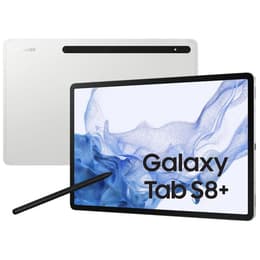
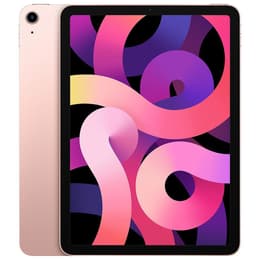

Galaxy Tab S8 (11.0", 2022) vs iPad Air 4 (2020, A14 series)

Galaxy Tab S8 (11.0", 2022)
Starting at

Refurbished price:A$632.00

Versus A$639.00 new

See options
iPad Air 4 (2020, A14 series)
Starting at

Refurbished price:A$500.00

Versus A$829.00 new

See options

The Samsung Galaxy Tab S8, released in 2022, and the Apple iPad Air (4th Generation), launched in 2020, are both prominent tablets designed for a range of productivity and entertainment tasks. While the Galaxy Tab S8 operates on the Android ecosystem, the iPad Air runs on iPadOS, offering distinct user experiences. Key differentiators between these two devices include their display refresh rates, the inclusion of a stylus, and their respective software ecosystems.

Scores

Durability

When considering the long-term usability of a tablet, factors like release timeline, software support, and repairability play a significant role. The Galaxy Tab S8 was released in February 2022, making it a newer device compared to the iPad Air (4th Generation), which launched in October 2020.

  • OS Support: Apple typically provides extensive software support for its devices, with the iPad Air (2020) being upgradable to iPadOS 18.1. Samsung has committed to providing Android version upgrades for the Galaxy Tab S8 up to Android 16 and security updates through the Android 17 cycle. This means the Galaxy Tab S8, being a more recent release, will likely receive software updates for a longer period from the current date.
  • Practical Lifespan: Both tablets are built with durable materials, featuring aluminum frames and backs. The practical lifespan for either device is largely tied to the duration of software and security updates, ensuring compatibility with new applications and protection against vulnerabilities.
  • Repairability: While specific repairability scores can vary, both manufacturers design their tablets with a certain level of complexity, which can influence the ease and cost of repairs.

Release year

2022

2020

Compatible with latest Update

Yes

Yes

Operating system

Android

iPadOS

Performance

The performance of a tablet is crucial for handling demanding applications, multitasking, and gaming. Both the Galaxy Tab S8 and the iPad Air (2020) are equipped with powerful internal components designed to deliver a smooth user experience.

  • Processing Power: The Galaxy Tab S8 features a current-generation octa-core processor, paired with either 8GB or 12GB of RAM. This configuration allows it to handle intensive applications and multitasking efficiently. The iPad Air (2020) is powered by a robust chip with a hexa-core CPU and 4-core graphics processing, accompanied by 4GB of RAM. Users report that both devices offer seamless performance across various applications.
  • Storage Options: The Galaxy Tab S8 offers 128GB or 256GB of internal storage, with the added flexibility of expanding storage up to 1TB via a microSD card. The iPad Air (2020) comes with either 64GB or 256GB of internal storage, but it does not support expandable storage.
  • Multitasking and Responsiveness: Both tablets are designed for responsive operation. The Galaxy Tab S8, with its higher RAM options, can manage numerous applications running simultaneously, and its Android operating system offers flexible window management. The iPad Air (2020) also provides a fluid experience for everyday tasks and demanding apps, with its optimized iPadOS.

Memory (GB)

8 GB

4 GB

Screen quality

The display is a primary interaction point for tablets, influencing everything from media consumption to productivity. Both the Galaxy Tab S8 and the iPad Air (2020) offer high-quality screens, but with distinct characteristics.

  • Display Technology and Resolution: The Galaxy Tab S8 features an 11-inch LCD display with a resolution of 2560 x 1600 pixels, resulting in a pixel density of 276 pixels per inch. The iPad Air (2020) comes with a 10.9-inch Liquid Retina IPS LCD display, offering a resolution of 2360 x 1640 pixels at 264 pixels per inch. Both provide clear and vibrant visuals for various content.
  • Refresh Rate: A notable difference lies in the refresh rate. The Galaxy Tab S8 boasts a 120Hz refresh rate, which contributes to smoother scrolling and a more fluid visual experience, particularly in fast-paced content or when navigating the interface. The iPad Air (2020) has a standard 60Hz refresh rate.
  • Brightness and Viewing Experience: Both displays offer good brightness levels suitable for indoor and outdoor use. The iPad Air (2020) includes True Tone technology, which adjusts the display's color and intensity to match the ambient light, providing a more natural viewing experience.

Resolution

1600x2560

2360 x 1640

Pixel density

280ppp

264ppp

Audiovisual

While tablets are not typically primary photography devices, their camera systems are important for video calls, document scanning, and casual photography. Both the Galaxy Tab S8 and iPad Air (2020) are equipped with capable cameras and audio features.

  • Camera System: The Galaxy Tab S8 features a dual rear camera setup with a 13MP wide lens and a 6MP ultrawide lens. For the front, it has a 12MP ultrawide camera with an auto-framing feature that keeps subjects centered during video calls. The iPad Air (2020) includes a 12MP wide camera on the rear and a 7MP wide front-facing camera.
  • Video Recording and Quality: Both tablets are capable of recording 4K video. The Galaxy Tab S8's front camera can record in 4K, and its ultrawide angle allows for capturing more of the surroundings.
  • Audio Experience: The Galaxy Tab S8 is equipped with quad stereo speakers tuned by AKG and supports Dolby Atmos, providing an immersive audio experience. The iPad Air (2020) features stereo speakers, which enhance media consumption. The Tab S8 also includes three microphones with noise cancellation for clearer audio during calls.

Miscellaneous

Beyond core performance and display, several practical elements contribute to the overall user experience of a tablet. These include connectivity, physical ports, biometric security, and physical design.

  • Connectivity and Ports: The Galaxy Tab S8 supports Wi-Fi 6E and Bluetooth 5.2, with optional 5G connectivity. The iPad Air (2020) supports Wi-Fi 6 and Bluetooth 5.0, also with optional cellular connectivity. Both devices utilize a USB-C port for charging and data transfer.
  • Biometric Security: Both tablets feature a side-mounted fingerprint sensor integrated into the power button for secure and convenient unlocking.
  • Design and Stylus: The Galaxy Tab S8 measures 253.8 x 165.3 x 6.3 mm and weighs around 503g to 507g. The iPad Air (2020) is slightly more compact and lighter at 247.6 x 178.5 x 6.1 mm and approximately 458g to 460g. A significant difference is that the Galaxy Tab S8 includes the S Pen stylus in the box, which magnetically attaches to the tablet for charging. The iPad Air (2020) supports the Apple Pencil 2nd Generation, which is sold separately.

Weight

507 oz

460 oz

Screen size (in)

11.0

10.9

Network

Wi-Fi + 5G

Wi-Fi + 4G

Carrier compatibility

Unlocked

Unlocked

The choice between the Galaxy Tab S8 and the iPad Air (2020) often comes down to individual preferences within the Android or iPadOS ecosystems, as well as specific feature priorities. Users frequently praise the Galaxy Tab S8 for its vibrant 120Hz display, the inclusion of the S Pen, and the flexibility of Android's multitasking capabilities and expandable storage. Some users note that while its performance is strong, it may not always match the raw benchmark scores of some Apple devices. The iPad Air (2020) is often lauded for its robust app ecosystem, the powerful and efficient performance of its processor, and its integration within the Apple ecosystem. Criticisms sometimes point to its 60Hz display and the separate purchase required for the Apple Pencil.

Users prioritizing a higher refresh rate display, the convenience of an included stylus, and the versatility of expandable storage and the Android operating system may find the Galaxy Tab S8 to be a well-suited option. Conversely, individuals who are already invested in the Apple ecosystem, value a highly optimized software experience with a vast selection of tablet-specific applications, and prefer the design language of Apple products, might lean towards the iPad Air (2020). Both tablets offer a quality-assured refurbished option, providing an eco-friendly alternative for consumers seeking reliable devices.

See all articles

Our recent comparisons