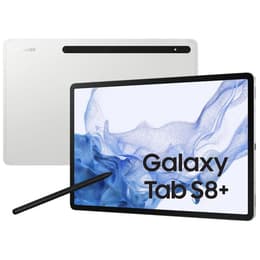
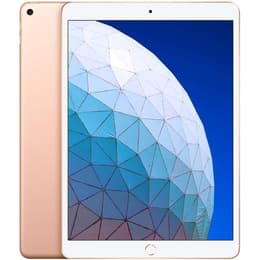

Galaxy Tab S8 (11.0", 2022) vs iPad Air 3 (2019, A12 series)

Galaxy Tab S8 (11.0", 2022)
Starting at

Refurbished price:A$632.00

Versus A$639.00 new

See options
iPad Air 3 (2019, A12 series)
Starting at

Refurbished price:A$247.00

Versus A$739.00 new

See options

The Samsung Galaxy Tab S8, released in February 2022, and the Apple iPad Air (2019), launched in March 2019, represent distinct approaches to the tablet experience. While both offer robust performance for a range of tasks, the Tab S8 features a more modern display with a higher refresh rate and a versatile camera system, running on Android. The iPad Air (2019), powered by iPadOS, provides a streamlined user experience with a focus on Apple's ecosystem and a traditional design.

Scores

Durability

The practical lifespan of a tablet is influenced by its release date, software support, and repairability. These two devices, separated by nearly three years, offer different expectations in these areas.

  • Release Timeline: The Galaxy Tab S8, being a 2022 release, benefits from a more recent hardware foundation and a longer projected software support window compared to the iPad Air (2019), which was released earlier.
  • OS Support: The Galaxy Tab S8 launched with Android 12 and is expected to receive four major OS updates and five years of security updates, extending its software relevance well into the future. The iPad Air (2019) launched with iOS 12.2 and typically receives 5-6 years of major iPadOS updates, meaning its update cycle is nearing its end.
  • Repairability: Both devices feature aluminum bodies, contributing to their structural integrity. While specific repairability scores can vary, the availability of parts and service for both brands generally supports a reasonable repair lifespan.

Release year

2022

2019

Compatible with latest Update

Yes

Yes

Operating system

Android

iPadOS

Performance

Performance is a key differentiator, with the newer Galaxy Tab S8 offering more contemporary processing power, while the iPad Air (2019) provides a capable experience for its generation.

  • Processing Power: The Galaxy Tab S8 is equipped with a powerful processor that handles demanding applications, intensive multitasking, and graphic-rich gaming smoothly. The iPad Air (2019) features a capable chip that delivers strong performance for everyday tasks, moderate gaming, and responsive app usage.
  • Multitasking & Responsiveness: The Galaxy Tab S8, with its higher RAM configurations (8GB/12GB), offers more headroom for extensive multitasking and keeping numerous applications open simultaneously without slowdowns. The iPad Air (2019) typically comes with 3GB of RAM, which is sufficient for general multitasking but may show limitations with a large number of demanding apps running concurrently.
  • Storage Options: The Galaxy Tab S8 provides 128GB or 256GB of internal storage and supports microSD card expansion up to 1TB, offering flexible storage solutions. The iPad Air (2019) is available with 64GB or 256GB of internal storage, but does not offer expandable storage.

Memory (GB)

8 GB

3 GB

Screen quality

The visual experience on these tablets differs significantly, primarily due to display technology and refresh rate.

  • Display Technology & Size: The Galaxy Tab S8 features an 11-inch LTPS TFT LCD with a resolution of 2560 x 1600 pixels, providing a clear and detailed image. The iPad Air (2019) has a 10.5-inch Retina IPS LCD with a resolution of 2224 x 1668 pixels, known for its color accuracy and wide viewing angles.
  • Refresh Rate & Smoothness: A notable difference is the refresh rate; the Galaxy Tab S8 offers a 120Hz refresh rate, resulting in smoother scrolling and more fluid animations, particularly noticeable in fast-paced content and gaming. The iPad Air (2019) features a standard 60Hz refresh rate, which provides a consistent visual experience for most everyday tasks.
  • Brightness & Color: Both tablets offer a peak brightness of around 500 nits, ensuring good visibility in various lighting conditions. The iPad Air (2019) also includes True Tone technology, which adjusts the display's white balance to match the ambient light, and supports a wide color (P3) gamut for more vibrant and accurate colors.

Resolution

1600x2560

2224 x 1668

Pixel density

280ppp

264ppp

Audiovisual

While tablets are not typically primary photography devices, their camera systems are important for video calls, document scanning, and casual photography.

  • Rear Camera Capabilities: The Galaxy Tab S8 features a dual rear camera setup with a 13MP wide lens and a 6MP ultrawide lens, offering more versatility for different shots. The iPad Air (2019) has a single 8MP wide rear camera, suitable for basic photography and document capture.
  • Front Camera & Video Calls: For video conferencing and selfies, the Galaxy Tab S8 includes a 12MP ultrawide front camera, which can capture a broader field of view. The iPad Air (2019) is equipped with a 7MP front camera.
  • Video Recording: The Galaxy Tab S8 is capable of recording video up to 4K resolution at 30 frames per second with its rear camera, and 1080p at 30fps with its front camera. The iPad Air (2019) records video at 1080p at 30fps for both its front and rear cameras.

Miscellaneous

Beyond core specifications, several practical features contribute to the overall user experience and device utility.

  • Connectivity & Ports: The Galaxy Tab S8 supports newer connectivity standards like Wi-Fi 6E and Bluetooth 5.2, and features a USB-C 3.2 port for faster data transfer and charging. The iPad Air (2019) uses Wi-Fi 5 (802.11ac) and Bluetooth 5.0, and includes a Lightning port along with a 3.5mm headphone jack, which is absent on the Tab S8.
  • Biometric Security: For secure unlocking, the Galaxy Tab S8 integrates a fingerprint sensor into its power button and offers facial recognition. The iPad Air (2019) relies on Touch ID, a fingerprint sensor embedded in the home button.
  • Design & Handling: The Galaxy Tab S8 weighs approximately 503g and measures 6.3mm thick, while the iPad Air (2019) is slightly lighter at 456g and thinner at 6.1mm. Both devices feature an aluminum body construction, contributing to a premium feel and durability.

Weight

507 oz

464 oz

Screen size (in)

11.0

10.5

Network

Wi-Fi + 5G

Wi-Fi + 4G

Carrier compatibility

Unlocked

Unlocked

User feedback for the Galaxy Tab S8 often praises its vibrant display with a high refresh rate, the inclusion of the S Pen stylus, and its strong performance for productivity and entertainment. Some users appreciate the flexibility of the Android ecosystem and expandable storage. Criticisms sometimes point to the LCD panel not being as vibrant as AMOLED alternatives found in other premium tablets, and the Android tablet app ecosystem still maturing compared to iPadOS.

The iPad Air (2019) is frequently lauded for its reliable performance, consistent iPadOS experience, and solid battery life. Users often highlight its compatibility with the first-generation Apple Pencil and Smart Keyboard as beneficial for creative and productivity tasks. Common concerns include the older design with larger bezels, the Lightning port instead of USB-C, and the lack of a high refresh rate display.

Users prioritizing a modern display with a high refresh rate, expandable storage, and the flexibility of the Android operating system may find the Galaxy Tab S8 well-suited to their needs. Those who value a consistent and intuitive user experience within the Apple ecosystem, along with a traditional headphone jack and Touch ID, may lean toward the iPad Air (2019). Both devices offer a quality-assured refurbished option, providing an eco-friendly alternative for consumers.

See all articles

Our recent comparisons