
iPhone
Compare models
Differences at a glance
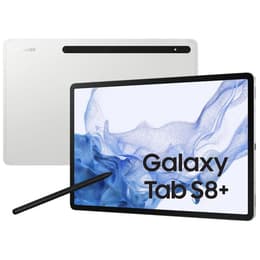
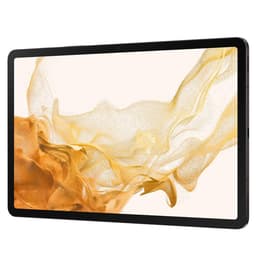
The Galaxy Tab S8 (11.0", 2022) and the Galaxy Tab S8+ (12.4", 2022) are high-performance Android tablets released by Samsung in early 2022. While they share identical internal processing hardware and software ecosystems, they differ significantly in physical dimensions, screen technology, and battery capacity. Both devices operate on the Android platform with Samsung's customized interface layer, delivering a consistent software experience tailored for productivity and media consumption. Choosing between the two models largely depends on whether portability or screen workspace takes priority for daily routines.
Both tablets share the same release timeline from 2022 and benefit from Samsung's comprehensive software update commitment, ensuring long-term utility and security support. Physical maintenance and repair ease are comparable across both chassis designs, with robust aluminum construction supporting everyday wear and tear.
Release year
Compatible with latest Update
Operating system
Underneath the exterior, both devices feature identical core hardware configurations, delivering smooth multitasking and responsive handling for demanding applications. Storage expandability via microSD cards is supported identically on both variants to accommodate large media libraries.
The display department highlights the most prominent physical divergence between the two models, changing how media viewing and document editing feel in practice. Both options maintain a smooth 120Hz refresh rate that ensures fluid scrolling and responsive stylus interaction.
Resolution
Screen type
Pixel density
Both tablets feature identical front and rear camera layouts designed primarily for document scanning, video calls, and casual snapshots rather than professional photography. Media consumption features and audio output are robust across both choices.
Connectivity options and accessory support remain uniform across both models, ensuring seamless integration into existing device ecosystems. Physical handling characteristics differ due to variations in footprint and mass.
Weight
Screen size (in)
Network
Carrier compatibility
Connector
User discussions across community forums frequently praise both tablets for their robust build quality, responsive stylus inclusion, and smooth display refresh rates. Common criticisms occasionally mention that the processor generates warmth during extended high-intensity gaming sessions, and that the physical dimensions of the larger variant can feel unwieldy during casual handheld reading. Users prioritizing maximum portability, a lighter everyday carry, and one-handed reading comfort often lean toward the Galaxy Tab S8. Conversely, users prioritizing expansive screen real estate for split-screen multitasking, digital art creation, or cinematic viewing frequently prefer the Galaxy Tab S8+. Exploring a quality-assured refurbished option provides a sustainable choice for acquiring either model while reducing electronic waste. Ultimately, matching the device size to your primary daily use case ensures a satisfying long-term experience without performance compromises.