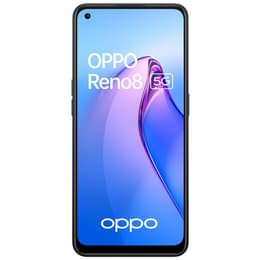
Motorola Edge 30 Pro vs Oppo Reno 8

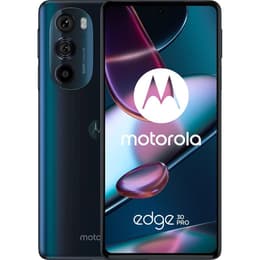
Motorola Edge 30 Pro
Starting at

Refurbished price:A$291.72

Versus A$2,709.00 new

See options
Oppo Reno 8
Oppo Reno 8
Starting at

Refurbished price:A$246.00

Versus A$1,159.00 new

See options

The Motorola Edge 30 Pro, released in early 2022, and the Oppo Reno 8, launched in mid-2022, are both Android smartphones that cater to different user priorities. While the Edge 30 Pro emphasizes high-end processing power and a very high refresh rate display, the Reno 8 focuses on a balanced user experience with rapid charging capabilities and a sleek design. Both devices run on the Android operating system, with Motorola offering a near-stock experience and Oppo utilizing its ColorOS overlay.

Scores

Durability

When considering the long-term usability of these devices, their release timelines and software support policies are key factors.

  • Release and Software Support: The Motorola Edge 30 Pro was released in February 2022, while the Oppo Reno 8 followed in May/July 2022. Motorola initially promised two major Android OS upgrades and three years of security updates for the Edge 30 series. The Oppo Reno 8, launched with Android 12, was part of an older policy that typically provided two major Android updates, meaning it likely received Android 13 and 14 but is not expected to receive Android 15.
  • Practical Lifespan: Users can expect the Motorola Edge 30 Pro to receive security patches for a slightly longer duration compared to the Oppo Reno 8, potentially extending its secure operational life. Both devices are built with durable materials, though the Edge 30 Pro features Gorilla Glass 3 on the front and Gorilla Glass 5 on the back, while the Reno 8 uses Gorilla Glass 5 for its front display.
  • Repairability: While specific repairability scores can vary by region and component availability, both devices are designed with modern smartphone construction, suggesting that professional repair services would be the primary option for significant damage.

Release year

2022

2022

Operating system

Android

Android

Foldable

No

No

Performance

The performance of a smartphone is largely determined by its internal components and how efficiently its software utilizes them for daily tasks and demanding applications.

  • Processing Power: The Motorola Edge 30 Pro is equipped with a high-end processor, enabling it to handle graphically intensive games and complex applications with considerable ease and responsiveness. The Oppo Reno 8 features a mid-range processor that provides smooth performance for everyday use, multitasking, and most popular games without significant slowdowns.
  • Multitasking and Responsiveness: Both devices offer configurations with ample RAM, allowing for efficient multitasking and quick switching between applications. The Edge 30 Pro's more powerful hardware generally translates to a snappier overall system responsiveness, particularly noticeable during heavy usage.
  • Battery Behavior: The Motorola Edge 30 Pro houses a 4800mAh battery, supporting 68W fast charging and wireless charging. However, some users have reported that its powerful processor can lead to faster battery drain, requiring more frequent charging for heavy users. The Oppo Reno 8 comes with a 4500mAh battery and features 80W fast charging, which users note can fully charge the device rapidly. For light to moderate users, the Reno 8's battery can often last a full day.

Memory (GB)

8 GB

8 GB

Screen quality

The display is a primary interface for smartphone interaction, and both devices offer distinct visual experiences.

  • Display Technology and Size: The Motorola Edge 30 Pro features a larger 6.7-inch OLED display, providing deep blacks and vibrant colors. The Oppo Reno 8 has a 6.43-inch AMOLED display, also known for its rich color reproduction and contrast.
  • Refresh Rate and Smoothness: A key differentiator is the refresh rate; the Edge 30 Pro boasts a 144Hz refresh rate, which results in exceptionally smooth scrolling and fluid animations, enhancing the visual experience, especially in fast-paced content. The Oppo Reno 8 offers a 90Hz refresh rate, which is smoother than standard 60Hz displays and provides a good balance for everyday interactions.
  • Clarity and Brightness: Both phones feature Full HD+ resolutions (2400x1080 pixels), ensuring sharp text and clear images. The Edge 30 Pro's OLED panel generally offers good brightness for various lighting conditions. The Reno 8's AMOLED display also provides good visibility, though some users note its peak brightness might be less ideal under direct, bright sunlight.

Resolution

1080 x 2400

1080x2400

Audiovisual

Camera capabilities are a significant consideration for many users, and these two smartphones approach photography with different strengths.

  • Rear Camera Systems: The Motorola Edge 30 Pro features a versatile triple-camera setup on the rear, including a 50-megapixel main sensor with optical image stabilization (OIS) and a 50-megapixel ultrawide sensor, complemented by a 2-megapixel depth sensor. The Oppo Reno 8 also has a triple rear camera system, with a 50-megapixel main sensor, a 2-megapixel macro lens, and a 2-megapixel depth sensor.
  • Photography Performance: The Edge 30 Pro's main camera is capable of capturing detailed images, and its ultrawide sensor offers broader perspectives. However, user feedback on its camera performance, particularly in low-light conditions and overall software processing, has been mixed, with some finding it inconsistent. The Reno 8's main camera performs well in good lighting for everyday shots, but some users have noted issues with over-processed photos, less effective edge detection in portrait mode, and shutter lag, especially with moving subjects.
  • Front Camera and Video: For selfies, the Edge 30 Pro features a high-resolution 60-megapixel front camera. The Reno 8 comes with a 32-megapixel front camera. Both devices are capable of recording high-quality video, with the Edge 30 Pro supporting 4K HDR10+ video capture.

Miscellaneous

Beyond core features, several practical elements contribute to the overall user experience and daily convenience.

  • Connectivity and Ports: Both smartphones support 5G connectivity, enabling faster mobile data speeds. The Motorola Edge 30 Pro includes Wi-Fi 6E for advanced wireless networking, while the Oppo Reno 8 supports Wi-Fi 5 (802.11ac). Both devices utilize a USB-C port for charging and data transfer. The Edge 30 Pro also features Bluetooth 5.2, while the Reno 8 has Bluetooth 5.3.
  • Biometric Security and Build: The Edge 30 Pro incorporates a side-mounted fingerprint sensor, while the Reno 8 uses an in-display optical fingerprint sensor. The Edge 30 Pro has a glass front and back with a plastic frame, offering IP52 splash resistance. The Reno 8 also features a glass front and a plastic frame.
  • Handling and Design: The Motorola Edge 30 Pro weighs 196 grams and is 8.8mm thick. The Oppo Reno 8 is lighter at 179 grams and thinner at 7.7mm, which some users find contributes to a comfortable in-hand feel, though its angular design has been noted as potentially uncomfortable for prolonged holding without a case.

Weight

196 oz

200 oz

Screen size (in)

6,7

6,43

Network

5G

5G

SIM card

Dual Physical SIM

Dual Physical SIM

Carrier compatibility

Unlocked

Unlocked

User feedback for the Motorola Edge 30 Pro often praises its powerful performance and the fluidity of its 144Hz OLED display, making it suitable for demanding applications and gaming. However, common criticisms include inconsistent camera performance, particularly in low light, and a battery life that may not satisfy heavy users due to the high-performance processor. Some users have also reported software bugs and heating issues.

The Oppo Reno 8 is frequently lauded for its exceptionally fast 80W charging, its vibrant AMOLED display, and generally smooth performance for everyday tasks. Users appreciate its lightweight design. Conversely, criticisms often point to its camera system, which can produce over-processed images and exhibit shutter lag, as well as the presence of pre-installed applications (bloatware). Some also find its angular design less ergonomic for extended use.

Users prioritizing raw processing power, a very high refresh rate display, and a near-stock Android experience may find the Motorola Edge 30 Pro well-suited to their needs. Conversely, individuals who value rapid battery charging, a lighter design, and consistent performance for general use might lean towards the Oppo Reno 8. Both devices offer a solid smartphone experience, and choosing between them often comes down to these specific feature preferences. For those looking for an eco-friendly alternative, quality-assured refurbished options for both models are available, providing a sustainable choice for acquiring these devices.


See all articles

Our recent comparisons