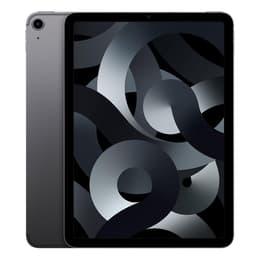

Galaxy Tab S8 (11.0", 2022) vs iPad Air 5 (2022, M1 series)

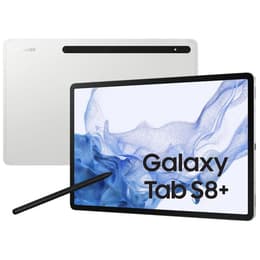
Galaxy Tab S8 (11.0", 2022)
Starting at

Refurbished price:A$632.00

Versus A$639.00 new

See options
iPad Air 5 (2022, M1 series)
Starting at

Refurbished price:A$649.00

Versus A$1,249.00 new

See options

The Samsung Galaxy Tab S8 and the Apple iPad Air (5th generation) are both prominent tablet computers released in 2022. The Galaxy Tab S8, launched in February 2022, operates on the Android ecosystem, while the iPad Air (M1 series), released in March 2022, runs on Apple's iPadOS. These devices offer distinct experiences, primarily differing in their operating systems, included accessories, and core processing power.

Scores

Durability

Evaluating the long-term usability of a tablet involves considering its release timeline, software support, and physical resilience.

  • Release and Support: The Galaxy Tab S8 was released in February 2022 and Samsung has committed to providing four Android OS upgrades and five years of security updates, potentially extending support until 2027. The iPad Air (M1 series), launched in March 2022, typically receives iPadOS updates for approximately 5-6 years from its release.
  • Software Longevity: Users prioritizing the absolute longest software support might find a slight edge with the iPad Air due to Apple's historical update consistency, though Samsung's recent commitment to extended updates for its flagship devices narrows this gap.
  • Build and Repairability: Both tablets feature a glass front with an aluminum back and frame, contributing to a premium feel and structural integrity. While specific repairability scores were not detailed, both devices are designed with a unibody construction.

Release year

2022

2022

Compatible with latest Update

Yes

Yes

Operating system

Android

iPadOS

Performance

Performance is a key differentiator, influencing how smoothly applications run, how quickly tasks are completed, and the overall responsiveness of the device.

  • Processing Power: The Galaxy Tab S8 is equipped with a powerful octa-core processor, enabling it to handle demanding applications and multitasking effectively. The iPad Air (M1 series) integrates a highly capable processor, delivering desktop-class performance that ensures smooth operation for intensive tasks like video editing and graphic design.
  • Multitasking and Responsiveness: Both tablets offer a fluid user experience for everyday tasks. The iPad Air's processor provides substantial headroom for complex workflows and high-fidelity gaming, often resulting in exceptionally smooth performance even under heavy load. The Galaxy Tab S8 also provides solid performance for multitasking and gaming, with users reporting a responsive experience.
  • Battery Behavior and Storage: The Galaxy Tab S8 features an 8000mAh battery, offering approximately 8 to 10 hours of real-world usage and up to 12-13 hours of web surfing on a single charge. It supports 45W fast charging. The iPad Air (M1 series) has a 28.6 watt-hour battery (around 7606mAh), typically providing about 10 hours of web browsing. The Galaxy Tab S8 offers 128GB or 256GB of internal storage, expandable via a microSD card. The iPad Air comes with 64GB or 256GB storage options, without expandable storage.

Memory (GB)

8 GB

8 GB

Screen quality

The visual experience is largely defined by the display technology, resolution, and refresh rate, impacting everything from reading to media consumption.

  • Display Technology and Resolution: The Galaxy Tab S8 features an 11-inch LTPS TFT LCD display with a resolution of 2560x1600 pixels, resulting in a pixel density of 276 pixels per inch. The iPad Air (M1 series) sports a 10.9-inch Liquid Retina IPS LCD display with a resolution of 2360x1640 pixels, yielding 264 pixels per inch.
  • Refresh Rate and Brightness: The Galaxy Tab S8 offers a 120Hz adaptive refresh rate, providing smoother scrolling and more fluid animations. Its display can reach a peak brightness of 480 nits. The iPad Air (M1 series) has a standard refresh rate display but offers a brightness of 500 nits.
  • Color and Viewing Experience: The iPad Air includes P3 wide color gamut support and True Tone technology, which adjusts the display's color temperature to ambient light, enhancing viewing comfort. The Galaxy Tab S8 provides 'Vivid' and 'Natural' color modes, allowing users to choose between more saturated or color-accurate visuals.

Resolution

1600x2560

2360 x 1640

Pixel density

280ppp

264ppp

Audiovisual

Both tablets offer capable camera systems, designed for a range of uses from video calls to casual photography and document scanning.

  • Rear Camera System: The Galaxy Tab S8 includes a dual rear camera setup with a 13MP main lens and a 6MP ultrawide lens. The iPad Air (M1 series) features a single 12MP wide rear camera with an f/1.8 aperture. Both are capable of 4K video recording, with the iPad Air supporting up to 60fps.
  • Front Camera and Video Conferencing: For video calls, the Galaxy Tab S8 has a 12MP ultrawide front camera, which is notably centered when the tablet is held in landscape orientation, providing a more natural framing for video conferences. The iPad Air also features a 12MP ultrawide front camera, which supports Apple's Center Stage feature, automatically keeping the user in the frame during video calls.
  • Audio Experience: The Galaxy Tab S8 is equipped with quad stereo speakers tuned by AKG and supports Dolby Atmos, providing an immersive audio experience. It also has a three-microphone setup with noise reduction for clearer audio input. The iPad Air features dual speakers, which offer clear audio for media consumption and calls.

Miscellaneous

Beyond core specifications, several practical elements contribute to the overall user experience, including connectivity, physical design, and unique features.

  • Connectivity and Ports: Both tablets offer modern connectivity options. The Galaxy Tab S8 supports Wi-Fi 6E and Bluetooth 5.2, with optional 5G connectivity. It features a USB-C 3.2 port. The iPad Air (M1 series) supports Wi-Fi 6 and Bluetooth 5.0, also with optional 5G. Its USB-C port offers faster data transfer speeds, up to 10 Gbps.
  • Physical Design and Handling: The Galaxy Tab S8 weighs 503g (Wi-Fi model) and measures 253.8 x 165.3 x 6.3 mm. The iPad Air (M1 series) is slightly lighter at 461g (Wi-Fi model) and has dimensions of 247.6 x 178.5 x 6.1 mm. Both are designed for portability and comfortable handling.
  • Unique Features and Authentication: The Galaxy Tab S8 includes an S Pen stylus in the box and features a side-mounted fingerprint sensor, along with facial recognition. The iPad Air supports the Apple Pencil 2nd generation (sold separately) and uses Touch ID integrated into the power button for biometric authentication.

Weight

507 oz

462 oz

Screen size (in)

11.0

10.9

Network

Wi-Fi + 5G

Wi-Fi + 5G

Carrier compatibility

Unlocked

Unlocked

User feedback for the Galaxy Tab S8 often highlights the value of the included S Pen, its solid battery life, and the versatility offered by Samsung's DeX mode for a desktop-like experience. The 120Hz display is also frequently praised for smooth interactions. Some common criticisms revolve around the LCD display not being as vibrant as the AMOLED panels found in its larger siblings, and the Android tablet app ecosystem sometimes being perceived as less optimized than iPadOS for certain professional applications.

For the iPad Air (M1 series), users consistently commend its powerful processor, which delivers exceptional performance for demanding creative tasks and gaming. The Center Stage feature for video calls is also a well-received addition. Criticisms sometimes point to the lack of an included stylus, the standard refresh rate display compared to some competitors, and the absence of expandable storage.

Users prioritizing an included stylus, expandable storage, and a more open operating system with desktop-like capabilities (DeX mode) may find the Galaxy Tab S8 well-suited to their needs. Conversely, individuals who require top-tier processing power for intensive creative applications, a highly optimized app ecosystem, and long-term software support might lean towards the iPad Air (M1 series). Both tablets offer compelling features, and choosing between them often comes down to individual preference for operating system and specific workflow requirements. Exploring quality-assured refurbished options for either device can provide an eco-friendly alternative for consumers.
See all articles

Our recent comparisons