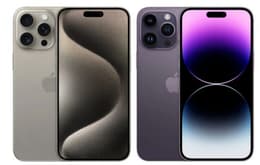

Galaxy S25 Ultra vs iPhone 14 Pro

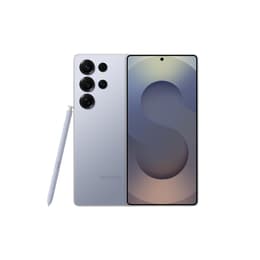
Galaxy S25 Ultra
Galaxy S25 Ultra
Starting at

Refurbished price:A$1,122.00

Versus A$2,149.00 new

See options
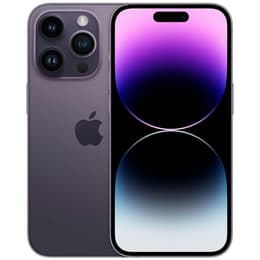
iPhone 14 Pro
iPhone 14 Pro
Starting at

Refurbished price:A$622.00

Versus A$1,749.00 new

See options

The Samsung Galaxy S25 Ultra, released in February 2025, and the Apple iPhone 14 Pro, launched in September 2022, represent distinct approaches to high-end smartphone design and functionality. While both devices offer premium experiences, they cater to different user preferences through their operating systems and hardware specializations. The Galaxy S25 Ultra operates on Android, emphasizing a larger display and advanced camera zoom capabilities, alongside integrated stylus functionality. In contrast, the iPhone 14 Pro runs on iOS, focusing on a compact form factor, a refined camera system, and a cohesive ecosystem experience.

Scores

Durability

The practical lifespan of a smartphone is influenced by its release timeline, software support, and physical durability.

  • Release Timeline: The Galaxy S25 Ultra, released in February 2025, benefits from a more recent launch, offering a longer period of current-generation hardware and software support compared to the iPhone 14 Pro, which debuted in September 2022.
  • Software Longevity: The Galaxy S25 Ultra launched with Android 15 and is expected to receive up to seven major Android upgrades, extending its software relevance well into the future. The iPhone 14 Pro, running iOS, typically receives software updates for approximately five to six years from its release, meaning its update cycle will conclude sooner than the S25 Ultra's.
  • Repairability: The Galaxy S25 Ultra has shown improvements in repairability, earning a 5 out of 10 score from iFixit, partly due to easier battery replacement with pull tabs and a modular camera design. While specific repairability scores for the iPhone 14 Pro are not as readily available, Apple has generally been improving its repair processes. Both devices feature robust build materials designed to withstand daily use.

Release year

2025

2022

Operating system

Android

iOS

Foldable

No

No

Performance

Performance in both devices is designed to handle demanding applications and multitasking, though they achieve this with different underlying architectures.

  • System Responsiveness: The Galaxy S25 Ultra, powered by a current-generation processor, delivers smooth operation for everyday tasks, quick app loading, and efficient multitasking. Users report a fluid experience, even with intensive use. The iPhone 14 Pro, featuring its own advanced chip, also provides a highly responsive user experience, with fast app launches and seamless transitions between applications.
  • Battery Behavior: The Galaxy S25 Ultra is equipped with a 5000mAh battery, providing extended usage, with some users reporting up to 1.5 days of moderate use and over six hours of screen-on time. The iPhone 14 Pro, with a 3200mAh battery, typically offers a full day of use for many users, achieving around ten hours in web browsing tests. Heavy users of the iPhone 14 Pro might find themselves needing to charge by evening.
  • Storage and Multitasking: The Galaxy S25 Ultra offers various storage configurations, including options with 12GB or 16GB of RAM, which supports extensive multitasking and keeps numerous applications active in the background without slowdowns. The iPhone 14 Pro comes with 6GB of RAM, which, combined with iOS's memory management, ensures efficient multitasking for most users.

Memory (GB)

12 GB

6 GB

Screen quality

Both smartphones feature high-quality displays, but they differ in size and peak brightness, influencing the overall viewing experience.

  • Display Technology and Clarity: The Galaxy S25 Ultra features a 6.9-inch Dynamic LTPO AMOLED 2X display, offering vibrant colors, deep blacks, and sharp detail with a 1440x3120 pixel resolution. The iPhone 14 Pro has a 6.1-inch Super Retina XDR OLED display, known for its excellent color accuracy, contrast, and a resolution of 2556 x 1179 pixels.
  • Brightness and Outdoor Visibility: The Galaxy S25 Ultra boasts a peak brightness of 2600 nits, providing exceptional visibility even in bright outdoor conditions. The iPhone 14 Pro also offers strong outdoor visibility with a peak brightness of 2000 nits. Both displays are designed to be easily viewable under direct sunlight.
  • Refresh Rate and Smoothness: Both devices feature a 120Hz adaptive refresh rate, which contributes to smooth scrolling, fluid animations, and a responsive feel during gaming and general navigation.

Resolution

1440x3120

1179 x 2556

Audiovisual

Both devices offer advanced camera systems capable of capturing high-quality photos and videos, though with different sensor configurations and processing characteristics.

  • Rear Camera Systems: The Galaxy S25 Ultra features a versatile quad-camera setup, including a 200MP main sensor, a 50MP ultrawide, a 10MP telephoto with 3x optical zoom, and a 50MP periscope telephoto with 5x optical zoom, offering extensive zoom capabilities. The iPhone 14 Pro has a triple-camera system with a 48MP main sensor, a 12MP ultrawide, and a 12MP telephoto with 3x optical zoom.
  • Photography Performance: The Galaxy S25 Ultra delivers refined and consistent results, with excellent detail and natural colors in daylight, and strong low-light performance with minimal noise. Its zoom capabilities are particularly noted for their quality. The iPhone 14 Pro excels in ideal conditions, producing outstanding photo quality with its 48MP main sensor, which is also beneficial for low-light scenarios.
  • Video Recording and Front Camera: Both phones offer high-quality video recording, with the Galaxy S25 Ultra capable of 8K video and the iPhone 14 Pro supporting 4K Cinematic mode and ProRes video. The S25 Ultra's front camera provides good skin tones, though some detail can be missing. The iPhone 14 Pro's front camera offers significantly sharper images with improved dynamic range.

Miscellaneous

Beyond core features, several practical elements differentiate these two devices in daily use.

  • Connectivity and Ports: The Galaxy S25 Ultra supports newer Wi-Fi standards (Wi-Fi 6e/7) and 5G, offering potentially faster and more stable wireless connections. It features a USB-C port. The iPhone 14 Pro supports Wi-Fi 6 and 5G, and uses a Lightning port for charging and data transfer. Neither device includes a traditional headphone jack.
  • Biometric Security and Design: The Galaxy S25 Ultra utilizes an in-display fingerprint sensor for biometric authentication. The iPhone 14 Pro relies on Face ID for secure facial recognition. The S25 Ultra also integrates an S Pen stylus, offering enhanced productivity and creative input.
  • Dimensions and Build Materials: The Galaxy S25 Ultra is a larger device, measuring 162.8 x 77.6 x 8.2 mm and weighing 218g, featuring a titanium frame and Corning Gorilla Armor 2 glass. The iPhone 14 Pro is more compact at 147.5 x 71.5 x 7.9 mm and 206g, built with a stainless steel frame and Ceramic Shield front.

Weight

218 oz

206 oz

Screen size (in)

6.9

6,1

Network

5G

5G

SIM card

Physical SIM + eSIM

Physical SIM + eSIM

Carrier compatibility

Unlocked

Unlocked

User feedback for the Samsung Galaxy S25 Ultra often highlights its impressive display, robust battery life, and smooth performance, with many appreciating the integrated S Pen and the capabilities of Galaxy AI. Some common criticisms include the placement of the in-display fingerprint sensor, the absence of a Face ID-like feature, and the lack of a charger in the box. The camera system is generally praised for its versatility and zoom, though some users note a preference for a more neutral color science.

For the iPhone 14 Pro, users frequently commend its crisp and smooth display, overall speed, and reliable battery life for a compact device. The Dynamic Island is often cited as a unique and useful feature. However, some users find the device's weight and the stainless steel frame can lead to hand fatigue, and while the camera is excellent for general use, it can face limitations with extended professional RAW shooting due to heat.

Users prioritizing a larger display, extensive camera zoom capabilities, and integrated stylus functionality may find the Galaxy S25 Ultra well-suited to their needs. Those who prefer a more compact device, a streamlined operating system, and a strong focus on a cohesive ecosystem might lean towards the iPhone 14 Pro. Both devices offer a premium smartphone experience, and considering a quality-assured refurbished option for either model can be an eco-friendly alternative.

See all articles

Our recent comparisons