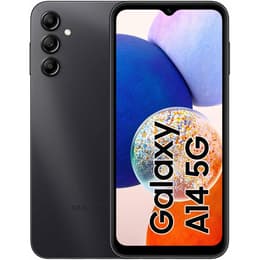


Galaxy A14 5G vs Google Pixel 7 Pro

Galaxy A14 5G
Galaxy A14 5G
Starting at

Refurbished price:A$220.00

Versus A$280.00 new

See options
Google Pixel 7 Pro
Google Pixel 7 Pro
Starting at

Refurbished price:A$412.00

Versus A$1,379.00 new

See options

The Samsung Galaxy A14 5G, released in January 2023, and the Google Pixel 7 Pro, launched in October 2022, represent distinct offerings within the Android smartphone market. While both devices operate on the Android platform, they cater to different user expectations through their hardware and software philosophies. The Pixel 7 Pro emphasizes advanced computational photography and a premium user experience, whereas the Galaxy A14 5G focuses on delivering essential smartphone functionalities with 5G connectivity.

Scores

Durability

The longevity of a smartphone is influenced by its release timeline, software support, and ease of repair. These factors determine how long a device remains functional and secure for daily use.

  • Release Timeline and OS Support: The Google Pixel 7 Pro, released in October 2022, benefits from Google's commitment to five years of both OS and security updates, extending its software lifespan significantly. The Samsung Galaxy A14 5G, launched in January 2023, is slated to receive two major Android OS upgrades and four years of security updates, typically on a quarterly schedule. This means the Pixel 7 Pro will receive software support for a longer duration.
  • Repairability: The Samsung Galaxy A14 5G demonstrates a higher degree of repairability, scoring 8 out of 10. Its design allows for relatively easy disassembly, and the battery is secured with adhesive pull tabs, simplifying replacement. In contrast, the Google Pixel 7 Pro has a repairability score of 5.5 out of 10, with battery replacement being more complex due to strong adhesives and the charging port being soldered to the main board.
  • Expected Practical Lifespan: Users prioritizing extended software support and access to the latest Android features will find the Pixel 7 Pro's longer update commitment advantageous. For those who value easier physical maintenance and component replacement, the Galaxy A14 5G offers a more accessible repair experience.

Release year

2023

2022

Compatible with latest Update

Yes

Yes

Foldable

No

No

Performance

Performance in smartphones is measured by how smoothly they handle daily tasks, from navigating apps to managing demanding applications and multitasking. The core processing capabilities and memory configurations play a significant role in the overall user experience.

  • Everyday Task Handling: The Google Pixel 7 Pro is equipped with a powerful, custom-designed processor that enables smooth operation across a wide range of applications, including graphically intensive games and complex productivity tools. It handles demanding apps and multitasking with notable responsiveness. The Samsung Galaxy A14 5G, powered by a capable octa-core processor, provides reliable performance for common tasks like web browsing, social media, and light gaming.
  • Multitasking and Responsiveness: With 12GB of RAM, the Pixel 7 Pro offers substantial capacity for keeping multiple applications open and switching between them without noticeable delays. The Galaxy A14 5G is available with 4GB, 6GB, or 8GB of RAM, which is sufficient for typical daily usage but may show limitations when running many applications simultaneously or engaging in heavy multitasking.
  • Storage and Battery Behavior: The Pixel 7 Pro comes with fast UFS 3.1 storage options up to 512GB, though it lacks expandable storage. Its 5000mAh battery provides a full day of use for many users, though its high-resolution, high-refresh-rate display can consume more power under certain conditions. The Galaxy A14 5G offers up to 128GB of internal storage, which can be expanded significantly via a microSD card, providing flexibility for media storage. Its 5000mAh battery is designed to offer extended usage, with some reports indicating it can last for a considerable duration on a single charge.

Memory (GB)

4 GB

12 GB

Screen quality

The display is a primary interface for smartphone interaction, and its quality significantly impacts the viewing experience, from casual browsing to multimedia consumption.

  • Display Technology and Clarity: The Google Pixel 7 Pro features a 6.7-inch QHD+ LTPO OLED display, offering a resolution of 3120x1440 pixels and a high pixel density of 512 PPI. This results in exceptionally sharp images, deep blacks, and vibrant colors, suitable for detailed content viewing. The Samsung Galaxy A14 5G utilizes a 6.6-inch PLS LCD panel with a 1080x2408 pixel (FHD+) resolution and approximately 400 PPI. While clear for everyday use, it does not offer the same level of contrast or color depth as an OLED display.
  • Brightness and Refresh Rate: The Pixel 7 Pro's display boasts a variable refresh rate up to 120Hz, providing smooth scrolling and fluid animations, and can reach a peak brightness of up to 1500 nits, ensuring good visibility even in bright outdoor conditions. The Galaxy A14 5G has a 90Hz refresh rate, which offers a smoother experience than standard 60Hz displays, and a peak brightness of around 480 nits, which is adequate for indoor use but may be less visible under direct sunlight.
  • Viewing Experience: Users prioritizing a premium visual experience for high-resolution media, gaming, and outdoor visibility will find the Pixel 7 Pro's display capabilities more immersive. The Galaxy A14 5G provides a clear and responsive screen that is well-suited for general daily tasks and casual media consumption.

Resolution

1080 x 2408

1440 x 3120

Screen type

PLS LCD

LTPO AMOLED

Audiovisual

Camera performance is a key differentiator for modern smartphones, encompassing the quality of photos and videos, as well as the range of features available for capturing moments.

  • Rear Camera System: The Google Pixel 7 Pro features a versatile triple-camera system, including a 50MP main sensor, a 12MP ultrawide lens, and a 48MP telephoto lens with 5x optical zoom and up to 30x Super Res Zoom. This setup, combined with Google's advanced computational photography, excels in capturing detailed images across various lighting conditions, including impressive low-light performance. The Samsung Galaxy A14 5G is equipped with a triple-camera array consisting of a 50MP main sensor, a 2MP macro lens, and a 2MP depth sensor. It performs well for everyday photography in good lighting.
  • Video Recording Capabilities: The Pixel 7 Pro offers advanced video recording, supporting up to 4K resolution at 60 frames per second across all its lenses, along with features like Cinematic Blur and 10-bit color recording for enhanced dynamic range. Its stabilization is also highly effective. The Galaxy A14 5G provides standard video recording capabilities suitable for casual capture.
  • Front Camera: For selfies and video calls, the Pixel 7 Pro includes a 10.8MP ultrawide front camera. The Galaxy A14 5G features a 13MP front camera.

Main camera

50 megapixels

50 megapixels

Front camera

13 megapixels

10.8 megapixels

Miscellaneous

Beyond core specifications, various practical elements contribute to the overall user experience, including connectivity, physical design, and additional features.

  • Connectivity and Ports: Both devices support 5G connectivity. The Google Pixel 7 Pro offers Wi-Fi 6E and Bluetooth 5.2, providing fast and stable wireless connections. It features a USB-C port but lacks a 3.5mm headphone jack. The Samsung Galaxy A14 5G supports Wi-Fi 5 and includes both a USB-C port and a 3.5mm headphone jack, offering more traditional audio connectivity.
  • Sensors and Security: The Pixel 7 Pro incorporates an in-display fingerprint scanner and facial scanning for biometric authentication, alongside Google's Titan M2 security chip for enhanced data protection. The Galaxy A14 5G features a side-mounted fingerprint sensor for secure access.
  • Design and Handling: The Pixel 7 Pro has a premium build with Gorilla Glass Victus protection for its curved display and an IP68 rating for water and dust resistance. It weighs 212g and measures 162.9 x 76.6 x 8.9 mm. The Galaxy A14 5G has a plastic back and frame, weighing 202g and measuring 167.7 x 78 x 9.1 mm. Its larger dimensions and plastic construction contribute to a different in-hand feel compared to the Pixel 7 Pro.

Weight

201 oz

212 oz

Screen size (in)

6.6

67

SIM card

Physical SIM

Physical SIM + eSIM

Carrier compatibility

Unlocked

Unlocked

The Samsung Galaxy A14 5G and the Google Pixel 7 Pro cater to distinct user needs, each offering a compelling set of features. User feedback often praises the Pixel 7 Pro for its exceptional camera capabilities, particularly its computational photography features and versatile zoom options, making it a strong choice for photography enthusiasts and those who value advanced imaging. Its vibrant, high-refresh-rate OLED display and extended software support are also frequently highlighted as significant advantages. Some users, however, have noted that its battery consumption can be higher at peak brightness and that its repairability is more challenging compared to some other devices.

The Galaxy A14 5G is generally appreciated for its reliable performance for everyday tasks, its long-lasting battery, and the inclusion of a 3.5mm headphone jack, which remains a valuable feature for many. Its higher repairability score is also a notable benefit for users who prefer easier maintenance. Criticisms sometimes point to its LCD display technology, which, while clear, does not offer the same visual richness as an OLED panel, and its more limited software update policy compared to premium devices.

Users prioritizing a top-tier camera experience, a high-resolution OLED display, and the longest possible software support may find the Google Pixel 7 Pro well-suited to their needs. Conversely, users who prioritize a more accessible and repairable device, expandable storage, and a traditional headphone jack, while still requiring reliable performance for daily use, may lean toward the Samsung Galaxy A14 5G. Both devices offer a pathway to sustainable tech consumption through quality-assured refurbished options, allowing users to make informed choices that align with their priorities and environmental considerations.

See all articles

Our recent comparisons