Galaxy A14 vs Motorola Razr 40

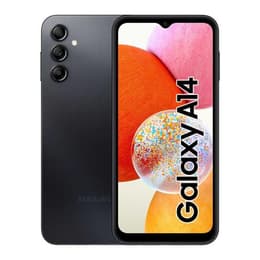
Galaxy A14
Galaxy A14
Starting at

Refurbished price:A$216.00

Versus A$390.00 new

See options
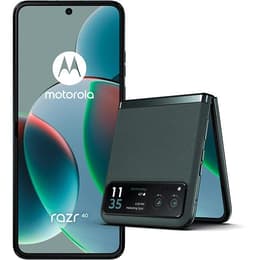
Motorola Razr 40
Motorola Razr 40
See options

Ratings

The Samsung Galaxy A14 and the Motorola Razr 40 are distinct smartphones released in 2023, catering to different user preferences and needs. The Galaxy A14, launched in January and February 2023 depending on the model, is a traditional slab-style device, while the Motorola Razr 40, released in June 2023, offers a unique foldable design. These devices primarily differ in their form factor and display technology, influencing their portability and user interaction. Both run on the Android operating system, providing access to a wide ecosystem of applications and services.

Scores

Durability

When considering the long-term usability of these devices, their release timelines and software support policies are key factors. The Galaxy A14 and Razr 40 offer different approaches to longevity, particularly concerning software updates and physical repairability.

  • Software Support: The Samsung Galaxy A14, originally launched with Android 13, is expected to receive two major Android OS upgrades, bringing it up to Android 15, along with four years of quarterly security updates. The Motorola Razr 40, also starting with Android 13, is slated to receive three major Android OS upgrades, extending its support to Android 16, coupled with four years of bi-monthly security updates. This means the Razr 40 generally offers a longer period of major OS updates.
  • Repairability: The Samsung Galaxy A14 has a notable repairability score, often rated around 8 out of 10, due to its relatively straightforward disassembly and features like a battery with an adhesive pull tab, making component replacement more accessible. In contrast, the Motorola Razr 40, as a foldable device, presents more complex repair challenges. Its intricate design and use of strong adhesives contribute to a lower repairability score, typically around 4 out of 10, making repairs more difficult and potentially costly.
  • Expected Lifespan: While both devices are built to last, the Razr 40's extended major OS update policy suggests a slightly longer period of receiving new Android features. However, the Galaxy A14's higher repairability score could mean a more practical extended physical lifespan if components need replacing.

Release year

2023

2023

Compatible with latest Update

No

Yes

Operating system

Android

Android

Foldable

No

Yes

Performance

The performance of a smartphone impacts daily tasks, from app usage to multitasking. Both the Galaxy A14 and Razr 40 are designed to handle common activities, but they approach performance with different hardware configurations.

  • Processing Power: The Motorola Razr 40 features a processor designed for efficient performance, allowing for smooth navigation, responsive app launches, and capable handling of more demanding applications and mobile gaming. The Samsung Galaxy A14 utilizes a processor that provides reliable performance for everyday tasks such as browsing, social media, and light gaming, ensuring a generally smooth user experience.
  • Multitasking and Storage: The Razr 40 typically comes with 8 GB or 12 GB of RAM, facilitating robust multitasking and keeping multiple applications open without significant slowdowns. It offers 128 GB or 256 GB of internal storage, but without expandable storage. The Galaxy A14 is available with 4 GB, 6 GB, or 8 GB of RAM, which is sufficient for typical daily use and moderate multitasking. It offers 64 GB or 128 GB of internal storage, with the added flexibility of microSD card expansion up to 1 TB.
  • Battery Behavior: The Galaxy A14 is equipped with a larger 5000 mAh battery, which generally translates to extended usage times for many users, often lasting through a full day or more on a single charge. The Razr 40 has a 4200 mAh battery, which, while smaller, is optimized for its foldable form factor and processor efficiency, providing adequate power for a day of moderate use.

Memory (GB)

4 GB

8 GB

Screen quality

The display is a primary interaction point, and both devices offer different visual experiences tailored to their designs.

  • Display Technology and Size: The Motorola Razr 40 features a 6.9-inch foldable LTPO AMOLED main display, offering deep blacks, vibrant colors, and excellent contrast. It also includes a smaller 1.5-inch AMOLED cover display for quick notifications and interactions when folded. The Samsung Galaxy A14 comes with a 6.6-inch PLS LCD display, which provides clear visuals and good color reproduction for a traditional smartphone.
  • Resolution and Refresh Rate: Both devices offer Full HD+ resolution, ensuring sharp text and images. The Razr 40's main display boasts a high 144Hz refresh rate, contributing to very smooth scrolling and fluid animations, enhancing the overall visual experience. The Galaxy A14 (5G model) provides a 90Hz refresh rate, which is smoother than a standard 60Hz display, offering a more fluid interaction for daily use.
  • Brightness and Outdoor Visibility: The Razr 40's AMOLED display can reach a peak brightness of 1400 nits, making it highly visible even in bright outdoor conditions. The Galaxy A14's PLS LCD display offers a peak brightness of around 480 nits, which is adequate for indoor use and most outdoor scenarios, though it may be less vibrant under direct sunlight.

Resolution

1080 x 2408

1080 x 2640

Screen type

PLS LCD

Foldable LTPO AMOLED

Audiovisual

Camera capabilities are a significant consideration for many users, and both phones offer different photographic strengths.

  • Rear Camera System: The Motorola Razr 40 features a dual-camera setup with a 64 MP main sensor (f/1.7) that includes optical image stabilization (OIS) for clearer shots, especially in challenging conditions, and a 13 MP ultrawide lens (f/2.2). The Samsung Galaxy A14 (5G model) is equipped with a triple-camera system, including a 50 MP wide main sensor (f/1.8), a 2 MP macro lens, and a 2 MP depth sensor.
  • Photography Performance: The Razr 40's main camera, with its higher megapixel count and OIS, is capable of capturing detailed images with good low-light performance. The ultrawide lens adds versatility for landscape and group shots. The Galaxy A14's 50 MP main camera performs well in good lighting conditions, producing clear and vibrant photos suitable for social sharing. Its macro lens allows for close-up photography, while the depth sensor assists with portrait mode effects.
  • Video Recording and Front Camera: The Razr 40 supports video recording up to 4K at 30 frames per second, offering higher detail for video content. Its front-facing camera is a 32 MP sensor, capable of capturing high-resolution selfies and clear video calls. The Galaxy A14 records video at 1080p at 30 frames per second with both its rear and 13 MP front cameras, which is suitable for standard video capture and online communication.
  • Audio Experience: The Razr 40 typically offers stereo speakers, providing a more immersive audio experience for media consumption. The Galaxy A14 generally features a single, mono speaker. Both devices include a 3.5mm headphone jack, offering a traditional wired audio option.

Main camera

50 megapixels

64 megapixels

Front camera

13 megapixels

32 megapixels

Miscellaneous

Beyond core features, several practical elements differentiate these smartphones in terms of daily convenience and build.

  • Connectivity and Ports: Both devices support 5G connectivity for fast mobile data speeds. The Motorola Razr 40 features Wi-Fi 6 and Bluetooth 5.3, offering newer standards for wireless communication. The Samsung Galaxy A14 supports Wi-Fi 5 and Bluetooth 5.2 (5G model) or 5.1 (4G model). Both include NFC for contactless payments and a USB-C port for charging and data transfer. A 3.5mm headphone jack is present on both models.
  • Sensors and Security: Both phones incorporate a side-mounted fingerprint sensor for secure unlocking. The Razr 40 also includes a barometer and gyroscope, which can enhance certain applications and location services.
  • Design and Build Materials: The Razr 40 stands out with its foldable form factor, featuring an aluminum frame, a stainless steel hinge, and a vegan leather finish on the back, along with a water-repellent coating and Gorilla Glass Victus on the external display. When folded, it becomes compact and pocketable. The Galaxy A14 has a traditional candy bar design with a plastic back and frame, offering a sturdy and familiar feel.
  • Dimensions and Handling: The Razr 40, when unfolded, measures 170.8 x 74 x 7.4 mm and weighs 188.6g. When folded, its dimensions are 88.2 x 74 x 15.8 mm, making it significantly smaller. The Galaxy A14 measures 167.7 x 78 x 9.1 mm and weighs 201-202g, providing a larger, more substantial feel in hand.

Weight

201 oz

189 oz

Screen size (in)

6.6

6,9

Network

4G

5G

SIM card

Physical SIM

Dual Physical SIM + eSIM

Carrier compatibility

Unlocked

Unlocked

User feedback for the Samsung Galaxy A14 often highlights its strong battery life and reliable performance for everyday tasks as key advantages. Users appreciate its clear display for media consumption and general browsing. Some common observations include its plastic build and the performance being suitable for casual use rather than intensive applications. The Motorola Razr 40 is frequently praised for its unique foldable design, which offers enhanced portability and a distinct user experience. Its vibrant main AMOLED display and the utility of the cover screen are also well-received. Criticisms sometimes point to its battery life, which, while adequate, may not match the endurance of larger, non-foldable phones, and the inherent repairability challenges of foldable technology.

Users prioritizing a compact, stylish device with a premium, high-refresh-rate display and a unique foldable form factor may find the Motorola Razr 40 well-suited to their needs. Its enhanced software update policy also offers a longer period of new Android features. Conversely, users who value extended battery life, a more traditional and robust build, and higher repairability for potential long-term use may lean toward the Samsung Galaxy A14. Its expandable storage also appeals to those who need ample space for media and files. Both devices offer a quality-assured refurbished option, providing an eco-friendly alternative for consumers looking to make informed and sustainable choices.


See all articles

Our recent comparisons