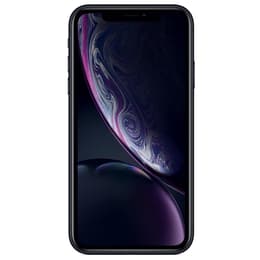

Galaxy S21 5G vs iPhone XR

Galaxy S21 5G
Galaxy S21 5G
Starting at

Refurbished price:A$318.00

Versus A$1,369.00 new

See options
iPhone XR
iPhone XR
Starting at

Refurbished price:A$219.76

Versus A$589.00 new

See options

Ratings

The Samsung Galaxy S21 5G, released in January 2021, and the Apple iPhone XR, launched in October 2018, represent different generations and operating systems within the smartphone landscape. While both offer a capable smartphone experience, the Galaxy S21 5G introduces more recent advancements in display technology, camera capabilities, and network connectivity, whereas the iPhone XR provides a streamlined iOS experience with a focus on battery longevity at its release.

Scores

Durability

The practical lifespan of a smartphone is influenced by its initial release date and the duration of software support it receives.

  • Release Timeline: The iPhone XR was released in October 2018, making it an older device compared to the Galaxy S21 5G, which launched in January 2021. This difference in release dates impacts their remaining software support windows.
  • Software Longevity: The iPhone XR, running iOS, typically receives major software updates for approximately 5-6 years from its release, and is compatible with iOS versions up to and including iOS 18, but not iOS 26. The Galaxy S21 5G, an Android device, generally receives 4-5 years of major Android OS updates, along with security updates. This means the Galaxy S21 5G will likely receive software support for a longer period into the future.
  • Repairability: The iPhone XR has a repairability score of 6 out of 10, indicating that common repairs like display and battery replacements are relatively straightforward. The Galaxy S21 5G has a slightly higher repairability score of 7.5 out of 10, noted for being easy to disassemble, though the battery can be challenging to remove due to strong adhesive. Both devices feature glass backs, which can be prone to damage.

Performance

Performance differences between these two devices stem from their respective processors and system architectures, impacting how they handle daily tasks and demanding applications.

  • Processing Power: The Galaxy S21 5G is equipped with a more recent generation octa-core processor, which allows for smooth multitasking, faster app loading, and efficient handling of graphics-intensive games and applications. The iPhone XR features a hexa-core processor, which at its release was considered powerful for its time, providing a responsive user experience for everyday tasks and many demanding applications.
  • Multitasking and Storage: The Galaxy S21 5G typically comes with 8GB of RAM, contributing to its ability to manage multiple applications simultaneously without significant slowdowns. The iPhone XR has 3GB of RAM, which is sufficient for general use and app switching, though it may show limitations with a large number of active background applications compared to the S21 5G. Both devices offer various internal storage options, ranging from 64GB to 256GB, to accommodate user data and applications.
  • Battery Behavior: The Galaxy S21 5G houses a 4000 mAh battery, designed to provide all-day power for typical usage, though features like its high refresh rate display can influence battery drain. The iPhone XR, with its 2942 mAh battery, was noted for its excellent battery life at the time of its release, often lasting longer than other iPhones of its generation, particularly for web browsing and video playback.

Memory (GB)

8 GB

3 GB

Screen quality

The visual experience on these smartphones differs significantly due to their display technologies and specifications.

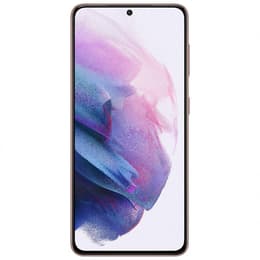
  • Display Technology and Clarity: The Galaxy S21 5G features a 6.2-inch Dynamic AMOLED 2X display, known for its deep blacks, vibrant colors, and high contrast. It offers a resolution of 1080 x 2400 pixels, resulting in a pixel density of 421 pixels per inch (ppi), providing a sharp and detailed image. The iPhone XR has a 6.1-inch Liquid Retina IPS LCD display. While it offers good color accuracy, its LCD technology means blacks are not as deep as OLED. Its resolution is 828 x 1792 pixels, with a pixel density of 326 ppi, which is clear for most viewing but less sharp than the S21 5G.
  • Brightness and Smoothness: The Galaxy S21 5G boasts a peak brightness of 1300 nits, making it highly visible even in bright outdoor conditions. It also features an adaptive 120Hz refresh rate, which provides a noticeably smoother scrolling and animation experience. The iPhone XR has a typical maximum brightness of 625 nits, which is adequate for most indoor and outdoor use but can be less effective in direct sunlight. Its display operates at a standard 60Hz refresh rate.
  • Viewing Experience: The Galaxy S21 5G's higher resolution, OLED technology, and faster refresh rate contribute to a more immersive and fluid viewing experience, particularly for media consumption and gaming. The iPhone XR's display, while still offering a good viewing experience, provides a more traditional LCD presentation.

Audiovisual

The camera systems on the Galaxy S21 5G and iPhone XR offer different approaches to photography and video recording, reflecting their respective release timelines.

  • Rear Camera System: The Galaxy S21 5G features a versatile triple-camera setup on the rear, including a 12MP wide-angle lens, a 12MP ultra-wide lens, and a 64MP telephoto lens with 3x hybrid optical zoom. This configuration allows for a wide range of photographic styles, from expansive landscapes to detailed zoomed-in shots. The iPhone XR has a single 12MP wide-angle rear camera. Despite having only one lens, it utilizes software to achieve Portrait mode with adjustable depth control.
  • Photography and Video Quality: The Galaxy S21 5G offers advanced features like 8K video recording and optical image stabilization on its main and telephoto lenses, contributing to stable and high-resolution video capture. Its multiple lenses and advanced processing provide strong performance in various lighting conditions. The iPhone XR is capable of 4K video recording at up to 60 frames per second and includes optical image stabilization for both photos and videos. Its single lens performs well in everyday photography, with software optimization enhancing image quality.
  • Front Camera and Audio: The Galaxy S21 5G is equipped with a 10MP front camera. The iPhone XR features a 7MP TrueDepth front camera, which supports Portrait mode selfies and Face ID. Both devices offer stereo speakers for media consumption.

Miscellaneous

Beyond core performance and display, several practical features and design elements differentiate these two smartphones.

  • Connectivity and Ports: The Galaxy S21 5G supports 5G cellular networks, offering faster data speeds where available, along with Wi-Fi 6 and Bluetooth 5.0. It uses a USB-C port for charging and data transfer. The iPhone XR supports 4G LTE networks, Wi-Fi 802.11ac, and Bluetooth 5.0. It uses Apple's proprietary Lightning port. Neither device includes a traditional 3.5mm headphone jack.
  • Security and Biometrics: The Galaxy S21 5G features an in-display ultrasonic fingerprint sensor for secure unlocking, in addition to face recognition. The iPhone XR relies on Face ID, Apple's facial recognition system, for biometric security.
  • Design and Build: The Galaxy S21 5G has dimensions of 151.7 x 71.2 x 7.9 mm and weighs 171 grams. It features a Gorilla Glass Victus front, a plastic back, and an aluminum frame, offering IP68 water and dust resistance. The iPhone XR measures 150.9 x 75.7 x 8.3 mm and weighs 194 grams. It has a glass front and back with an aluminum frame and is rated IP67 for water and dust resistance.

Screen size (in)

6.2

6.1

Network

5G

4G

SIM card

Physical SIM + eSIM

Physical SIM + eSIM

Carrier compatibility

Unlocked

Unlocked

User sentiment for the Galaxy S21 5G often praises its vibrant display with a high refresh rate, its versatile camera system, and its modern design. Users appreciate the smooth performance for everyday tasks and gaming. Some common criticisms have included its battery life for heavy users, especially with the 120Hz display enabled, and the absence of a microSD card slot.

The iPhone XR, on the other hand, was frequently lauded for its exceptional battery life at its launch, often outperforming more expensive iPhones of its generation. Its single camera was also well-regarded for its image quality and software-driven Portrait mode. Criticisms often centered on its LCD display not being as sharp or vibrant as OLED alternatives, and the lack of a telephoto lens.

Users prioritizing a modern display with a high refresh rate, a versatile multi-lens camera system, and 5G connectivity will find the Samsung Galaxy S21 5G well-suited to their needs. It offers a more contemporary Android experience with robust performance for demanding applications. Conversely, users who value extended battery life, a straightforward iOS experience, and reliable performance for general use may lean towards the iPhone XR. It remains a capable device for those seeking a quality-assured refurbished option for an eco-friendly alternative.
See all articles

Our recent comparisons