
Galaxy S21 5G vs iPhone 14 Pro

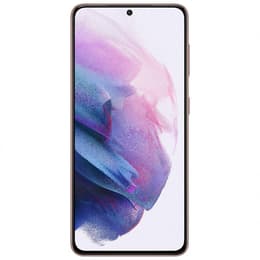
Galaxy S21 5G
Galaxy S21 5G
Starting at

Refurbished price:A$318.00

Versus A$1,369.00 new

See options
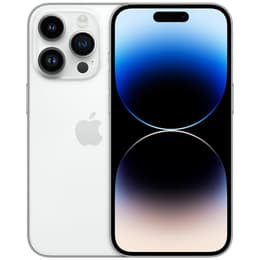
iPhone 14 Pro
iPhone 14 Pro
Starting at

Refurbished price:A$622.00

Versus A$1,749.00 new

See options

Ratings

The Samsung Galaxy S21 5G, released in January 2021, and the Apple iPhone 14 Pro, launched in September 2022, represent different generations and operating systems within the premium smartphone market. While both offer high-end mobile experiences, they diverge significantly in their core software ecosystems and hardware philosophies. The iPhone 14 Pro introduces a more advanced camera system and a newer processor, alongside Apple's iOS, contrasting with the Galaxy S21 5G's Android platform and its slightly earlier release.

Scores

Durability

When considering the practical lifespan of these devices, several factors come into play, including software support, physical durability, and repairability.

  • Software Longevity: The iPhone 14 Pro, being released in late 2022, is expected to receive major iOS updates for a longer period, likely until 2028-2029. The Galaxy S21 5G, launched in early 2021, has received its major Android updates and is nearing the end of its guaranteed software support cycle, which typically lasts around four years for major OS upgrades from its release date.
  • Physical Durability: Both devices feature robust builds with IP68 ratings for dust and water resistance, indicating they can withstand submersion in water up to 1.5 meters for 30 minutes. The iPhone 14 Pro uses a Ceramic Shield front cover and a stainless steel frame, contributing to its perceived durability. The Galaxy S21 5G features Gorilla Glass Victus on the front and an aluminum frame, with a plastic back.
  • Repairability: While specific repairability scores can vary, both devices are designed with modern smartphone construction, meaning repairs often require specialized tools and expertise. The availability of parts and repair services tends to be robust for both Apple and Samsung devices.

Release year

2021

2022

Compatible with latest Update

Yes

Yes

Operating system

Android

iOS

Foldable

No

No

Performance

The performance of a smartphone is crucial for daily tasks, from browsing and social media to demanding applications and gaming. These two devices offer distinct performance profiles.

  • Processing Power: The iPhone 14 Pro features a more recent generation processor, which provides a notable advantage in raw computational power and graphical performance. This translates to smoother operation, faster app loading times, and more fluid multitasking, especially with graphically intensive games or complex video editing applications. The Galaxy S21 5G, while still capable for everyday use, relies on a processor from an earlier generation.
  • Multitasking and Responsiveness: The iPhone 14 Pro's optimized software and powerful processor ensure consistent responsiveness even under heavy loads. Users can expect seamless transitions between applications and efficient handling of multiple tasks simultaneously. The Galaxy S21 5G, with its 8GB of RAM, handles multitasking well for most users, but the overall system responsiveness might not match the newer iPhone in demanding scenarios.
  • Battery Behavior: The iPhone 14 Pro generally offers solid battery life, often lasting a full day with moderate use, thanks to its efficient processor and display technology. Heavy users might still need to charge it by evening. The Galaxy S21 5G has a 4000 mAh battery, which typically provides a full day of use for many, though its 120Hz display can impact battery longevity.

Memory (GB)

8 GB

6 GB

Screen quality

The display is a primary interface for any smartphone, and both the Galaxy S21 5G and iPhone 14 Pro offer high-quality viewing experiences with some key differences.

  • Display Technology and Clarity: Both phones feature vibrant OLED displays, offering deep blacks and excellent contrast. The iPhone 14 Pro boasts a Super Retina XDR OLED display with a resolution of 2556 x 1179 pixels at 460 pixels per inch (ppi). The Galaxy S21 5G uses a Dynamic AMOLED 2X display with a resolution of 2400 x 1080 pixels at 421 ppi.
  • Brightness and Outdoor Visibility: The iPhone 14 Pro offers significantly higher peak brightness, reaching up to 2000 nits outdoors, making it exceptionally legible even in direct sunlight. The Galaxy S21 5G also provides good brightness, with a peak of 1300 nits, which is sufficient for most outdoor conditions.
  • Refresh Rate and Smoothness: Both devices feature a 120Hz refresh rate for smooth scrolling and fluid animations. The iPhone 14 Pro's ProMotion technology allows for an adaptive refresh rate that can scale down to 1Hz to conserve battery life, and it also introduces an Always-On display feature. The Galaxy S21 5G maintains a consistent 120Hz refresh rate.

Resolution

1080 x 2400

1179 x 2556

Screen type

Dynamic AMOLED 2X

LTPO Super Retina XDR OLED

Audiovisual

For many users, the camera system is a deciding factor, and both smartphones offer capable setups, though with different strengths and capabilities.

  • Rear Camera System: The iPhone 14 Pro features a more advanced triple-camera system, highlighted by a 48-megapixel main sensor that uses pixel binning to produce detailed 12-megapixel photos, alongside a 12-megapixel ultrawide and a 12-megapixel telephoto lens with 3x optical zoom. It also benefits from Apple's Photonic Engine for improved image processing. The Galaxy S21 5G offers a versatile triple-camera setup with a 12-megapixel wide, a 12-megapixel ultrawide, and a 64-megapixel telephoto lens capable of 3x hybrid optical zoom.
  • Low-Light Performance and Detail: The iPhone 14 Pro shows significant improvements in low-light photography, capturing more detail and reducing noise, especially with its larger main sensor and enhanced software processing. The Galaxy S21 5G also performs well in low light, but the iPhone 14 Pro generally delivers sharper and clearer results in challenging conditions.
  • Video Recording Capabilities: Both phones are capable of recording high-quality video. The iPhone 14 Pro supports 4K video recording at up to 60 frames per second (fps) and introduces Cinematic mode for shallow depth-of-field video and Action mode for stabilized footage. It also supports ProRes video recording. The Galaxy S21 5G can record up to 8K video at 24fps and 4K at 60fps, offering features like Super Steady video.

Main camera

12 megapixels

48 megapixels

Front camera

10 megapixels

12 megapixels

Miscellaneous

Beyond the core features, several other aspects contribute to the overall user experience and differentiate these two devices.

  • Connectivity and Ports: Both devices support 5G connectivity for fast mobile data speeds. The iPhone 14 Pro features Bluetooth 5.3 and Wi-Fi 6, while the Galaxy S21 5G uses Bluetooth 5.0 and Wi-Fi 6. The iPhone 14 Pro uses a Lightning port for charging and data transfer, whereas the Galaxy S21 5G uses a USB-C port.
  • Biometric Security and Design: The iPhone 14 Pro relies on Face ID for secure facial recognition. It also features the Dynamic Island, an interactive area around the front camera and sensors that displays alerts and activities. The Galaxy S21 5G incorporates an ultrasonic in-display fingerprint sensor for biometric authentication.
  • Weight and Build Materials: The iPhone 14 Pro weighs 206 grams and features a stainless steel frame and glass back. The Galaxy S21 5G is lighter at 169 grams and has an aluminum frame with a plastic back. This difference in materials contributes to a distinct feel in hand.

Weight

169 oz

206 oz

Screen size (in)

6.2

6,1

Network

5G

5G

SIM card

Physical SIM + eSIM

Physical SIM + eSIM

Carrier compatibility

Unlocked

Unlocked

Connector

USB-C

Lightning

The Samsung Galaxy S21 5G and iPhone 14 Pro cater to users with varying priorities and preferences within the smartphone landscape. User sentiment often highlights the iPhone 14 Pro's exceptional camera capabilities, particularly in low light, and its powerful, efficient processor that ensures smooth performance for years to come. Many users also appreciate the innovative Dynamic Island and the bright, adaptive refresh rate display. However, some users note its heavier build and the continued use of the Lightning port as potential drawbacks.

The Galaxy S21 5G is praised for its vibrant Android experience, a slightly larger screen in a compact form factor, and its versatile camera system that performs well in everyday situations. Its ultrasonic fingerprint sensor is a preferred biometric method for some. Criticisms sometimes point to its battery life, which, while generally good, may require more frequent charging for heavy users compared to newer, more efficient devices. Its software support window is also shorter than that of the iPhone 14 Pro, which is a consideration for long-term use.

Users prioritizing cutting-edge camera technology, long-term software support, and a highly optimized, powerful user experience within the Apple ecosystem will find the iPhone 14 Pro well-suited to their needs. Conversely, those who prefer the flexibility and customization of the Android operating system, a slightly larger display, and a different biometric authentication method might lean towards the Galaxy S21 5G. Both devices are available as quality-assured refurbished options, providing an eco-friendly alternative for consumers.

See all articles

Our recent comparisons