

iPad
Compare models
Differences at a glance
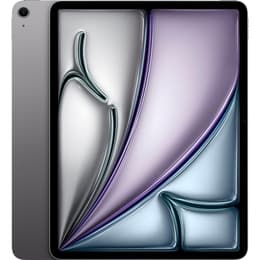
The iPad Air 2025 M3 Series and the iPad Pro 2024 M4 Series represent distinct tiers within Apple's tablet lineup, released in March 2025 and May 2024, respectively. Both devices operate on iPadOS, offering a versatile computing experience. The primary differentiators lie in their processing power, with the M3 chip in the Air and the more advanced M4 chip in the Pro, alongside significant differences in display technology.
Colour
Storage
When considering the long-term usability of these tablets, several factors contribute to their expected lifespan, including software support and physical resilience.
Release year
Compatible with latest Update
Operating system
Minimum system requirements (iPadOS)
The performance capabilities of the iPad Air M3 and iPad Pro M4 are central to their user experience, influencing how smoothly demanding applications and multitasking are handled.
Processor
The visual experience on a tablet is largely defined by its display, and here the iPad Air M3 and iPad Pro M4 offer distinct technologies and capabilities.
Resolution
True Tone
Promotion
Screen type
Pixel density
Brightness
Speakers
The camera systems on both the iPad Air M3 and iPad Pro M4 cater to different user needs, from casual photography and video calls to more advanced content creation.
Beyond core performance and display, several practical features and design elements differentiate the iPad Air M3 and iPad Pro M4, impacting daily usability.
Weight
Width
Height
Depth
Screen size (in)
Network
Carrier compatibility
Wi-Fi version
Bluetooth version
Face ID
Touch ID
Connector
User feedback for the iPad Air M3 Series often highlights its strong performance for everyday tasks, smooth multitasking capabilities, and reliable battery life, making it a practical choice for students and general users. Many appreciate its lightweight design, which enhances portability for work or study on the go. Criticisms sometimes point to the Liquid Retina display not matching the visual fidelity of OLED panels and the 60Hz refresh rate, which some users accustomed to higher refresh rates on other devices might notice. The use of Touch ID over Face ID is also occasionally mentioned as a preference point for some users.
The iPad Pro M4 Series receives significant praise for its unparalleled performance, particularly for demanding creative and professional applications like 4K video editing and 3D design. Its stunning Ultra Retina XDR Tandem OLED display is frequently lauded for its exceptional brightness, contrast, and color accuracy, providing an immersive experience for media consumption and critical visual work. The thin and light design is also a common point of appreciation. However, some users note that the camera system, while capable, may not match the advanced features found in dedicated mobile cameras. Repairability, despite some improvements, remains a concern due to the device's intricate and ultra-thin construction. Additionally, some users feel that iPadOS, while powerful, does not always fully leverage the M4 chip's capabilities for certain desktop-class workflows.
Users prioritizing a balance of performance, portability, and a capable ecosystem for general productivity, note-taking, and media consumption will find the iPad Air M3 Series well-suited to their needs. It offers robust performance for most tasks without the premium features of the Pro line. Conversely, creative professionals, users engaged in intensive computing tasks, or those who demand the absolute best display technology and advanced accessory support will likely lean towards the iPad Pro M4 Series. Its superior processing power and display are tailored for workflows that require maximum performance and visual precision. For those seeking an eco-friendly alternative, both models are available as quality-assured refurbished options, providing a sustainable choice for acquiring advanced tablet technology.