
Galaxy A23 5G vs iPhone 16 Plus

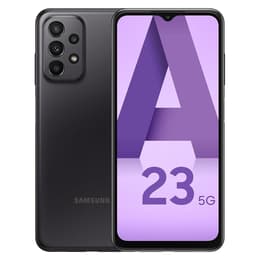
Galaxy A23 5G
Galaxy A23 5G
Starting at

Refurbished price:A$219.00

Versus A$457.00 new

See options
iPhone 16 Plus
iPhone 16 Plus
Starting at

Refurbished price:A$918.00

Versus A$1,599.00 new

See options

Ratings

The Samsung Galaxy A23 5G, released in late 2022, and the Apple iPhone 16 Plus, launched in late 2024, represent distinct approaches to smartphone design and functionality. While the Galaxy A23 5G operates on the Android platform, offering a versatile and customizable experience, the iPhone 16 Plus runs on Apple's iOS, known for its integrated ecosystem and streamlined user interface. These devices primarily differ in their core performance capabilities, display technology, and camera systems, catering to varying user preferences and needs.

Scores

Durability

The longevity of a smartphone is influenced by its release timeline, software support, and physical durability.

  • Release Timeline and Software Support: The Galaxy A23 5G, released in 2022, typically receives major Android updates for approximately four years from its launch, having started with Android 12 and updated to Android 14. [7, 12, 13] In contrast, the iPhone 16 Plus, released in 2024, benefits from Apple's longer software support, generally receiving major iOS updates for five to seven years and security updates for seven to eight years. [9, 26, 30, 31, 42] This means the iPhone 16 Plus is expected to receive software enhancements and security patches for a longer duration.
  • Physical Durability: The Galaxy A23 5G features Gorilla Glass 5 for screen protection and a plastic build, which contributes to its overall resilience. [4, 13] The iPhone 16 Plus incorporates Apple's Ceramic Shield on the front and an aluminum frame with a color-infused glass back, offering enhanced drop protection. [1, 3] It also carries an IP68 rating for water and dust resistance, allowing it to withstand submersion in up to 6 meters of water for 30 minutes. [1, 11] The Galaxy A23 5G does not have an official IP rating. [13]
  • Repairability: While specific repairability scores vary, Apple generally provides hardware services for several years beyond software support. [26] Both devices, when considering a quality-assured refurbished option, offer a practical and sustainable choice for extending their useful life.

Release year

2022

2024

Compatible with latest Update

Yes

Yes

Foldable

No

No

Performance

Performance in daily use, from app handling to multitasking, is a key differentiator between these two smartphones.

  • Processing Power and Responsiveness: The Galaxy A23 5G is equipped with a processor that provides solid performance for everyday tasks and smooth navigation. [4, 18] It handles many simpler and moderately complex applications without issues, though it may reach its limits with more demanding apps or immediately after a restart. [4] The iPhone 16 Plus features a current-generation processor optimized for advanced tasks and artificial intelligence. [1, 3, 23, 24] This allows for smoother execution of demanding applications, graphic-intensive games, and seamless multitasking, with users reporting swift performance. [3, 24]
  • Memory and Storage: The Galaxy A23 5G offers various RAM configurations, including 4GB, 6GB, and 8GB, and storage options of 64GB or 128GB, with the added flexibility of expandable storage via a microSD card. [6, 7, 12, 13] The iPhone 16 Plus comes with 8GB of RAM and internal storage options of 128GB, 256GB, or 512GB, but does not support expandable storage. [1, 2, 3, 5, 24]
  • Battery Behavior: The Galaxy A23 5G houses a 5000mAh battery, known for its long-lasting capacity, often providing 1.5 to 2 days of use for average users and a full day for heavy users. [13, 18, 19, 38] It supports 25W fast charging. [13, 18] The iPhone 16 Plus, with its 4674 mAh battery, also delivers excellent battery life, with many users reporting it comfortably lasts a full day or more, even with intensive use. [1, 5, 20, 23, 34, 36, 39] It supports MagSafe and Qi2 wireless charging, alongside USB-C fast charging. [1]

Memory (GB)

4 GB

8 GB

Screen quality

The visual experience on a smartphone is largely defined by its display technology, resolution, and brightness.

  • Display Technology and Resolution: The Galaxy A23 5G features a 6.6-inch PLS LCD display with a resolution of 2408x1080 pixels (FHD+). [6, 13] This technology provides good clarity and color reproduction. The iPhone 16 Plus boasts a 6.7-inch Super Retina XDR OLED display with a higher resolution of 2796x1290 pixels, resulting in a sharper image with deeper blacks and more vibrant colors. [1, 2, 3, 5, 10, 11, 23, 27, 32]
  • Refresh Rate and Brightness: The Galaxy A23 5G offers a smoother scrolling and viewing experience with its 120Hz refresh rate. [6, 13] The iPhone 16 Plus maintains a standard 60Hz refresh rate. [1, 3, 23] For brightness, the iPhone 16 Plus offers significantly higher peak brightness levels, reaching up to 1000 nits typical and 2000 nits for outdoor use, making it highly visible in bright sunlight. [3, 10, 11, 23, 27] The Galaxy A23 5G's brightness levels are suitable for most indoor and outdoor conditions, but may not match the iPhone's peak outdoor visibility.
  • Special Features: The iPhone 16 Plus includes the Dynamic Island, an interactive area at the top of the display that adapts to show alerts, activities, and notifications. [10, 11]

Resolution

1080 x 2408

1290 x 2796

Screen type

PLS LCD

Super Retina XDR OLED

Audiovisual

Camera capabilities are a significant factor for many users, encompassing photo quality, video recording, and additional features.

  • Rear Camera System: The Galaxy A23 5G features a quad-camera setup, including a 50MP main sensor with optical image stabilization (OIS), a 5MP ultrawide lens, a 2MP macro lens, and a 2MP depth sensor. [4, 6, 13, 15, 37, 40] The main camera performs well in bright lighting, producing colorful and vibrant images, though the ultrawide lens may show distortion and the low-light performance is less robust. [4, 13, 15] The iPhone 16 Plus has a dual-camera system, consisting of a 48MP Fusion Main camera with OIS and a 12MP ultrawide camera. [1, 2, 5, 8, 11, 14, 16, 22, 32] The main camera can capture high-resolution 24MP and 48MP photos, and offers a 2x telephoto equivalent. [8, 22]
  • Front Camera and Video Recording: The Galaxy A23 5G has an 8MP front camera and records video at 1080p at 30 frames per second. [13] The iPhone 16 Plus features a 12MP front camera and supports 4K Dolby Vision video recording at various frame rates, including 60 frames per second, along with cinematic mode and spatial video recording. [1, 8, 16]
  • Additional Camera Features: The iPhone 16 Plus introduces a new Camera Control button and improved Photographic Styles, offering more tactile and creative control over photography. [1, 14, 22] Users generally praise the iPhone 16 Plus for its high-quality images and videos. [39]

Main camera

50 megapixels

48 megapixels

Front camera

8 megapixels

12 megapixels

Miscellaneous

Beyond core features, practical elements like connectivity, ports, and physical design contribute to the overall user experience.

  • Connectivity and Ports: Both devices support 5G connectivity. [1, 13] The Galaxy A23 5G includes a 3.5mm headphone jack and a USB-C port for charging and data transfer. [13] The iPhone 16 Plus has transitioned to a USB-C port, replacing the older Lightning connector, and supports Wi-Fi 7 and Bluetooth 5.3. [1, 2, 33, 35] It does not feature a headphone jack. [35]
  • Biometric Security and Design: The Galaxy A23 5G utilizes a fingerprint sensor integrated into the power button for secure unlocking. [38] The iPhone 16 Plus employs Face ID for facial recognition. [8, 11, 16, 24] In terms of design, the Galaxy A23 5G has a plastic build with a matte back, weighing 197 grams. [4, 13] The iPhone 16 Plus features an aluminum design with a color-infused glass back and weighs 199 grams. [1, 3] The iPhone 16 Plus also includes an Action button, which can be customized for quick access to various functions. [3, 11, 36]
  • Other Features: The iPhone 16 Plus supports Ultra Wideband (UWB) for precise location tracking and enhanced connectivity with other Apple devices. [1, 24]

Weight

197 oz

199 oz

Screen size (in)

6.6

6.7

Network

5G

5G

SIM card

Physical SIM

Physical SIM + eSIM

Carrier compatibility

Unlocked

Unlocked

User feedback for the Samsung Galaxy A23 5G often highlights its impressive battery life and the smooth experience provided by its 120Hz display, especially considering its market segment. [13, 19] Some users note that while its main camera performs well in good lighting, the ultrawide and low-light capabilities are less consistent. [4, 13, 15] The inclusion of a headphone jack and expandable storage are frequently praised features. [13]

The iPhone 16 Plus receives consistent praise for its exceptional battery life, with many users reporting it easily lasts a full day or more. [20, 34, 36, 39] Its powerful processor ensures smooth performance across demanding applications and games. [3, 24] While the 60Hz display is sometimes mentioned as a point of comparison to higher refresh rate Android devices, users generally appreciate the display's clarity and brightness. [3, 23, 39] The camera system is noted for producing high-quality images and videos, though some users coming from Pro models might find the optical zoom capabilities different. [22, 39]

Users prioritizing extended software support, a highly integrated ecosystem, and top-tier performance for demanding tasks may find the iPhone 16 Plus well-suited to their needs. Its robust build and advanced camera features also appeal to those seeking a premium experience. Conversely, users who value a high refresh rate display, expandable storage, and the flexibility of the Android operating system, along with a long-lasting battery, might lean towards the Galaxy A23 5G. Both devices, whether new or as a quality-assured refurbished option, offer a pathway to making an informed and sustainable choice.
See all articles

Our recent comparisons