Compare models

Galaxy A56 vs Motorola Edge 50

  • 1-year warranty
  • Free standard shipping
  • Free 30-day returns
Galaxy A56
Starting at

Refurbished price:A$407.00

Versus A$699.00 new

See options
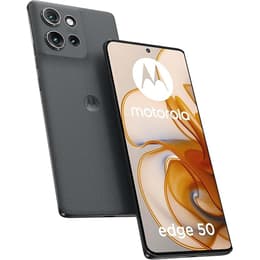
Motorola Edge 50
Starting at

Refurbished price:A$417.00

Versus A$832.00 new

See options

Differences at a glance

The Samsung Galaxy A56 (2025) and the Motorola Edge 50 (2024) are mid-range Android smartphones designed to deliver reliable everyday performance, capable cameras, and modern connectivity. While both devices serve users looking for a balanced mobile experience without stepping up to flagship tiers, they differ notably in software philosophies, display curvatures, and physical design profiles. Choosing between them depends on how you value long-term software support versus ergonomic styling.

Available Models

Colour

Storage

Scores

Durability

Both smartphones offer robust build qualities and modern features designed for multi-year daily use, though their software update timelines and physical repair profiles differ.

  • Software support lifecycle: The Galaxy A56 benefits from Samsung's extensive multi-year update commitment, while the Motorola Edge 50 provides a more standard security and operating system upgrade path.
  • Build durability: The Motorola Edge 50 features specialized glass and frame materials alongside robust water resistance, whereas the Galaxy A56 utilizes reinforced glass front protection and a solid frame structure.
  • Repairability expectations: Both handsets feature sealed internal components requiring professional assistance for major hardware repairs, though standard component replacements remain straightforward for service centers.

Release year

2025

2024

Operating system

Android

Android

Foldable

No

No

Performance

Performance across both devices handles standard communication, media streaming, and mobile gaming smoothly, though their underlying processing hardware and memory configurations take different approaches.

  • Everyday multitasking: Both models manage app switching, web browsing, and background tasks reliably, supported by sufficient random access memory configurations.
  • Battery endurance: Each device packs a substantial cell capacity designed to comfortably last through a full day of mixed usage under typical network conditions.
  • Storage capacity: Internal storage tiers accommodate extensive media libraries and applications, though neither device supports physical storage expansion via microSD cards.

Screen quality

Viewing experiences on these devices differ primarily through screen curvature and maximum refresh rates, though both deliver sharp resolutions and vivid colors.

  • Display technology: The Motorola Edge 50 utilizes a curved P-OLED panel with a high refresh rate, while the Galaxy A56 employs a flat display layout emphasizing consistent brightness and wide viewing angles.
  • Outdoor visibility: High peak brightness capabilities on both screens ensure legibility under direct sunlight, reducing glare during outdoor navigation or reading.
  • Visual smoothness: Fast panel refresh rates ensure fluid scrolling through menus, web pages, and supported interactive applications on both smartphones.

Resolution

1080 x 2340

1220x2712

Audiovisual

Imaging capabilities on the Galaxy A56 and Motorola Edge 50 cater to everyday creators, offering versatile primary lenses and dedicated supplementary sensors.

  • Main photography: High-resolution primary sensors equipped with optical image stabilization capture detailed everyday and low-light shots on both models.
  • Secondary lenses: The Motorola Edge 50 includes a dedicated telephoto lens for optical zoom versatility, whereas the Galaxy A56 relies on ultra-wide and macro configurations.
  • Video and audio: High-definition video recording features stable output and clear audio pickup, complemented by balanced stereo speakers suitable for media consumption.

Miscellaneous

Physical dimensions and connectivity standards shape how each smartphone feels in daily handling and connects to external accessories.

  • Handling and ergonomics: The Motorola Edge 50 features a slim profile with curved edges for a streamlined grip, while the Galaxy A56 maintains a slightly broader, flat-sided form factor.
  • Connectivity suites: Modern 5G capabilities, fast Wi-Fi standards, and Bluetooth support come standard on both devices for reliable wireless accessory pairing.
  • Biometric security: In-display fingerprint sensors and secure facial recognition options provide quick, convenient unlocking methods on both handsets.

Weight

200 oz

180 oz

Screen size (in)

6.7

6.7

Network

4G

5G

SIM card

Physical SIM + eSIM

Physical SIM

Carrier compatibility

Unlocked

Unlocked

Connector

USB-C

USB-C

What the community thinks

User discussions across community forums highlight distinct preferences for each device. Owners of the Samsung Galaxy A56 frequently praise its long-term software update schedule, bright flat display, and dependable daily reliability. On the other hand, Motorola Edge 50 users often highlight the sleek curved design, fast charging speeds, and the inclusion of a dedicated optical zoom lens as standout features. Some users note that curved screens can occasionally lead to accidental palm touches, while others mention that software preference heavily dictates their choice between Samsung's interface and Motorola's clean software approach.

Users prioritizing extended software longevity and a flat screen surface may prefer the Galaxy A56, while users prioritizing physical slenderness, rapid charging, and telephoto photography may lean toward the Motorola Edge 50. For those exploring sustainable purchasing routes, opting for a quality-assured refurbished option provides an eco-friendly way to acquire either device without compromising on performance. Ultimately, selecting between the two depends on whether flat-panel practicality or curved ergonomic style best fits your daily routine.