
Galaxy A55 vs iPhone 14

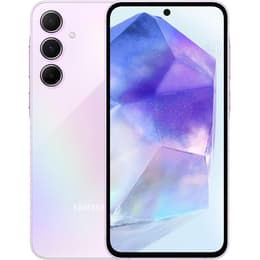
Galaxy A55
Galaxy A55
Starting at

Refurbished price:A$340.00

Versus A$699.00 new

See options
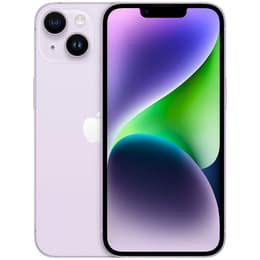
iPhone 14
iPhone 14
Starting at

Refurbished price:A$467.00

Versus A$1,049.00 new

See options

Ratings

The Samsung Galaxy A55, released in March 2024, and the Apple iPhone 14, launched in September 2022, represent distinct approaches to smartphone design and functionality. While the Galaxy A55 operates on the Android platform with Samsung's One UI, the iPhone 14 runs on Apple's iOS, offering different user experiences. Key differentiators include their operating systems, display technologies, and camera philosophies.

Scores

Durability

When considering the long-term usability of a smartphone, software support and physical resilience are important factors.

  • Release Timeline: The iPhone 14 was released in September 2022, making it an older model compared to the Galaxy A55, which launched in March 2024. This difference in release dates impacts their respective software support windows.
  • Software Longevity: The Galaxy A55 is promised four major Android OS upgrades and five years of security updates from its release, extending its support into the future [1, 11, 14, 23]. The iPhone 14 typically receives major iOS updates for approximately five to seven years from its launch, with an expected end of support around September 2028 [17, 29, 33].
  • Durability Features: The iPhone 14 features a Ceramic Shield front cover and an IP68 rating for dust and water resistance, indicating a high level of protection [3, 4, 24]. The Galaxy A55 offers an IP67 rating, providing robust dust and water resistance, and uses Corning Gorilla Glass Victus+ for its display [5, 8, 24].

Release year

2024

2022

Operating system

Android

iOS

Foldable

No

No

Performance

Performance in daily use is influenced by a combination of internal components, affecting how smoothly applications run and how efficiently tasks are handled.

  • Processing Power: The iPhone 14 is equipped with a powerful processor that ensures smooth operation for demanding applications and efficient multitasking, providing a responsive user experience [10, 19]. The Galaxy A55 features a current-generation processor designed to handle everyday tasks and moderate gaming with good speed and stable thermal management [9, 12, 22].
  • Storage and Multitasking: Both devices offer various internal storage options, with the Galaxy A55 also supporting expandable storage via a microSD card, allowing users to increase capacity for photos, videos, and apps [2, 5, 8]. The iPhone 14 comes with 6GB of RAM, contributing to its ability to manage multiple applications simultaneously without significant slowdowns [4, 26]. The Galaxy A55 is available with 8GB or 12GB of RAM, which aids in maintaining fluidity during heavy multitasking [2, 5, 8].
  • Battery Behavior: Users of the iPhone 14 generally report solid all-day battery life, even with consistent use [10, 19, 27]. The Galaxy A55 is noted for its substantial battery capacity, often lasting a full day or even two with moderate usage [9, 12, 15].

Memory (GB)

8 GB

6 GB

Screen quality

The visual experience is a primary interaction point, and both devices offer displays with distinct characteristics.

  • Display Technology and Clarity: The iPhone 14 features a 6.1-inch Super Retina XDR OLED display, known for its deep blacks, vibrant colors, and sharp resolution of 1170 x 2532 pixels, resulting in a pixel density of approximately 460 ppi [3, 4, 24]. The Galaxy A55 sports a larger 6.6-inch Super AMOLED display with a resolution of 1080 x 2340 pixels, offering vivid visuals and a pixel density of around 390 ppi [2, 5, 24].
  • Brightness and Smoothness: The iPhone 14's display offers high brightness levels, making content visible even in bright outdoor conditions [4, 10]. The Galaxy A55 also provides a bright and vibrant screen, with users noting its excellent visibility [9, 15]. A key difference is the refresh rate: the Galaxy A55 features a 120Hz refresh rate for smoother scrolling and more fluid animations, while the iPhone 14 has a standard 60Hz refresh rate [2, 5, 16, 24].
  • Viewing Experience: The larger screen of the Galaxy A55 provides more expansive viewing for media consumption and productivity [2, 24]. The iPhone 14's slightly smaller display offers a compact form factor that some users find easier for one-handed use [24].

Resolution

1080x2340

1170 x 2532

Audiovisual

Camera capabilities are a significant consideration for many users, with both devices offering versatile systems for capturing moments.

  • Rear Camera Systems: The iPhone 14 is equipped with an advanced dual-camera system, featuring a 12MP main sensor with a wide aperture and optical image stabilization, alongside a 12MP ultrawide lens, capable of capturing detailed photos in various lighting conditions [3, 26]. The Galaxy A55 boasts a triple-camera setup, including a 50MP main sensor with optical image stabilization, a 12MP ultrawide lens, and a 5MP macro lens for close-up shots [2, 5, 8].
  • Photography Performance: The iPhone 14 excels at capturing stunning photos in both bright and low-light environments, with consistent image processing [3]. The Galaxy A55 delivers acceptable to good clarity in photos, particularly in well-lit conditions, though some users note occasional slower focusing [9, 15].
  • Video Recording and Front Camera: Both devices support 4K video recording, with the iPhone 14 offering 4K Dolby Vision HDR recording for enhanced dynamic range [3, 8]. For selfies and video calls, the iPhone 14 has a 12MP front camera [3], while the Galaxy A55 features a higher-resolution 32MP front camera, though some users have observed a slight yellowish tone in certain selfie shots [5, 8, 9].

Miscellaneous

Beyond core features, several practical elements contribute to the overall user experience and device utility.

  • Connectivity and Ports: Both the Galaxy A55 and iPhone 14 support 5G connectivity for fast mobile data speeds, along with modern Wi-Fi and Bluetooth standards [3, 8]. The Galaxy A55 uses a USB Type-C 2.0 port for charging and data transfer [8, 12], while the iPhone 14 utilizes Apple's proprietary Lightning port [3].
  • Biometric Security: The iPhone 14 relies on Face ID for secure facial recognition and authentication [21]. The Galaxy A55 incorporates an in-display fingerprint sensor for biometric security, which users generally find responsive [5, 8, 20].
  • Design and Handling: The Galaxy A55 features a metal frame and a glass back, contributing to a premium feel, though some users find its 213g weight and 161.1 x 77.4 x 8.2 mm dimensions make it feel substantial in hand [8, 12, 20, 24]. The iPhone 14, with its aerospace-grade aluminum frame, is lighter at 172g and more compact at 146.7 x 71.5 x 7.8 mm, offering a different handling experience [3, 24].

Weight

213 oz

172 oz

Screen size (in)

6.6

6,1

Network

5G

5G

SIM card

Physical SIM

Physical SIM + eSIM

Carrier compatibility

Unlocked

Unlocked

User feedback for the Samsung Galaxy A55 often highlights its excellent display, smooth performance for everyday tasks, and robust battery life as significant advantages [9, 12, 15, 20, 22]. Common criticisms include its larger bezels, a perception of it being heavy, and some users noting that the camera can be slow to focus or that the selfie camera sometimes produces a yellowish tone [9, 12, 15, 20, 22].

For the iPhone 14, users frequently praise its consistently smooth performance, reliable battery life, and the clarity and vibrancy of its display [10, 19, 27]. Points of concern sometimes raised include the lack of a USB-C port, the perception of minimal upgrades over its predecessor for some users, and occasional reports of battery degradation [10, 27, 31].

Users prioritizing a larger, high-refresh-rate display and expandable storage may find the Galaxy A55 well-suited to their needs, especially if they appreciate the Android ecosystem and a longer software update commitment for a non-flagship device. Conversely, individuals who value a compact design, consistent performance within the iOS ecosystem, and a strong emphasis on privacy and security might lean towards the iPhone 14. Both devices offer a quality-assured refurbished option, providing an eco-friendly alternative for consumers seeking reliable technology.

See all articles

Our recent comparisons