iPhone 13 mini vs Motorola Razr 40

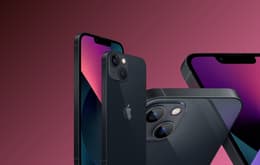
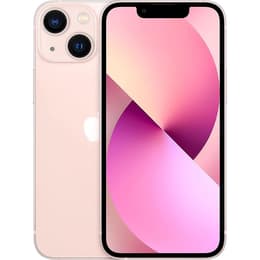
iPhone 13 mini
iPhone 13 mini
Starting at

Refurbished price:A$369.00

Versus A$1,049.00 new

See options
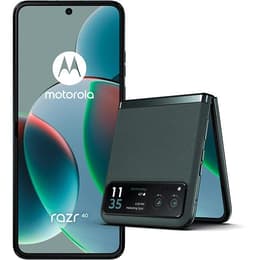
Motorola Razr 40
Motorola Razr 40
See options

Ratings

The iPhone 13 Mini, released in September 2021, and the Motorola Razr 40, launched in June 2023, represent distinct approaches to smartphone design and functionality. While the iPhone 13 Mini offers a compact, traditional smartphone experience running on iOS, the Motorola Razr 40 provides a foldable design with an Android operating system, emphasizing portability and a unique form factor. Their primary differentiators lie in their physical design, operating systems, and target user experiences.

Scores

Durability

When considering the long-term usability of these devices, their release timelines and software support policies are key factors.

  • Software Support: The iPhone 13 Mini, launched in September 2021, is expected to receive major iOS updates until at least 2028, with security updates potentially extending to 2030 or 2031. The Motorola Razr 40, released in June 2023, is anticipated to receive three major Android OS upgrades, up to Android 16, and four years of bi-monthly security updates. This suggests a longer period of major OS updates for the iPhone 13 Mini.
  • Physical Durability: The iPhone 13 Mini features a Ceramic Shield front cover and an IP68 rating for dust and water resistance, allowing submersion up to 6 meters for 30 minutes. The Motorola Razr 40 has a water-repellent coating and an IP52 rating, offering protection against dust and light splashes. Its foldable design introduces a hinge mechanism and a flexible screen, which are inherent considerations for long-term durability.
  • Repairability: The iPhone 13 Mini initially received a repairability score of 4 out of 10 from iFixit, which later improved to 6 out of 10 after an iOS update addressed certain repair challenges. The Motorola Razr 40 has been rated around 4 out of 10 for repairability, with challenges noted due to adhesive use, complex disassembly for components like the screen and battery, and the intricate nature of its folding display.

Release year

2021

2023

Compatible with latest Update

Yes

Yes

Operating system

iOS

Android

Foldable

No

Yes

Performance

The performance of a smartphone is crucial for daily tasks, from app usage to multitasking and gaming.

  • Processing Power: The iPhone 13 Mini is equipped with a powerful processor that enables smooth handling of demanding applications and efficient multitasking. Users generally report a highly responsive experience, even with graphically intensive games. The Motorola Razr 40 features a current-generation processor that provides snappy and responsive performance for everyday browsing and messaging. While capable for most tasks, it may not match the peak performance of higher-tier chipsets in very demanding scenarios.
  • Battery Behavior: The iPhone 13 Mini, due to its compact size, has a smaller battery capacity, which some heavy users report may require more frequent charging to last a full day. The Motorola Razr 40, with a larger battery, generally offers better battery life, often lasting a full day for moderate users. It also supports both wired and wireless charging.
  • Storage and Responsiveness: Both devices offer various internal storage options, with the iPhone 13 Mini starting at 128GB and going up to 512GB, and the Motorola Razr 40 offering 128GB or 256GB. The iPhone 13 Mini comes with 4GB of RAM, while the Motorola Razr 40 offers 8GB or 12GB of RAM, which can contribute to smoother multitasking with many applications open simultaneously on the Android device.

Memory (GB)

4 GB

8 GB

Screen quality

The display is a primary interface for smartphone interaction, and both devices offer distinct visual experiences.

  • Display Technology and Size: The iPhone 13 Mini features a 5.4-inch Super Retina XDR OLED display, known for its deep blacks, vibrant colors, and high pixel density. The Motorola Razr 40 boasts a larger 6.9-inch foldable LTPO AMOLED main display, offering a more expansive viewing area when unfolded. It also includes a 1.5-inch AMOLED cover display for quick notifications and interactions when folded.
  • Resolution and Clarity: The iPhone 13 Mini's 2340x1080 resolution on its smaller screen results in a high pixel density of 476 pixels per inch (ppi), contributing to sharp and clear visuals. The Motorola Razr 40's main display has a resolution of 1080 x 2640 pixels, providing good clarity across its larger surface.
  • Brightness and Refresh Rate: Both displays offer good brightness levels, with the iPhone 13 Mini reaching 800 nits typical max brightness and 1200 nits for HDR content. The Motorola Razr 40's main display can achieve a peak brightness of 1400 nits. A key difference is the refresh rate: the iPhone 13 Mini has a standard 60Hz refresh rate, while the Motorola Razr 40's main display offers a smoother 144Hz refresh rate, which can enhance the fluidity of scrolling and animations.

Resolution

1080 x 2340

1080 x 2640

Screen type

Super Retina XDR OLED

Foldable LTPO AMOLED

Audiovisual

Camera capabilities are a significant consideration for many users, and both phones offer competent systems for capturing photos and videos.

  • Rear Camera Systems: The iPhone 13 Mini features a dual 12MP camera system on the rear, comprising a wide-angle lens with a f/1.6 aperture and an ultrawide-angle lens with a f/2.4 aperture. It includes features like improved low-light performance and Cinematic mode for video. The Motorola Razr 40 has a dual rear camera setup with a 64MP wide-angle lens (f/1.7, with optical image stabilization) and a 13MP ultrawide-angle lens (f/2.2, 120˚ field of view).
  • Photography Performance: The iPhone 13 Mini is known for its consistent and high-quality image output in various conditions, with users praising its overall camera performance. The Motorola Razr 40's camera system delivers generally acceptable images, though some user reviews indicate that HDR performance can be inconsistent and colors may appear less accurate compared to some competitors. A notable advantage of the Razr 40 is the ability to use its main cameras for high-quality selfies, utilizing the cover display as a viewfinder.
  • Video Recording and Audio: Both devices are capable of recording 4K video. The iPhone 13 Mini supports 4K video recording at up to 60 frames per second. The Motorola Razr 40 also supports 4K video recording at 30 frames per second. Both phones offer stereo speakers for media consumption.

Main camera

12 megapixels

64 megapixels

Front camera

12 megapixels

32 megapixels

Miscellaneous

Beyond core features, several practical elements contribute to the overall user experience of a smartphone.

  • Connectivity and Ports: Both the iPhone 13 Mini and Motorola Razr 40 support 5G connectivity for faster mobile data speeds. The iPhone 13 Mini uses a Lightning connector for charging and data transfer, while the Motorola Razr 40 features a USB-C 2.0 port. The Razr 40 also supports Wi-Fi 6E and Bluetooth 5.3, compared to the iPhone 13 Mini's Wi-Fi 6 and Bluetooth 5.0. Neither device includes a traditional 3.5mm headphone jack.
  • Biometric Security: The iPhone 13 Mini relies on Face ID for secure facial recognition. The Motorola Razr 40 incorporates a side-mounted fingerprint sensor and also offers face unlock functionality.
  • Physical Design and Handling: The iPhone 13 Mini is notably compact and lightweight, measuring 131.5 x 64.2 x 7.65 mm and weighing 141 grams, making it easy for one-handed use and pocketability. The Motorola Razr 40's foldable design allows it to be significantly smaller when closed (88.2 x 74 x 15.8 mm) while offering a larger screen when unfolded (170.8 x 74 x 7.4 mm). It weighs 188.6 grams. The Razr 40's build materials include an aluminum frame, plastic front, and plastic back with a vegan leather finish.

Weight

140 oz

189 oz

Screen size (in)

5,4

6,9

Network

5G

5G

SIM card

Physical SIM + eSIM

Dual Physical SIM + eSIM

Carrier compatibility

Unlocked

Unlocked

The iPhone 13 Mini and Motorola Razr 40 cater to different user preferences, each excelling in distinct areas. Users frequently praise the iPhone 13 Mini for its compact size, making it ideal for one-handed operation and easy pocketability, a feature increasingly rare in modern smartphones. Its consistent camera performance and the long-term software support from Apple are also common points of appreciation. However, a frequent criticism is its battery life, which, while improved over its predecessor, may not consistently last a full day for heavy users.

The Motorola Razr 40 is often lauded for its unique foldable design, offering a large screen experience in a highly portable, pocket-friendly form factor when closed. Its main display's high refresh rate and the convenience of the external cover screen for quick interactions are also well-received. Conversely, some users note that its camera performance, particularly in challenging conditions, might not match the consistency of some competitors, and the functionality of the external display is more limited compared to its Ultra counterpart.

Users prioritizing a compact, traditional smartphone with robust performance and extended software longevity will find the iPhone 13 Mini well-suited to their needs. Those who value a unique, foldable design that offers a large screen in a small footprint, along with a high refresh rate display and the Android ecosystem, may lean toward the Motorola Razr 40. Both devices offer compelling features for their respective audiences. For those considering either model, exploring quality-assured refurbished options can provide an eco-friendly alternative to extend the life cycle of these devices.


See all articles

Our recent comparisons