Galaxy A53 5G vs Motorola Razr 40 Ultra

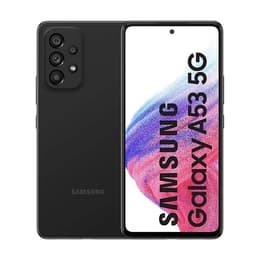
Galaxy A53 5G
Galaxy A53 5G
Starting at

Refurbished price:A$342.00

Versus A$624.00 new

See options
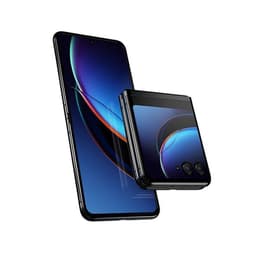
Motorola Razr 40 Ultra
See options

The Samsung Galaxy A53 5G (2022) and the Motorola Razr 40 Ultra (2023) represent distinct approaches to smartphone design and functionality. While the Galaxy A53 5G offers a traditional, durable slab form factor, the Razr 40 Ultra stands out with its innovative foldable clamshell design and a prominent external display. These core differences lead to varied user experiences, particularly in terms of portability, screen interaction, and overall performance.

Scores

Durability

The expected lifespan of a smartphone is influenced by its release timeline, software support, and physical durability features.

  • Software Support: The Samsung Galaxy A53 5G, released in March 2022, was promised four generations of Android OS upgrades and five years of security updates, extending its support through to Android 16 and security patches until 2027. The Motorola Razr 40 Ultra, launched in June 2023, is expected to receive three major Android OS upgrades and four years of bi-monthly security updates, also reaching Android 16. This means the Galaxy A53 5G offers a longer period of security updates.
  • Physical Durability: The Galaxy A53 5G features Corning Gorilla Glass 5 for screen protection and boasts an IP67 rating for dust and water resistance, indicating it can withstand immersion in water. The Razr 40 Ultra incorporates Gorilla Glass Victus on its cover screen and has a water-repellent design with an IP52 rating, offering protection against splashes but not full immersion. User reports suggest the Razr 40 Ultra's cover screen may have structural weaknesses under significant pressure.
  • Repairability: The Samsung Galaxy A53 5G is considered relatively repairable, with a score around 6.75 to 7.5 out of 10, indicating that components like the battery and screen are accessible, though some adhesive use is noted. In contrast, the Motorola Razr 40 Ultra's foldable design makes it less repair-friendly, with a repairability score of approximately 4 out of 10, due to strong adhesives and complex internal component access.

Release year

2022

2023

Compatible with latest Update

Yes

Yes

Operating system

Android

Android

Foldable

No

Yes

Performance

Performance in daily use, from app responsiveness to multitasking, is a key differentiator between these two devices.

  • Processing Power: The Motorola Razr 40 Ultra is equipped with a more powerful current-generation processor, which translates to smoother operation for demanding applications, faster game loading times, and more efficient multitasking. The Samsung Galaxy A53 5G, while capable for everyday tasks, may exhibit occasional stutters or slower app loading, particularly with graphically intensive games or numerous applications running simultaneously.
  • Storage and Responsiveness: Both devices offer ample storage options, with the Razr 40 Ultra providing faster UFS 3.1 storage, contributing to quicker data access and app launch times. The Galaxy A53 5G uses UFS 2.2 storage. The Razr 40 Ultra's higher RAM configurations also support more fluid transitions between multiple open applications.
  • Battery Behavior: The Galaxy A53 5G features a larger 5000 mAh battery, often providing more than a full day of heavy use and potentially up to two days with moderate usage. The Razr 40 Ultra has a smaller 3800 mAh battery, which, while optimized for its foldable form factor, typically offers sufficient power for a full day of moderate use but may require a top-up with extensive screen-on time or heavy gaming.

Memory (GB)

4 GB

8 GB

Screen quality

The visual experience on both devices is shaped by their display technology, resolution, and unique design elements.

  • Main Display Technology: The Samsung Galaxy A53 5G features a 6.5-inch Super AMOLED display, known for its vibrant colors, deep blacks, and excellent contrast. The Motorola Razr 40 Ultra's main display is a 6.9-inch pOLED panel, offering similar benefits of rich colors and contrast, but in a foldable format.
  • Refresh Rate and Brightness: The Galaxy A53 5G provides a smooth viewing experience with a 120Hz refresh rate and a peak brightness of 800 nits, ensuring good visibility in most lighting conditions. The Razr 40 Ultra elevates smoothness with a 165Hz refresh rate on its main display and a higher peak brightness of 1400 nits, enhancing outdoor visibility and overall fluidity.
  • External Display and Viewing Experience: A key differentiator for the Razr 40 Ultra is its large 3.6-inch external pOLED display, which is highly functional and allows users to interact with apps, notifications, and camera controls without unfolding the device. The Galaxy A53 5G, as a traditional smartphone, does not feature an external display.

Resolution

1080 x 2400

1080 x 2640

Screen type

Super AMOLED

Foldable LTPO AMOLED

Audiovisual

Both smartphones offer capable camera systems, but their strengths and features cater to different photographic needs.

  • Rear Camera System: The Samsung Galaxy A53 5G is equipped with a versatile quad-camera setup, including a 64MP main sensor with optical image stabilization (OIS), a 12MP ultrawide, a 5MP macro, and a 5MP depth sensor. It generally produces clear and colorful photos in good lighting, with a versatile range of lenses. The Motorola Razr 40 Ultra features a dual-camera system with a 12MP main sensor (f/1.5 aperture, OIS) and a 13MP ultrawide/macro lens. Its main camera performs well, especially in low light due to its wider aperture.
  • Low-Light and Video Performance: The Galaxy A53 5G's low-light performance is considered good but can be inconsistent, sometimes producing noisy or blurry images. Video recording quality is generally good, with 4K at 30fps and gyro-EIS. The Razr 40 Ultra's main camera excels in low-light conditions, and its video recording capabilities include 4K at 60fps from both internal and external cameras.
  • Selfie Camera and Unique Features: The Galaxy A53 5G has a 32MP front camera capable of 4K video recording. The Razr 40 Ultra also features a 32MP selfie camera, but its foldable design allows users to utilize the higher-quality main rear cameras for selfies and video calls, using the external display as a viewfinder.

Main camera

64 megapixels

12 megapixels

Front camera

32 megapixels

32 megapixels

Miscellaneous

Beyond core specifications, several practical elements contribute to the overall user experience and daily convenience.

  • Connectivity and Ports: Both devices support 5G connectivity, Wi-Fi, and Bluetooth. The Galaxy A53 5G includes Bluetooth 5.1, while the Razr 40 Ultra features the newer Bluetooth 5.3. The Galaxy A53 5G uses a USB-C port, while the Razr 40 Ultra also uses a USB-C port. Neither device includes a traditional 3.5mm headphone jack.
  • Biometric Security: The Samsung Galaxy A53 5G incorporates an in-display optical fingerprint sensor for secure unlocking. The Motorola Razr 40 Ultra features a side-mounted fingerprint reader, integrated into the power button, along with face unlock capabilities.
  • Design and Handling: The Galaxy A53 5G has a slate-type form factor, weighing 189 grams and measuring 8.1mm thick. The Razr 40 Ultra, when unfolded, is thinner at 6.9mm and weighs 184.5-188.5 grams, but folds into a compact, thicker square, offering enhanced portability. The Razr 40 Ultra's build materials include Gorilla Glass Victus and a 7000 series aluminum frame, with some variants featuring a vegan leather back.

Weight

189 oz

1 oz

Screen size (in)

6.5

6.9

Network

5G

5G

SIM card

Physical SIM

Dual Physical SIM

Carrier compatibility

Unlocked

Unlocked

The Samsung Galaxy A53 5G and the Motorola Razr 40 Ultra cater to different user preferences, each offering a distinct set of advantages. Users often praise the Galaxy A53 5G for its long-lasting battery, vibrant display, and consistent software update policy. Its camera system is generally well-regarded for versatility in daylight conditions. Some common criticisms include occasional performance stutters with demanding tasks and inconsistent low-light camera performance.

The Motorola Razr 40 Ultra is frequently lauded for its unique foldable design, making it highly portable, and its large, functional external display, which enhances quick interactions. Its powerful processor and high refresh rate main display also receive positive feedback for a smooth user experience. However, some users note that its battery life, while improved for a foldable, may not match traditional slab phones, and its camera, while capable, might not compete with the best non-folding flagships in all scenarios. Concerns about the durability of the cover screen under stress have also been raised.

Users prioritizing extended software support, a larger battery, and a robust, water-resistant traditional smartphone design may find the Samsung Galaxy A53 5G well-suited to their needs. Conversely, those who value a compact, innovative form factor, a highly interactive external display, and a powerful processor for a fluid daily experience will likely lean towards the Motorola Razr 40 Ultra. Both devices offer compelling features, and considering a quality-assured refurbished option for either model can provide an eco-friendly alternative for making an informed choice.

See all articles

Our recent comparisons