Galaxy A53 5G vs iPhone 13

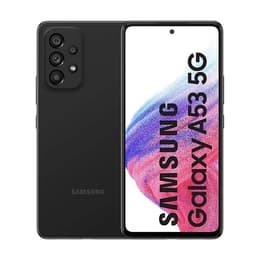
Galaxy A53 5G
Galaxy A53 5G
Starting at

Refurbished price:A$268.00

Versus A$991.00 new

See options
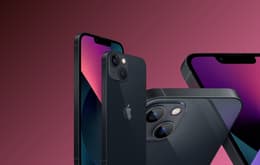
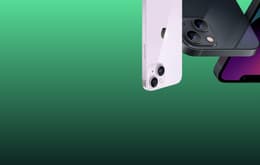
iPhone 13
iPhone 13
Starting at

Refurbished price:A$413.00

Versus A$1,099.00 new

See options

Ratings

The Samsung Galaxy A53 5G, released in March 2022, and the Apple iPhone 13, launched in September 2021, represent distinct approaches to smartphone design and functionality. While the Galaxy A53 5G operates on the Android platform, offering a customizable experience, the iPhone 13 runs on Apple's iOS, known for its integrated ecosystem. Key differentiators include their operating systems, display technologies, and camera philosophies, catering to different user preferences.

Scores

Durability

When considering the long-term usability of these devices, both offer substantial software support, though with differing timelines and approaches.

  • Software Longevity: The Samsung Galaxy A53 5G was promised four major Android OS upgrades and five years of security updates from its release, meaning it is expected to receive updates up to Android 16 and security patches until at least 2027. The iPhone 13, typically, receives iOS updates for approximately five to six years from its release, with security updates often extending beyond that period, potentially until 2027 or 2028.
  • Physical Durability: The Galaxy A53 5G features a plastic back and frame with a Gorilla Glass 5 front, offering IP67 dust and water resistance. The iPhone 13 uses a Ceramic Shield front cover, a glass back, and an aluminum frame, boasting an IP68 rating for enhanced dust and water resistance.
  • Repairability: The Galaxy A53 5G has a repairability score of 6.75 out of 10, with components like the battery and screen being relatively accessible for repair. The iPhone 13 received a repairability score of 5.5 out of 10 from iFixit, noting that while battery and display replacements are prioritized, some repairs can be complex due to software-hardware linkages.

Release year

2022

2021

Compatible with latest Update

Yes

Yes

Operating system

Android

iOS

Foldable

No

No

Performance

The performance of a smartphone significantly impacts daily usage, from app responsiveness to handling demanding tasks. These two devices offer different levels of processing power and battery endurance.

  • Processing Capabilities: The iPhone 13 is equipped with a powerful processor that delivers fast and fluid performance, making it well-suited for intensive applications, advanced gaming, and seamless multitasking. The Galaxy A53 5G features a mid-range processor that handles everyday tasks smoothly, but users might notice occasional delays or less snappy performance with very demanding apps or graphically intensive games.
  • System Responsiveness: Users generally report the iPhone 13 offers consistently smooth navigation and quick app loading times, contributing to a highly responsive user experience. The Galaxy A53 5G provides a generally smooth experience, though some users have noted instances of minor lag or slower app closure, particularly when the device is under heavier load.
  • Battery Behavior: The Galaxy A53 5G houses a larger battery capacity, often translating to extended usage times, with many users reporting it can last more than a full day even with moderate to heavy use. The iPhone 13 also offers strong battery life, representing a significant improvement over its predecessor, capable of easily lasting a full day for most users.

Memory (GB)

6 GB

4 GB

Screen quality

The visual experience is a primary interaction point for any smartphone, and both devices offer vibrant displays with distinct characteristics.

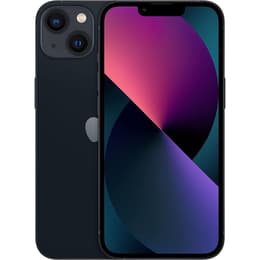
  • Display Technology and Clarity: Both phones feature OLED display technology, providing deep blacks and vibrant colors. The iPhone 13 has a 6.1-inch Super Retina XDR OLED display with a resolution of 1170 x 2532 pixels. The Galaxy A53 5G sports a larger 6.5-inch Super AMOLED display with a resolution of 1080 x 2400 pixels.
  • Refresh Rate and Smoothness: A notable difference lies in their refresh rates. The Galaxy A53 5G offers a 120Hz refresh rate, which results in smoother scrolling and more fluid animations, enhancing the overall visual experience. The iPhone 13 maintains a standard 60Hz refresh rate, which is still smooth for most content but does not offer the same level of fluidity as higher refresh rate displays.
  • Brightness and Viewing Experience: Both displays offer good brightness levels for outdoor visibility. The iPhone 13's display can reach high peak brightness for HDR content, making media consumption engaging. The Galaxy A53 5G also provides good sunlight legibility with up to 800 nits peak brightness.

Resolution

1080 x 2400

1170 x 2532

Screen type

Super AMOLED

Super Retina XDR OLED

Audiovisual

Camera capabilities are a significant factor for many users, and both devices provide versatile systems for capturing photos and videos.

  • Rear Camera System: The iPhone 13 features a dual 12MP camera system, including a wide and an ultrawide lens, with sensor-shift optical image stabilization (OIS) on the main sensor for improved low-light performance and stability. The Galaxy A53 5G comes with a quad-camera setup, featuring a 64MP main sensor with OIS, a 12MP ultrawide, a 5MP macro, and a 5MP depth sensor, offering more versatility in lens options.
  • Photography Performance: The iPhone 13 is praised for its consistent image quality, excellent detail, and natural color reproduction in various lighting conditions, with significant improvements in low-light photography. The Galaxy A53 5G delivers good daylight photos with vibrant colors and detail, and its main camera performs well in low light, especially with Night mode.
  • Video Recording Quality: Both phones are capable of recording high-quality video. The iPhone 13 offers Cinematic mode for shallow depth-of-field video and records in 4K at 60fps. The Galaxy A53 5G can record 4K video at 30fps across all its cameras, with good video stabilization on the main sensor.

Main camera

64 megapixels

12 megapixels

Front camera

32 megapixels

12 megapixels

Miscellaneous

Beyond the core features, several practical elements contribute to the overall user experience and device utility.

  • Connectivity and Ports: Both devices support 5G connectivity for faster mobile data speeds. The iPhone 13 supports Wi-Fi 6 and Bluetooth 5.0, and uses Apple's proprietary Lightning port. The Galaxy A53 5G supports Wi-Fi 5 (802.11ac) and Bluetooth 5.1, and features a more universal USB-C port.
  • Biometric Security: The iPhone 13 relies on Face ID for secure facial recognition. The Galaxy A53 5G incorporates an under-display optical fingerprint sensor for biometric authentication.
  • Design and Handling: The iPhone 13 has a compact design with flat edges, weighing 174g and measuring 146.7 x 71.5 x 7.7 mm, making it comfortable for one-handed use. The Galaxy A53 5G is slightly larger and heavier at 189g and 159.6 x 74.8 x 8.1 mm, featuring a design with a plastic back and frame that some users find comfortable to hold.

Weight

189 oz

173 oz

Screen size (in)

6.5

6,1

Network

5G

5G

SIM card

Dual Physical SIM

Physical SIM + eSIM

Carrier compatibility

Unlocked

Unlocked

The Samsung Galaxy A53 5G and the iPhone 13 cater to different user priorities, each excelling in specific areas. Users often praise the Galaxy A53 5G for its expansive and fluid 120Hz AMOLED display, its long-lasting battery, and the versatility offered by its multi-lens camera system. Some common criticisms, however, point to its performance not always matching higher-end devices, with occasional stutters in demanding applications.

Conversely, the iPhone 13 receives consistent acclaim for its powerful and efficient processor, delivering a consistently smooth and responsive user experience. Its camera system is highly regarded for its reliable image quality and strong low-light performance, and its improved battery life is a significant highlight. A frequent point of discussion for the iPhone 13 is its standard 60Hz display, which some users find less fluid compared to devices with higher refresh rates.

Users prioritizing a large, high-refresh-rate display and extensive battery life, along with a versatile camera setup and the Android ecosystem, may find the Samsung Galaxy A53 5G well-suited to their needs. Those who value top-tier processing power, consistent camera performance, a compact design, and the integrated iOS experience will likely lean towards the iPhone 13. Both devices offer a compelling package, and choosing between them often comes down to individual preferences for operating system, display fluidity, and specific camera features. For those seeking a more sustainable choice, both models are available as quality-assured refurbished options.


See all articles

Our recent comparisons