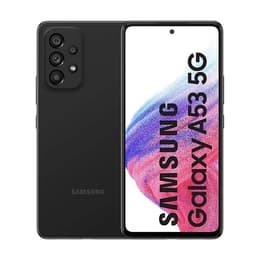
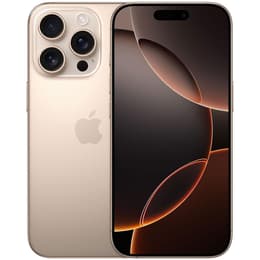

Galaxy A53 5G vs iPhone 16 Pro

Galaxy A53 5G
Galaxy A53 5G
Starting at

Refurbished price:A$267.00

Versus A$991.00 new

See options
iPhone 16 Pro
iPhone 16 Pro
Starting at

Refurbished price:A$1,134.00

Versus A$1,999.00 new

See options

Ratings

The Samsung Galaxy A53 5G, released in March 2022, and the iPhone 16 Pro, launched in September 2024, represent distinct offerings within the smartphone market. While the Galaxy A53 5G is positioned as a capable mid-range Android device, the iPhone 16 Pro stands as a premium flagship running Apple's iOS. These two devices cater to different user expectations, primarily differing in their performance capabilities, camera systems, and overall ecosystem experience.

Scores

Durability

When considering the long-term usability of a smartphone, factors like software support and physical resilience are key. The Galaxy A53 5G and iPhone 16 Pro offer different trajectories in this regard.

  • Software Longevity: The Galaxy A53 5G launched with Android 12 and was promised four major OS upgrades and five years of security updates, extending its software support until approximately March 2027. The iPhone 16 Pro, released with iOS 18, is expected to receive software updates for a longer duration, typically 6-7 years from its release, offering an extended period of access to new features and security patches.
  • Physical Durability: The Galaxy A53 5G features a plastic back and a Gorilla Glass 5 front, along with an IP67 rating for dust and water resistance, meaning it can withstand immersion in up to 1 meter of water for 30 minutes. The iPhone 16 Pro, on the other hand, incorporates a more robust titanium frame and Ceramic Shield front, coupled with an IP68 rating, allowing for submersion in deeper water for longer periods.
  • Repairability: While specific repairability scores can vary by region and independent assessments, both devices are designed with modern smartphone construction, which often involves specialized tools for repairs. The availability of parts and authorized service centers can influence the practical ease of repair for users over time.

Release year

2022

2024

Compatible with latest Update

Yes

Yes

Foldable

No

No

Performance

The performance of a smartphone dictates its responsiveness and ability to handle various tasks, from everyday browsing to demanding applications. The Galaxy A53 5G and iPhone 16 Pro exhibit notable differences in this area.

  • Everyday Responsiveness: The Galaxy A53 5G, powered by its internal processor, handles daily tasks like web browsing, social media, and light app usage smoothly. Users generally report a fluid experience for common activities. The iPhone 16 Pro, featuring a more advanced internal chip, delivers exceptionally fast app loading, seamless multitasking, and a highly responsive user interface, even with numerous applications running simultaneously.
  • Demanding Applications and Gaming: For more intensive tasks such as graphic-heavy gaming or video editing, the Galaxy A53 5G performs adequately but may encounter occasional stutters or slower loading times, particularly in graphically demanding titles. The iPhone 16 Pro is engineered to excel in these scenarios, offering sustained high performance for complex applications and delivering a smooth, high-frame-rate gaming experience.
  • Storage and Multitasking: The Galaxy A53 5G offers storage options up to 256GB, expandable via microSD card, providing flexibility for users who need additional space for media and files. The iPhone 16 Pro comes with storage configurations ranging from 128GB up to 1TB, without expandable storage, and its system memory is optimized to support extensive multitasking without performance degradation.

Memory (GB)

6 GB

8 GB

Screen quality

The display is a primary interface for smartphone interaction, and both devices offer distinct visual experiences tailored to their respective segments.

  • Display Technology and Clarity: The Galaxy A53 5G features a 6.5-inch Super AMOLED display with a Full HD+ resolution (1080x2400 pixels), providing vibrant colors and deep blacks. The iPhone 16 Pro boasts a 6.3-inch Super Retina XDR OLED display with a higher resolution of 2868 by 1230 pixels, resulting in sharper text and more detailed images.
  • Brightness and Refresh Rate: The Galaxy A53 5G offers a 120Hz refresh rate for smooth scrolling and animations, with a typical brightness of up to 800 nits. The iPhone 16 Pro also features a 120Hz adaptive refresh rate (ProMotion technology) for fluid visuals, but it achieves higher brightness levels, reaching 1000 nits typical, 1600 nits peak for HDR content, and up to 2000 nits peak outdoors, enhancing visibility in bright conditions.
  • Viewing Experience: The larger screen of the Galaxy A53 5G provides an expansive canvas for media consumption. The iPhone 16 Pro's display, while slightly smaller, benefits from its higher pixel density and superior brightness, offering a more immersive and detailed viewing experience, especially for high-quality video content.

Resolution

1080 x 2400

1206 x 2622

Screen type

Super AMOLED

LTPO Super Retina XDR OLED

Audiovisual

Camera capabilities are a significant consideration for many users, and both the Galaxy A53 5G and iPhone 16 Pro provide different photographic tools.

  • Rear Camera Systems: The Galaxy A53 5G is equipped with a versatile quad-camera setup, including a 64MP main sensor with optical image stabilization (OIS), a 12MP ultrawide lens, and dedicated 5MP macro and depth sensors. The iPhone 16 Pro features an advanced triple-lens system, comprising a 48MP main camera (capable of 24MP or 48MP images), a new 48MP ultrawide lens, and a 12MP telephoto lens with 5x optical zoom.
  • Photography Performance: In everyday lighting, the Galaxy A53 5G captures detailed and colorful photos, with its OIS aiding in sharper images. The iPhone 16 Pro excels in various conditions, offering superior detail, dynamic range, and color accuracy, particularly benefiting from its larger sensors and advanced computational photography for low-light scenarios.
  • Video Recording and Features: The Galaxy A53 5G supports 4K video recording at 30 frames per second. The iPhone 16 Pro offers extensive video capabilities, including 4K recording at up to 120 frames per second with Dolby Vision, ProRes video, Cinematic mode, and Action mode, providing professional-grade video capture options. It also supports spatial video and photos.

Main camera

64 megapixels

48 megapixels

Front camera

32 megapixels

12 megapixels

Miscellaneous

Beyond core features, several practical elements contribute to the overall user experience of these smartphones.

  • Connectivity Standards: The Galaxy A53 5G supports 5G networks, Wi-Fi 5 (802.11 a/b/g/n/ac), and Bluetooth 5.1. The iPhone 16 Pro offers more advanced connectivity with 5G (including sub-6GHz and mmWave), Wi-Fi 7 (802.11be), and Bluetooth 5.3, providing faster wireless speeds and improved network efficiency.
  • Ports and Biometrics: Both devices utilize a USB-C port for charging and data transfer, though the Galaxy A53 5G uses USB-C 2.0, while the iPhone 16 Pro features faster USB-C 3 with DisplayPort support. The Galaxy A53 5G includes an under-display fingerprint scanner for biometric security. The iPhone 16 Pro relies on Face ID for secure authentication.
  • Design and Handling: The Galaxy A53 5G has dimensions of 159.6 x 74.8 x 8.1 mm and weighs 189g, featuring a plastic back. The iPhone 16 Pro, with its 6.3-inch display, measures 149.6 x 71.5 x 8.25 mm and weighs 199g, utilizing a lighter yet durable titanium frame. The iPhone 16 Pro also introduces a new Camera Control button for enhanced photography interaction.

Weight

189 oz

199 oz

Screen size (in)

6.5

6.3

Network

5G

5G

SIM card

Dual Physical SIM

Physical SIM + eSIM

Carrier compatibility

Unlocked

Unlocked

The Samsung Galaxy A53 5G and iPhone 16 Pro cater to distinct user needs and preferences, reflecting their different market positions and release timelines. User feedback for the Galaxy A53 5G often praises its long-lasting 5000 mAh battery, which many find comfortably lasts over a day even with consistent use. Its vibrant Super AMOLED display and commitment to multiple Android OS updates are also frequently highlighted as strong points for a device in its category. Some common criticisms, however, point to its processor performance, which, while adequate for daily tasks, can struggle with more demanding games or heavy multitasking compared to higher-end devices. The absence of a charger in the box and slower charging speeds relative to some competitors are also noted.

For the iPhone 16 Pro, user sentiment consistently emphasizes its exceptional performance, driven by its advanced internal chip, which provides a fluid experience across all applications, including intensive gaming and professional-grade tasks. The significantly upgraded camera system, with its new 48MP ultrawide lens and 5x telephoto zoom, receives considerable acclaim for its versatility and image quality. Users also appreciate the improved battery life, which offers extended usage even on busy days. The premium build quality, featuring a titanium frame and Ceramic Shield, contributes to its perceived durability and sophisticated feel.

Users prioritizing an extended software support timeline, top-tier performance for demanding applications, and a highly advanced camera system for both photos and videos will find the iPhone 16 Pro well-suited to their needs. Its robust build and cutting-edge connectivity also appeal to those seeking a premium, future-proof device. Conversely, users who value a larger display, expandable storage, and a strong battery life for everyday use within the Android ecosystem may lean toward the Galaxy A53 5G. It remains a solid choice for those seeking a reliable smartphone experience without the absolute latest in processing power or camera technology. Both devices, whether new or as quality-assured refurbished options, offer distinct advantages depending on individual priorities.


See all articles

Our recent comparisons