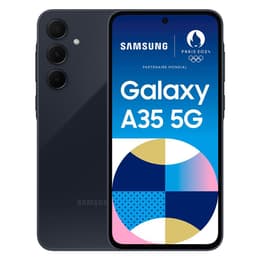
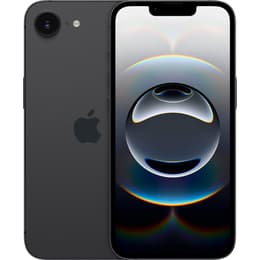

Galaxy A35 vs iPhone 16e

Galaxy A35
Galaxy A35
See options
iPhone 16e
iPhone 16e
Starting at

Refurbished price:A$838.00

Versus A$999.00 new

See options

The Samsung Galaxy A35, released in March 2024, and the iPhone 16E, introduced in February 2025, represent distinct approaches to smartphone design and functionality. While the Galaxy A35 operates on the Android platform, offering a customizable experience, the iPhone 16E runs on Apple's iOS, known for its integrated ecosystem. Key differentiators between these two devices include their display technologies, camera philosophies, and overall user interface, catering to varied preferences.

Scores

Durability

When considering the long-term usability of a smartphone, factors like software support and physical resilience are important. Both devices offer robust support timelines and durable designs, though with different specifics.

  • Software Longevity: The Samsung Galaxy A35 is promised four generations of Android OS updates, extending its software support until Android 18, alongside five years of security updates until 2029. The iPhone 16E, running on iOS, typically receives software updates for an extended period, often five to six years from its release, ensuring access to the latest features and security enhancements for a considerable duration.
  • Physical Durability: The Galaxy A35 features Gorilla Glass Victus+ on its front display and carries an IP67 rating for dust and water resistance, indicating protection against immersion in up to 1 meter of water for 30 minutes. The iPhone 16E boasts a Ceramic Shield front cover, which offers enhanced drop performance, and an IP68 rating, allowing for submersion in up to 6 meters of water for 30 minutes.
  • Repairability Considerations: While specific repairability scores can vary, both manufacturers generally offer repair services. Users seeking to extend the life of their devices beyond their initial purchase can consider quality-assured refurbished options, which often come with warranties.

Release year

2024

2025

Operating system

Android

iOS

Foldable

No

No

Performance

The performance of a smartphone is crucial for daily tasks, from navigating applications to engaging in demanding activities like gaming. Both the Galaxy A35 and iPhone 16E deliver capable performance, optimized for their respective operating systems.

  • Processing Power: The Galaxy A35 is equipped with a processor that handles everyday applications and multitasking smoothly. For more intensive tasks like mobile gaming, it performs well on medium settings, though extended sessions with high graphics might show some frame drops. The iPhone 16E features a current-generation Apple chip, designed for fast and fluid performance across a wide range of applications, including demanding games and Apple Intelligence features.
  • Multitasking and Responsiveness: With 8GB of RAM, the Galaxy A35 allows for efficient switching between multiple applications without significant slowdowns. The iPhone 16E also includes 8GB of RAM, contributing to its responsive user experience and smooth handling of various tasks simultaneously.
  • Battery Endurance: The Galaxy A35 houses a 5000mAh battery, providing reliable power for a full day of moderate to heavy use, with some users reporting up to a day and a half on lighter usage. The iPhone 16E is noted for its extended battery life, offering up to 26 hours of video playback, which is described as the best battery life ever on a 6.1-inch iPhone.
  • Storage Options: The Galaxy A35 is available with 128GB or 256GB of internal storage, with the added flexibility of expandable storage via a microSD card. The iPhone 16E offers storage configurations of 128GB, 256GB, and 512GB, catering to users with varying storage needs.

Memory (GB)

6 GB

8 GB

Screen quality

The display is a primary interface for smartphone interaction, and both devices offer distinct visual experiences tailored to their respective technologies.

  • Display Technology and Clarity: The Samsung Galaxy A35 features a 6.6-inch Super AMOLED display, known for its vibrant colors, deep blacks, and excellent contrast. It offers a Full HD+ resolution of 2340x1080 pixels, resulting in a clear and sharp viewing experience. The iPhone 16E comes with a 6.1-inch Super Retina XDR OLED display, which also delivers rich colors and deep blacks, with a resolution of 2532x1170 pixels, providing crisp visuals.
  • Smoothness and Brightness: The Galaxy A35's display boasts a 120Hz refresh rate, contributing to smoother scrolling and more fluid animations. It achieves a peak brightness of 1000 nits, ensuring good visibility even in bright outdoor conditions. The iPhone 16E's OLED display offers a typical maximum brightness of 800 nits and can reach up to 1200 nits for HDR content, providing clear viewing in various lighting environments.
  • Viewing Experience: The larger screen size of the Galaxy A35 offers an expansive canvas for media consumption and multitasking. The iPhone 16E's 6.1-inch display provides a compact yet immersive viewing experience, suitable for one-handed use while still delivering high-quality visuals.

Resolution

1080x2340

2532x1170

Audiovisual

Camera capabilities are a significant consideration for many users, and both the Galaxy A35 and iPhone 16E offer advanced systems for capturing photos and videos.

  • Rear Camera System: The Galaxy A35 features a versatile triple-camera setup on the rear, including a 50-megapixel main sensor with optical image stabilization (OIS), an 8-megapixel ultrawide lens, and a 5-megapixel macro lens. This configuration allows for detailed shots in good lighting, expansive landscape photos, and close-up captures. The iPhone 16E is equipped with a single 48-megapixel Fusion main camera, which utilizes advanced processing to deliver high-resolution photos and offers a 2x optical-quality zoom through sensor cropping.
  • Low-Light and Video Performance: The Galaxy A35's main camera performs well in daylight, producing vibrant and detailed images, and its low-light performance is considered decent, especially when Night mode is automatically engaged. Both the main and front cameras can record video in 4K resolution at 30 frames per second. The iPhone 16E's camera system is designed to capture more detail in low-light conditions with its Night mode and records 4K Dolby Vision video at various frame rates, known for its high video quality.
  • Front Camera and Audio: For selfies and video calls, the Galaxy A35 has a 13-megapixel front camera that produces pleasing shots with good detail and color, and can also record in 4K. The iPhone 16E features a 12-megapixel TrueDepth front camera, capable of capturing high-quality selfies and videos. Both devices include stereo speakers, offering a more immersive audio experience for media consumption.

Miscellaneous

Beyond core features, several practical elements contribute to the overall user experience and daily convenience of a smartphone.

  • Connectivity and Ports: The Samsung Galaxy A35 supports 5G connectivity, Wi-Fi 6, and Bluetooth 5.3, ensuring modern wireless communication. It features a USB-C port for charging and data transfer. The iPhone 16E also offers 5G connectivity, Wi-Fi 7, and Bluetooth 5.3, along with a USB-C port, aligning with current industry standards.
  • Biometric Security: The Galaxy A35 incorporates an in-display fingerprint sensor for secure and convenient unlocking, complemented by face recognition. The iPhone 16E relies on Face ID, Apple's facial recognition system, for secure authentication and unlocking.
  • Design and Handling: The Galaxy A35 features a design with a glass front and plastic back, weighing 209 grams. Its dimensions make it a larger device, which can be beneficial for media viewing. The iPhone 16E has an aluminum frame with a glass back and a Ceramic Shield front, weighing 170 grams. It features a 6.1-inch display, offering a balance between screen size and comfortable one-handed use. The iPhone 16E also includes an Action Button, providing customizable quick access to various functions.

Weight

209 oz

167 oz

Screen size (in)

6.6

6.1

Network

5G

5G

SIM card

Physical SIM + eSIM

Physical SIM + eSIM

Carrier compatibility

Unlocked

Unlocked

The Samsung Galaxy A35 and iPhone 16E cater to different user preferences, each excelling in specific areas. Users often praise the Galaxy A35 for its vibrant Super AMOLED display, extended battery life, and the flexibility of expandable storage. Its camera system is generally well-regarded for daylight photography, and the commitment to four years of OS updates is a significant advantage for Android users. Some common feedback notes that while its performance is solid for most tasks, it might not match the raw power of higher-end devices for very demanding applications, and low-light camera performance, while decent, could see further improvements.

The iPhone 16E receives commendation for its powerful processing capabilities, which enable smooth operation and support for advanced features like Apple Intelligence. Its OLED display offers excellent visual quality, and its camera system is noted for high-resolution photos and strong video capabilities, even with a single lens. The extended battery life for a 6.1-inch iPhone is also a frequently highlighted positive. Some users might note the absence of MagSafe charging and mmWave 5G as points of differentiation from other iPhone models.

Users prioritizing a large, vibrant display, extensive Android customization, and expandable storage may find the Galaxy A35 well-suited to their needs. Those who value a highly integrated ecosystem, robust processing power for demanding tasks, and a strong emphasis on video quality and long-term software support might lean towards the iPhone 16E. Both devices offer compelling features, and choosing between them often comes down to individual priorities regarding operating system preference, display characteristics, and specific performance requirements. For those seeking a sustainable choice, both models are available as quality-assured refurbished options, providing an eco-friendly alternative to new purchases.

See all articles

Our recent comparisons