
Galaxy A33 5G vs Motorola Razr 40 Ultra

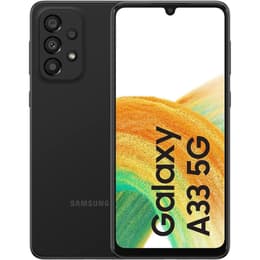
Galaxy A33 5G
Galaxy A33 5G
Starting at

Refurbished price:A$206.00

Versus A$495.00 new

See options
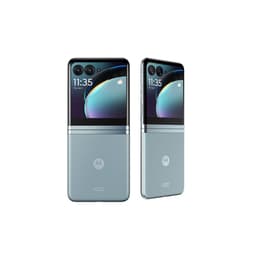
Motorola Razr 40 Ultra
See options

The Samsung Galaxy A33 5G, a traditional smartphone, was released in April 2022, while the Motorola Razr 40 Ultra, a foldable clamshell device, launched in June 2023. These two devices cater to different user preferences, with the A33 5G offering a conventional form factor and the Razr 40 Ultra providing a compact, foldable design with a prominent external display. Both run on the Android operating system, but they differ significantly in their hardware and user experience.

Scores

Durability

The practical lifespan and software support differ between these two devices, largely due to their release timelines and manufacturer policies.

  • Software Longevity: The Samsung Galaxy A33 5G, released in April 2022, benefits from Samsung's policy of providing four generations of Android OS upgrades and five years of security patches, potentially extending its software support until Android 16. The Motorola Razr 40 Ultra, launched in June 2023, shipped with Android 13, but user reports suggest that Motorola's software update frequency can be slower compared to some competitors.
  • Physical Durability: The Galaxy A33 5G features an IP67 rating for dust and water resistance, meaning it can withstand immersion in up to 1 meter of freshwater for 30 minutes, and its display is protected by Corning Gorilla Glass 5. The Razr 40 Ultra has an IP52 rating, offering splash resistance, and its cover screen is protected by Gorilla Glass Victus. While the Razr 40 Ultra's hinge is designed for durability, some user experiences and stress tests have indicated potential vulnerabilities in the cover screen's structural support.
  • Repairability: Both devices, as modern smartphones, present challenges for user repair. The foldable nature of the Razr 40 Ultra introduces additional complexities in repair compared to the more traditional design of the Galaxy A33 5G.

Release year

2022

2023

Compatible with latest Update

Yes

Yes

Operating system

Android

Android

Foldable

No

Yes

Performance

The performance capabilities of the Galaxy A33 5G and the Razr 40 Ultra are distinct, reflecting their different hardware and target user experiences.

  • Processing Power: The Motorola Razr 40 Ultra is equipped with a current-generation processor, allowing it to handle demanding applications, graphic-intensive games, and multitasking with notable smoothness and responsiveness. The Samsung Galaxy A33 5G features a capable octa-core processor that provides a smooth experience for everyday tasks, web browsing, and social media, though it may exhibit slight choppiness with very demanding applications or heavy multitasking compared to higher-end devices.
  • Multitasking and Storage: The Razr 40 Ultra offers configurations with 8GB or 12GB of RAM and 256GB or 512GB of internal storage, providing ample space and efficient multitasking for power users. The Galaxy A33 5G comes with 6GB or 8GB of RAM and 128GB or 256GB of internal storage, which is expandable via a microSD card up to 1TB, offering flexibility for users who require more storage for media and files.
  • Battery Usage: The Razr 40 Ultra, with its 3800mAh battery, is noted for good battery life for a foldable, especially when utilizing its external display for quick interactions, allowing many users to get through a full day. The Galaxy A33 5G houses a larger 5000mAh battery, which, combined with its efficient processor, typically provides extended usage, often lasting up to two days for moderate users.

Memory (GB)

4 GB

8 GB

Screen quality

The display experience on these two smartphones varies significantly due to their form factors and panel technologies.

  • Main Display Technology and Smoothness: The Motorola Razr 40 Ultra features a 6.9-inch pOLED main display with a high 165Hz refresh rate, providing exceptionally smooth scrolling and responsive interactions, particularly beneficial for gaming and fast-paced content. The Samsung Galaxy A33 5G has a 6.4-inch Super AMOLED display with a 90Hz refresh rate, offering a fluid visual experience for everyday use and vibrant colors.
  • Clarity and Brightness: Both devices offer Full HD+ resolutions, ensuring sharp text and clear images. The Razr 40 Ultra's main display can reach a peak brightness of 1400 nits, providing excellent visibility even in bright outdoor conditions. The Galaxy A33 5G's display can reach up to 800 nits of brightness, which is generally sufficient for outdoor viewing, though it may be less vibrant under direct sunlight.
  • Unique External Display: A key differentiator for the Razr 40 Ultra is its large 3.6-inch pOLED external display, which boasts a 144Hz refresh rate and high resolution. This cover screen is highly functional, allowing users to interact with apps, view notifications, and take photos without opening the phone, enhancing convenience and potentially conserving main screen battery usage. The Galaxy A33 5G does not feature an external display.

Resolution

1080 x 2400

1080 x 2640

Screen type

Super AMOLED

Foldable LTPO AMOLED

Audiovisual

The camera systems on the Galaxy A33 5G and the Razr 40 Ultra are designed with different priorities and offer distinct photographic experiences.

  • Rear Camera Configuration: The Samsung Galaxy A33 5G features a versatile quad-camera setup, including a 48MP main sensor with Optical Image Stabilization (OIS), an 8MP ultrawide lens, a 5MP macro lens, and a 2MP depth sensor. The Motorola Razr 40 Ultra has a dual-camera system on the rear, comprising a 12MP main sensor with OIS and a wider f/1.5 aperture, alongside a 13MP ultrawide lens that also functions for macro photography.
  • Photography Performance: The A33 5G's main camera, with OIS, performs well in various lighting conditions, offering good detail and vibrant colors, and its macro lens provides decent close-up shots. The Razr 40 Ultra's main camera, with its wider aperture, excels in capturing more light, leading to improved low-light performance and good detail in well-lit environments. Its ultrawide camera also features autofocus, which is beneficial for close-up subjects.
  • Video and Selfies: Both phones are capable of recording 4K video at 30 frames per second with their main rear cameras. The Razr 40 Ultra can record 4K video at 60 frames per second with its main camera and offers a 32MP internal selfie camera, which can be used with the external display for high-quality selfies and vlogging. The Galaxy A33 5G has a 13MP front-facing camera.

Main camera

48 megapixels

12 megapixels

Front camera

13 megapixels

32 megapixels

Miscellaneous

Beyond core features, several practical elements distinguish the Galaxy A33 5G and the Razr 40 Ultra in daily use.

  • Connectivity and Ports: Both devices support 5G connectivity for fast mobile data. The Razr 40 Ultra features Wi-Fi 6E and Bluetooth 5.2, offering advanced wireless performance. The Galaxy A33 5G supports Wi-Fi 5 (802.11ac) and Bluetooth 5.1. Both utilize a USB-C 2.0 port for charging and data transfer and lack a traditional 3.5mm headphone jack.
  • Biometric Security and Sensors: The Galaxy A33 5G incorporates an in-display fingerprint sensor for secure unlocking. The Razr 40 Ultra features a side-mounted fingerprint sensor. Both include standard sensors like accelerometers, gyroscopes, and compasses.
  • Design and Handling: The Galaxy A33 5G has a conventional slate design, measuring 159.7 x 74 x 8.1mm and weighing 186g, with a plastic build and matte finish. The Razr 40 Ultra, when unfolded, measures 170.83 x 73.95 x 6.99mm and weighs around 184.5g to 188g. Its foldable design allows it to become significantly more compact when closed (88.42 x 73.95 x 15.1mm), making it highly portable. The Razr 40 Ultra also features an aluminum frame and Gorilla Glass Victus on its rear.

Weight

186 oz

1 oz

Screen size (in)

6.4

6.9

Network

5G

5G

SIM card

Physical SIM

Dual Physical SIM

Carrier compatibility

Unlocked

Unlocked

The Samsung Galaxy A33 5G and the Motorola Razr 40 Ultra offer distinct smartphone experiences, each with its own set of advantages and considerations based on user priorities.

Users of the Galaxy A33 5G often praise its robust battery life, consistent software updates, and the inclusion of Optical Image Stabilization in its main camera, which enhances everyday photography. Its IP67 water and dust resistance is also a frequently appreciated feature for added durability. Some criticisms occasionally point to its processing power not being as cutting-edge as some competitors, potentially leading to minor performance lags with very intensive tasks.

The Motorola Razr 40 Ultra is frequently lauded for its innovative foldable design and the highly functional external display, which allows for significant interaction without opening the device. Its smooth, high refresh rate main display and capable processor for demanding applications also receive positive feedback. However, some users have expressed concerns regarding its long-term durability, particularly concerning the internal screen and the structural integrity of the cover display under stress. The camera system, while improved, is sometimes noted as not being on par with the best traditional smartphones in its segment.

Users prioritizing a long-lasting battery, a highly durable and water-resistant build, and extended software support in a traditional smartphone form factor may find the Samsung Galaxy A33 5G well-suited to their needs. Conversely, individuals seeking a compact, innovative device with a highly interactive external display and strong performance for demanding applications, who value portability and a unique design, may lean toward the Motorola Razr 40 Ultra. Both devices can be excellent choices, and considering a quality-assured refurbished option for either model can be an eco-friendly alternative.

See all articles

Our recent comparisons