
iPhone 16e vs Nokia X30

iPhone 16e
iPhone 16e
Starting at

Refurbished price:A$838.00

Versus A$999.00 new

See options
Nokia X30
Nokia X30
Starting at

Refurbished price:A$298.00

Versus A$965.00 new

See options

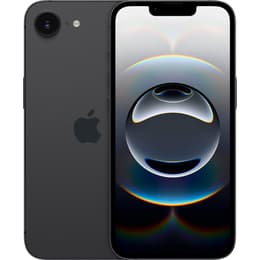
The iPhone 16E (released February 2025) and the Nokia X30 (released September 2022) represent distinct approaches to smartphone design and functionality. While the iPhone 16E offers a more recent hardware platform and Apple's ecosystem, the Nokia X30 focuses on durability and a streamlined Android experience. These differences influence their performance, camera capabilities, and overall user experience, catering to varying preferences in the smartphone market.

Scores

Durability

The practical lifespan of a smartphone is significantly influenced by its release timeline and ongoing software support. The iPhone 16E, launched in February 2025, benefits from Apple's extended software update policy, typically receiving major iOS updates for many years from its release. This ensures access to new features, security patches, and app compatibility for a prolonged period. In contrast, the Nokia X30, released in September 2022, was promised three years of operating system upgrades and three years of monthly security updates, meaning its software support cycle is nearing its conclusion in 2026.

  • Software Longevity: The iPhone 16E, running on iOS, is expected to receive software updates for a longer duration compared to the Nokia X30, which follows Nokia's commitment to three years of Android OS upgrades.
  • Physical Durability: Both devices offer robust build quality. The iPhone 16E features an IP68 rating for dust and water resistance, allowing submersion up to 6 meters for 30 minutes, and a Ceramic Shield front cover for enhanced screen protection. The Nokia X30 carries an IP67 rating, protecting against submersion up to 1 meter for 30 minutes, and uses Corning Gorilla Glass Victus for display durability.
  • Repairability Considerations: While specific repairability scores can vary, both manufacturers design their devices with certain repair considerations. Opting for a quality-assured refurbished version of either model can extend its life cycle and offer an eco-friendly alternative.

Release year

2025

2022

Operating system

iOS

Android

Foldable

No

No

Performance

Performance is a key differentiator, largely driven by the internal processing components and software optimization. The iPhone 16E, with its more recent internal chip, delivers a highly responsive experience across various applications and demanding tasks. The Nokia X30, while capable, is designed for reliable everyday usage rather than intensive performance.

  • Processing Power: The iPhone 16E is equipped with a current-generation Apple chip, providing substantial power for complex applications, advanced gaming, and seamless multitasking. This allows for smooth operation of features like Apple Intelligence. The Nokia X30 utilizes a mid-range processor, which handles daily tasks, web browsing, and most applications efficiently, though it may show limitations with graphically intensive games or very heavy multitasking.
  • Multitasking and Storage: The iPhone 16E comes with 8GB of RAM, supporting fluid transitions between multiple open applications. It offers storage options up to 512GB. The Nokia X30 is available with 6GB or 8GB of RAM and up to 256GB of internal storage, which is not expandable.
  • Battery Performance: The iPhone 16E offers extended battery life, with up to 26 hours of video playback and 21 hours of streamed video, partly due to its efficient chip and custom modem. The Nokia X30, with its 4200 mAh battery, is often reported to last up to two days with moderate use, and supports 33W fast charging.

Memory (GB)

8 GB

8 GB

Screen quality

The display is a primary interface for smartphone interaction, and both devices offer distinct visual experiences. Both the iPhone 16E and Nokia X30 feature vibrant OLED technology, but they differ in resolution, refresh rate, and overall brightness capabilities.

  • Display Technology and Clarity: The iPhone 16E features a 6.1-inch Super Retina XDR OLED display with a resolution of 2532x1170 pixels, resulting in a pixel density of 460 pixels per inch (ppi). This provides sharp text and detailed images. The Nokia X30 has a 6.43-inch AMOLED display with a resolution of 1080x2400 pixels, offering a pixel density of 409 ppi.
  • Brightness and Refresh Rate: The iPhone 16E's display can reach 800 nits typical brightness and 1200 nits peak brightness for HDR content, ensuring good visibility in various lighting conditions. It operates at a standard 60Hz refresh rate. The Nokia X30 offers a 90Hz refresh rate for smoother scrolling and animations, with typical brightness of 400 nits and peak brightness of 700 nits.
  • Viewing Experience: The iPhone 16E's display is protected by Ceramic Shield, offering enhanced durability. The Nokia X30 uses Corning Gorilla Glass Victus for screen protection. The iPhone 16E retains a traditional notch design, while the Nokia X30 features a punch-hole cutout for its front camera.

Resolution

2532x1170

1080 x 2400

Audiovisual

Camera systems are crucial for capturing memories and communicating visually, and both the iPhone 16E and Nokia X30 offer capable setups with different strengths. The iPhone 16E focuses on a high-resolution main sensor with advanced computational photography, while the Nokia X30 provides a versatile dual-camera arrangement.

  • Rear Camera System: The iPhone 16E features a single 48MP Fusion Main camera with an f/1.6 aperture and optical image stabilization (OIS). It also offers a 2x telephoto option by cropping the main sensor. This system benefits from Apple's Photonic Engine and Smart HDR 5 for image processing, excelling in various lighting conditions, including Night mode. The Nokia X30 includes a dual-camera setup with a 50MP main sensor (f/1.9, OIS) and a 13MP ultrawide sensor (f/2.4, 123° field of view), providing more flexibility for wide-angle shots.
  • Video Recording Capabilities: The iPhone 16E supports 4K video recording at up to 60 frames per second (fps) with HDR and OIS, offering high-quality video capture. The Nokia X30 records video at 1080p resolution at 30 or 60 fps.
  • Front Camera and Audio: For selfies and video calls, the iPhone 16E has a 12MP front camera with autofocus. The Nokia X30 features a 16MP front camera. Both devices offer stereo speakers for media consumption, with the iPhone 16E also supporting spatial audio. The Nokia X30 includes OZO Spatial Audio capture with wind noise reduction.

Front camera

TrueDepth 12MP

16 megapixels

Miscellaneous

Beyond core performance and display, several practical features contribute to the overall user experience. Connectivity, physical design, and additional sensors can significantly impact daily usage and convenience.

  • Connectivity and Ports: Both devices support 5G cellular networks and feature USB-C ports for charging and data transfer. The iPhone 16E supports Wi-Fi 6 and Bluetooth 5.3. It also includes satellite connectivity for emergency services and messaging in areas without cellular coverage. The Nokia X30 supports Wi-Fi 6 and Bluetooth 5.1, and includes NFC for contactless payments.
  • Biometrics and Design: The iPhone 16E utilizes Face ID for secure facial recognition and authentication. It also features an Action Button for customizable shortcuts. The Nokia X30 incorporates an in-display optical fingerprint sensor for biometric security. The Nokia X30 emphasizes sustainable design, using 100% recycled aluminum for its frame and 65% recycled plastic for its back cover.
  • Dimensions and Handling: The iPhone 16E measures 146.7 x 71.5 x 7.8 mm and weighs 167 grams, offering a compact and lightweight feel. The Nokia X30 is slightly larger and heavier at 158.9 x 73.9 x 7.99 mm and 185 grams. Neither device includes a 3.5mm headphone jack.

Weight

167 oz

185 oz

Screen size (in)

6.1

6.43

Network

5G

5G

SIM card

Physical SIM + eSIM

Dual Physical SIM

Carrier compatibility

Unlocked

Unlocked

Choosing between the iPhone 16E and the Nokia X30 involves weighing priorities between a newer, performance-oriented device within a robust ecosystem and a durable, eco-conscious Android smartphone. User feedback for the iPhone 16E often highlights its powerful performance, excellent battery life, and the integration of Apple Intelligence as significant advantages. Some users appreciate its compact size and the inclusion of features like satellite connectivity. Potential criticisms might revolve around its 60Hz display and the absence of MagSafe charging, which are present in other iPhone models.

For the Nokia X30, common praise points include its commitment to sustainability through recycled materials, its solid build quality, and a clean Android experience with guaranteed updates. Users often find its battery life to be reliable for daily use. However, some reviews note that its processor, while capable for everyday tasks, may not match the performance of more powerful chipsets in its original price segment, and its camera system, while good, might not compete with higher-end devices.

Users prioritizing cutting-edge performance, a longer software support window, and access to Apple's integrated services, including advanced AI features and satellite communication, may find the iPhone 16E well-suited to their needs. Conversely, users who value environmental responsibility, a straightforward Android experience, and a durable device with a smoother 90Hz display for everyday interactions might lean toward the Nokia X30. Both devices offer compelling features for different user profiles, and considering a quality-assured refurbished option for either model can provide a sustainable choice.
See all articles

Our recent comparisons