Compare models
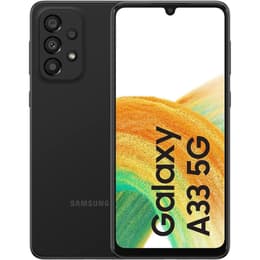
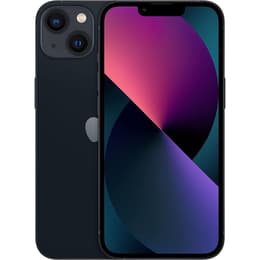
Galaxy A33 5G vs iPhone 13
- 1-year warranty
- Free standard shipping
- Free 30-day returns
Differences at a glance
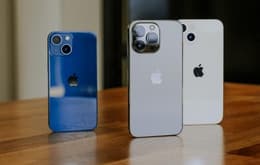
The Samsung Galaxy A33 5G, released in March 2022, and the Apple iPhone 13, launched in September 2021, represent distinct approaches to the modern smartphone. While the Galaxy A33 5G operates on the Android platform, offering extensive customization, the iPhone 13 runs on iOS, known for its streamlined interface and integrated ecosystem. These devices cater to different user preferences, primarily differing in their operating systems, performance capabilities, and camera philosophies.
Available Models
Colour
Storage (GB)
Scores
Durability
The practical lifespan of these devices is influenced by their release dates and respective software support policies.
- Software Updates: The iPhone 13, being an Apple device, typically receives iOS updates for a longer duration, often 5-6 years from its release, with security updates extending even further, potentially until 2027-2028. [10, 15, 23, 33, 40] The Galaxy A33 5G, as an Android phone, is guaranteed to receive four major Android OS updates and five years of security updates from its launch, meaning it is expected to reach Android 16. [20, 27, 32, 36]
- Repairability: The Samsung Galaxy A33 5G generally offers a more straightforward repair experience, with a repairability score around 7.5 out of 10, featuring modular components and a battery that is relatively accessible. [6, 11] The iPhone 13 received a repairability score of 5 or 5.5 out of 10, with some software-hardware linkages complicating certain repairs, such as Face ID functionality after a screen replacement. [3, 4, 5, 7, 14]
- Practical Longevity: Users prioritizing the absolute longest software support and ecosystem integration will find the iPhone 13 offers a slightly extended practical lifespan for major OS versions. The Galaxy A33 5G still provides several years of current software and security, making it a viable option for long-term use within the Android ecosystem.
Release year
2022
2021
Compatible with latest Update
Yes
Yes
Operating system
Android
iOS
Foldable
No
No
Performance
These two smartphones offer different levels of processing power and storage flexibility, impacting daily usage.
- Everyday Responsiveness: The iPhone 13 delivers consistently smooth and rapid performance across applications, handling demanding games and multitasking with ease thanks to its powerful internal components. [19, 30, 31] The Galaxy A33 5G provides capable performance for daily tasks, social media, and most mobile games, though some users have noted it can feel slightly less fluid compared to higher-end devices. [22, 31, 37]
- Battery Behavior: The Galaxy A33 5G features a larger 5000mAh battery, often providing up to two days of use for many users. [1, 27, 31, 32, 37] The iPhone 13, while having a smaller battery capacity, is optimized for efficiency and typically offers excellent all-day battery life, with some users reporting up to 46 hours between charges with moderate screen time. [24, 26, 28, 29, 30]
- Storage Options: The Galaxy A33 5G comes with 128GB or 256GB of internal storage and offers the flexibility of expandable storage via a microSD card up to 1TB. [8, 12, 17, 32, 35, 41] The iPhone 13 is available with 128GB, 256GB, or 512GB of internal storage, but does not support expandable storage. [9, 13]
Screen quality
The display technologies and characteristics of these phones offer distinct visual experiences.
- Display Technology and Clarity: The iPhone 13 features a 6.1-inch Super Retina XDR OLED display, known for its deep blacks, high contrast, and excellent color accuracy at a resolution of 2532x1170 pixels. [13, 16, 19, 28] The Galaxy A33 5G sports a slightly larger 6.4-inch Super AMOLED display with a resolution of 1080x2400 pixels, which also provides vibrant colors and good contrast. [1, 8, 12, 17, 32, 34, 35, 41]
- Smoothness and Brightness: The Galaxy A33 5G benefits from a 90Hz refresh rate, offering a smoother scrolling experience and more fluid animations compared to the iPhone 13's standard 60Hz refresh rate. [1, 17, 18, 32, 34, 35, 41] The iPhone 13's display offers a typical brightness of 800 nits, with a peak brightness of 1200 nits for HDR content, ensuring good visibility even in bright outdoor conditions. [19] The Galaxy A33 5G also offers good outdoor visibility with a peak brightness of 700 nits. [34]
- Screen Protection: Both devices offer robust screen protection. The iPhone 13 features a Ceramic Shield front cover for enhanced durability. [19, 29] The Galaxy A33 5G is protected by Corning Gorilla Glass 5. [12, 35, 41]
Resolution
1080 x 2400
1170 x 2532
Screen type
Super AMOLED
Super Retina XDR OLED
Audiovisual
Both devices offer capable camera systems, but with different strengths and features.
- Rear Camera System: The iPhone 13 features a dual 12-megapixel camera system, including a wide lens with sensor-shift optical image stabilization (OIS) and an ultrawide lens. [19, 24, 26, 28, 29, 30] This setup is praised for its improved low-light performance and consistent image quality. [24, 28, 30] The Galaxy A33 5G comes with a quad-camera array on the rear, consisting of a 48-megapixel main camera with OIS, an 8-megapixel ultrawide, a 5-megapixel macro, and a 2-megapixel depth sensor. [1, 8, 17, 32, 35, 41] Its main camera with OIS allows for decent snaps, especially in daylight. [32, 37]
- Video Recording and Features: The iPhone 13 is highly regarded for its video recording capabilities, offering features like Cinematic Mode for shallow depth-of-field effects and excellent stabilization, recording up to 4K at 60 frames per second. [18, 19, 29] The Galaxy A33 5G also records stable video and offers good quality for everyday use, capable of 4K video recording at 30 frames per second. [8, 32, 41]
- Audio Experience: Both phones provide stereo speakers for media consumption. The iPhone 13 generally offers a slightly richer and louder sound profile. For calls and recordings, both devices provide clear microphone quality. [18]
Main camera
48 megapixels
12 megapixels
Front camera
13 megapixels
12 megapixels
Miscellaneous
Beyond core features, several practical elements differentiate these two smartphones.
- Connectivity and Ports: Both devices support 5G connectivity for faster mobile data speeds. [1, 19] The Galaxy A33 5G uses a USB-C 2.0 port for charging and data transfer, [1, 41] while the iPhone 13 utilizes Apple's proprietary Lightning port. [42] The Galaxy A33 5G also supports Wi-Fi 802.11 a/b/g/n/ac and Bluetooth 5.1. [1, 41] The iPhone 13 supports Wi-Fi 6 and Bluetooth 5.0. [9, 42]
- Biometric Security: The iPhone 13 relies on Face ID for secure facial recognition. [9] The Galaxy A33 5G features an in-display optical fingerprint sensor for biometric authentication. [1, 8, 41]
- Build Materials and Durability: The iPhone 13 features a Ceramic Shield front cover, flat aluminum sides, and a glass back, with an IP68 rating for dust and water resistance. [19, 24, 29] The Galaxy A33 5G has a glass front (Gorilla Glass 5), a plastic back, and a plastic frame, offering IP67 dust and water resistance. [12, 35, 41]
- Dimensions and Handling: The Galaxy A33 5G measures 159.7 x 74 x 8.1 mm and weighs 186 grams. [1, 8, 12, 35] The iPhone 13 is slightly more compact, with dimensions of 146.7 x 71.5 x 7.65 mm and a weight of 173 grams. [29]
Weight
186 oz
173 oz
Screen size (in)
6.4
6,1
Network
5G
5G
SIM card
Physical SIM
Physical SIM + eSIM
Carrier compatibility
Unlocked
Unlocked
What the community thinks
User sentiment highlights distinct strengths for both the Samsung Galaxy A33 5G and the iPhone 13. The iPhone 13 is frequently praised for its consistent performance, premium build, and excellent camera system, particularly for video recording. [18, 24, 26, 28, 29, 30] Common observations sometimes point to its 60Hz display as a potential area for improvement compared to some competitors. [18, 28]
The Galaxy A33 5G is often lauded for its vibrant 90Hz display, long battery life, and the flexibility of expandable storage. [18, 27, 31, 32, 37] Some users note its performance is good for its class but may not match the raw speed of flagship devices, and its plastic build, while durable, might feel less premium to some. [18, 22, 31, 37]
Users prioritizing a highly fluid and polished user experience with a strong emphasis on camera quality, especially for video, and a long-term software support commitment may find the iPhone 13 well-suited to their needs. Conversely, users who value a smoother scrolling display, extended battery life, the versatility of expandable storage, and the customization options of the Android operating system may lean toward the Galaxy A33 5G. Both devices offer reliable performance for daily tasks, and choosing between them often comes down to individual preference for operating system and specific feature priorities. Considering a quality-assured refurbished option for either model can be an eco-friendly alternative to extend the life cycle of these devices.