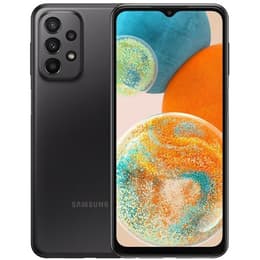
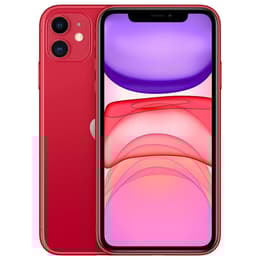

Galaxy A23 vs iPhone 11

Galaxy A23
Galaxy A23
See options
iPhone 11
iPhone 11
Starting at

Refurbished price:A$270.00

Versus A$769.00 new

See options

Ratings

The Samsung Galaxy A23, released in March 2022, and the Apple iPhone 11, launched in September 2019, are both smartphones designed to cater to different user preferences. While the Galaxy A23 operates on Android with Samsung's One UI, the iPhone 11 runs on Apple's iOS platform. Key differentiators include their camera systems, display technologies, and overall software ecosystems.

Scores

Durability

The practical lifespan of a smartphone is influenced by its physical durability and the duration of software support it receives.

  • Release Timeline and Software Support: The iPhone 11, released in September 2019, is an older device compared to the Galaxy A23, which launched in March 2022. Apple typically provides major iOS updates for 5 to 6 years, with security updates extending beyond that, meaning the iPhone 11 is expected to receive major updates until late 2025 or 2026. The Galaxy A23, initially offering two major Android updates and four years of security updates, benefits from Samsung's updated policy, which now extends security support for some devices, including the A23, up to seven years.
  • Build Materials and Water Resistance: The iPhone 11 features a glass front and back with an aluminum frame, offering IP68 water and dust resistance, allowing submersion up to 2 meters for 30 minutes. In contrast, the Galaxy A23 has a Gorilla Glass 5 front, but its frame and back are made of plastic, and it does not carry an official IP rating for water resistance.
  • Repairability: The iPhone 11 has an iFixit repairability score of 6 out of 10, with display and battery repairs being relatively accessible. The Galaxy A23 scores slightly higher at 6.75 out of 10, indicating that its back plate and battery are replaceable with appropriate tools and heat.

Performance

Performance is a key aspect for daily usage, encompassing how smoothly a device handles applications, multitasking, and its power efficiency.

  • Processor Capabilities and Responsiveness: The iPhone 11 is known for its consistent and fluid performance, capably handling demanding applications and multitasking without significant slowdowns. The Galaxy A23 performs well with everyday tasks, though some users have noted occasional sluggishness when running more intensive applications or managing multiple tasks simultaneously.
  • Battery Endurance: The Galaxy A23 is equipped with a 5000 mAh battery, frequently praised for its extended endurance, often providing up to two days of use for many users. The iPhone 11, with its 3110 mAh battery, generally offers sufficient power for a full day of typical usage.
  • Storage and RAM: The Galaxy A23 offers internal storage options of 64GB or 128GB, with the added flexibility of expandable storage via a microSD card. It comes with 4GB, 6GB, or 8GB of RAM. The iPhone 11 provides internal storage choices of 64GB, 128GB, or 256GB, but does not support expandable storage. It features 4GB of RAM.

Memory (GB)

4 GB

4 GB

Screen quality

The display significantly impacts the visual experience, from clarity and color reproduction to smoothness and outdoor visibility.

  • Display Technology and Size: The Galaxy A23 features a larger 6.6-inch PLS LCD. The iPhone 11 comes with a 6.1-inch Liquid Retina IPS LCD.
  • Resolution and Clarity: The Galaxy A23 offers a resolution of 1080 x 2408 pixels, resulting in a pixel density of approximately 400 ppi. The iPhone 11 has a resolution of 1792 x 828 pixels, with a pixel density of 326 ppi.
  • Refresh Rate and Brightness: A notable difference is the refresh rate, with the Galaxy A23 featuring a 120Hz display for smoother scrolling and animations. The iPhone 11 has a standard 60Hz refresh rate, though it offers a 120Hz touch-sensing rate for responsiveness. For brightness, the iPhone 11 typically reaches 625 nits, while the Galaxy A23 may struggle with visibility in very bright outdoor conditions.

Audiovisual

Camera capabilities are often a deciding factor, influencing the quality of photos and videos captured in various environments.

  • Rear Camera Systems: The Galaxy A23 boasts a quad-camera setup, including a 50MP main sensor with Optical Image Stabilization (OIS), a 5MP ultrawide, a 2MP macro, and a 2MP depth sensor. The iPhone 11 features a dual 12MP camera system, comprising a wide and an ultrawide lens.
  • Photography Performance: In well-lit conditions, the Galaxy A23 can capture decent images, but its performance in low-light environments can result in grainier photos and challenges with focus. The iPhone 11 is recognized for its strong photography performance, particularly benefiting from features like Night mode and Deep Fusion for enhanced low-light and detailed image capture.
  • Video Recording and Front Camera: The iPhone 11 supports video recording up to 4K at 60 frames per second, and has a 12MP front camera. The Galaxy A23 records video up to 1080p and includes an 8MP front camera. The iPhone 11 also offers stereo speakers, contributing to a more immersive media consumption experience, while the Galaxy A23 typically features a mono speaker.

Miscellaneous

Beyond core features, several practical elements contribute to the overall user experience, including connectivity, physical design, and security.

  • Connectivity and Ports: The Galaxy A23 offers versatile connectivity with 4G or 5G (depending on the model), Wi-Fi 5, Bluetooth 5.0/5.1, and NFC. It includes a USB-C port and retains a 3.5mm headphone jack. The iPhone 11 supports 4G, Wi-Fi 6, Bluetooth 5.0, and features Apple's Lightning port, but it does not have a 3.5mm headphone jack. It also incorporates the U1 chip for ultra-wideband capabilities.
  • Security and Sensors: For security, the Galaxy A23 utilizes a side-mounted fingerprint sensor. The iPhone 11 relies on Face ID for biometric authentication. Both devices include standard sensors such as accelerometers and gyroscopes.
  • Dimensions and Build: The Galaxy A23 measures 165.4 x 76.9 x 8.4 mm and weighs 195 grams. The iPhone 11 is slightly more compact at 150.9 x 75.7 x 8.3 mm and weighs 194 grams. The iPhone 11 features a more premium construction with glass on both the front and back, framed by aluminum, contributing to its IP68 water and dust resistance. The Galaxy A23 has a Gorilla Glass 5 front but a plastic frame and back, without an official IP rating.

Screen size (in)

6.6

6.1

Network

4G

4G

SIM card

Dual Physical SIM

Physical SIM + eSIM

Carrier compatibility

Unlocked

Unlocked

Both the Samsung Galaxy A23 and the iPhone 11 offer distinct advantages, catering to different user priorities. The Galaxy A23 is often praised by users for its exceptional battery life, large display with a high refresh rate, and the convenience of expandable storage and a traditional headphone jack. However, some users have noted that its performance can occasionally feel sluggish, and its camera system may struggle in low-light conditions.

Conversely, the iPhone 11 receives commendation for its consistently smooth performance, a capable camera system that excels in various lighting scenarios, and Apple's commitment to extended software support. Criticisms sometimes point to its LCD display, 60Hz refresh rate, and the proprietary Lightning port.

Users prioritizing long battery life, a larger, smoother display, and the flexibility of expandable storage and a 3.5mm audio jack may find the Galaxy A23 to be a suitable option. For those who value consistent and fluid performance, a robust camera with strong low-light capabilities, a premium build with water resistance, and a longer period of major software updates, the iPhone 11 could be a more aligned choice. Both devices, whether new or as quality-assured refurbished options, provide reliable smartphone experiences for different user needs.


See all articles

Our recent comparisons