
Compare models
Galaxy A23 vs Google Pixel 9 Pro
- 1-year warranty
- Free standard shipping
- Free 30-day returns
Differences at a glance
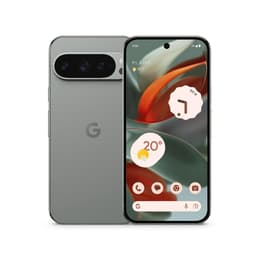
The Samsung Galaxy A23 (2022) and the Google Pixel 9 Pro (2024) are distinct smartphones representing different tiers and release windows within the mobile market. While both devices run on the Android operating system, they cater to very different expectations regarding design philosophy, internal hardware capabilities, and software support longevity. These two smartphones provide unique feature sets that align with varied everyday user requirements.
Available Models
Colour
Storage
Scores
Durability
When examining longevity and durability, the two devices occupy different timelines due to their respective release years, affecting software update schedules and overall structural resilience over time.
- Software Support Window: The Google Pixel 9 Pro benefits from an extended multi-year update commitment spanning several major operating system upgrades, whereas the Galaxy A23 operates on a shorter remaining support lifecycle given its earlier release date.
- Build and Materials: The Google Pixel 9 Pro utilizes robust front and rear glass protected by advanced scratch-resistant layers alongside a reinforced metal frame, while the Galaxy A23 employs a plastic back construction paired with standard protective glass.
- Expected Lifespan: Both models offer dependable daily utility, though the Google Pixel 9 Pro's higher-tier components and extended software backing position it to remain current for a longer duration.
Release year
2022
2024
Operating system
Android
Android
Foldable
No
No
Performance
System responsiveness and hardware capabilities vary notably, reflecting the distinct processing architecture and memory configurations built into each device.
- Multitasking and Memory: The Google Pixel 9 Pro includes a substantial amount of high-speed random access memory to manage heavy background tasks smoothly, while the Galaxy A23 utilizes more modest memory allocations suited for standard day-to-day switching.
- App Handling and Gaming: Resource-intensive applications and complex mobile games load and run with greater fluidity on the Google Pixel 9 Pro, whereas the Galaxy A23 handles routine tasks like web browsing and messaging efficiently without heavy gaming emphasis.
- Battery Behavior: Both phones manage daily power consumption effectively, though real-world endurance varies depending on screen refresh rates and active application demands during heavy usage periods.
Screen quality
Visual output and display technology differ significantly between the two models, impacting clarity, outdoor legibility, and motion smoothness.
- Display Technology: The Google Pixel 9 Pro features an advanced organic light-emitting diode panel that delivers deep contrast levels and rich color reproduction, whereas the Galaxy A23 relies on a standard liquid crystal display panel.
- Refresh Rate and Motion: Scrolling through web pages and navigating menus appears noticeably smoother on the Google Pixel 9 Pro due to a high refresh rate capability, compared to the standard refresh rate behavior found on the Galaxy A23.
- Outdoor Brightness: The Google Pixel 9 Pro achieves higher peak luminance levels for clear visibility under direct sunlight, while the Galaxy A23 requires shaded conditions for optimal legibility.
Resolution
1080 x 2408
1280x2856
Audiovisual
Photography and media consumption hardware present distinct capabilities, catering to users with varying multimedia capture preferences.
- Camera System Setup: The Google Pixel 9 Pro equips a versatile triple-lens rear arrangement including dedicated telephoto zoom capabilities, while the Galaxy A23 features a simpler multi-lens layout focusing on standard wide-angle and basic supplementary captures.
- Low-Light Performance: Advanced computational photography algorithms on the Google Pixel 9 Pro preserve intricate details in dimly lit environments, whereas the Galaxy A23 yields standard results in comparable lighting conditions.
- Audio and Speaker Output: Both devices deliver functional stereo or single-speaker configurations adequate for casual video viewing, though neither includes a traditional legacy headphone port.
Miscellaneous
Practical physical characteristics and connectivity standards define how each phone integrates into everyday routines and accessory ecosystems.
- Connectivity Standards: The Google Pixel 9 Pro supports modern wireless protocols including advanced Wi-Fi and high-speed cellular bands, while the Galaxy A23 offers standard connectivity features depending on the specific regional variant.
- Physical Dimensions: The Galaxy A23 is slightly larger and heavier in the hand, whereas the Google Pixel 9 Pro adopts a more compact, balanced form factor with curved edges.
- Security Sensors: Both models incorporate biometric authentication methods, utilizing secure fingerprint recognition integrated directly into the hardware configuration.
Weight
195 oz
199 oz
Screen size (in)
6.6
6.3
Network
4G
5G
SIM card
Physical SIM
Physical SIM + eSIM
Carrier compatibility
Unlocked
Unlocked
What the community thinks
User feedback from online communities indicates that the Google Pixel 9 Pro receives frequent praise for its exceptional photo clarity, premium build quality, and fluid display performance. Common discussions note that its advanced processing package handles demanding workloads efficiently, though some users mention that the device can feel warm during prolonged intensive tasks. Conversely, the Samsung Galaxy A23 is frequently acknowledged by community members for its reliable everyday functionality and straightforward interface, though users note that its processing speeds and display technology reflect a more basic tier of hardware.
Users who prioritize cutting-edge computational photography, high refresh rate visuals, and long-term software updates will find the Google Pixel 9 Pro well-suited to their needs. Meanwhile, users who require a straightforward, dependable tool for routine communication and media consumption may lean toward the Galaxy A23. For buyers seeking a sustainable choice, a quality-assured refurbished option provides a reliable way to access these technologies while reducing electronic waste. Selecting between the two depends entirely on whether advanced flagship capabilities or essential everyday practicality align closer with personal usage habits.