Galaxy A23 vs Galaxy A51

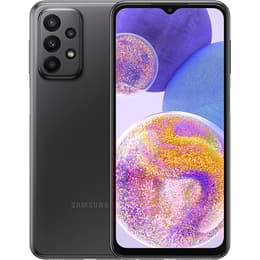
Galaxy A23
Galaxy A23
See options
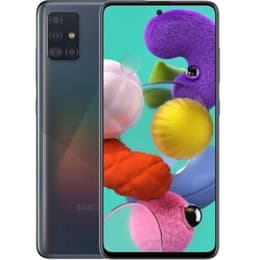
Galaxy A51
Galaxy A51
Starting at

Refurbished price:A$197.16

Versus A$592.00 new

See options

Ratings

The Samsung Galaxy A23 (released March 2022) and the Samsung Galaxy A51 (released December 2019) are both Android-based smartphones from Samsung's Galaxy A series. While both devices aim to offer a balanced user experience, they differ significantly in their release timelines, display technology, and camera capabilities. The Galaxy A23, being a newer model, incorporates more recent hardware and software considerations, while the Galaxy A51, though older, was notable for its display and camera features at its launch.

Scores

Durability

The practical lifespan of a smartphone is heavily influenced by its release date and the manufacturer's software support policy. The Galaxy A23 and Galaxy A51, having different launch years, present distinct expectations for longevity.

  • Release Timeline: The Galaxy A51 was released in December 2019, making it an older device compared to the Galaxy A23, which launched in March 2022. This age difference directly impacts how much longer each device will receive official software and security updates.
  • Software Support: The Galaxy A51 was initially promised three generations of Android software updates and four years of security updates. However, as of early 2024, Samsung has ended official software support for the Galaxy A51 4G variant. The Galaxy A23, launching with Android 12, is slated to receive two major Android OS upgrades and four years of security updates. This means the Galaxy A23 will continue to receive updates for a longer period, potentially up to Android 14 or 15, and security patches until around 2026.
  • Practical Lifespan: Users prioritizing the latest software features and security patches will find the Galaxy A23 offers a longer practical lifespan due to its more recent release and ongoing support. The Galaxy A51, while still functional, will no longer receive official updates, which could pose security risks and limit compatibility with newer applications over time.

Release year

2022

2019

Compatible with latest Update

Yes

No

Operating system

Android

Android

Foldable

No

No

Performance

Performance in daily use is a key differentiator, with the internal components dictating how smoothly applications run and how effectively the device handles multitasking.

  • Processor Capabilities: The Galaxy A23 is equipped with a more recent processor, which generally translates to improved efficiency and responsiveness for everyday tasks and moderate gaming. The Galaxy A51 features an older processor, which, while capable at its release, may show more noticeable slowdowns with demanding applications or extensive multitasking in the current landscape.
  • System Responsiveness: Users of the Galaxy A23 generally report smooth performance for basic tasks, though some reviews note occasional lag with heavy multitasking. The Galaxy A51, particularly in later years, has been noted by users to exhibit occasional stuttering and slower loading times, especially when switching between multiple applications.
  • Storage and RAM: Both devices offer various RAM configurations (4GB, 6GB, 8GB) and internal storage options (64GB, 128GB), with expandable storage via microSD. The amount of RAM can influence multitasking fluidity, with higher RAM variants on either device providing a smoother experience when many apps are open simultaneously.

Memory (GB)

4 GB

6 GB

Screen quality

The display is a primary interface for users, and both the Galaxy A23 and Galaxy A51 offer different visual experiences.

  • Display Technology: The Galaxy A51 features a 6.5-inch Super AMOLED display, known for its vibrant colors, deep blacks, and excellent contrast. In contrast, the Galaxy A23 comes with a 6.6-inch PLS TFT LCD display. While LCDs are generally good, they typically do not achieve the same level of contrast or black depth as AMOLED panels.
  • Resolution and Refresh Rate: Both phones offer a Full HD+ resolution (1080 x 2400 pixels for A51, 1080 x 2408 pixels for A23), providing clear and sharp visuals. A key difference is the refresh rate: the Galaxy A23 features a 90Hz refresh rate (with some 5G variants offering 120Hz), resulting in smoother scrolling and animations. The Galaxy A51 has a standard 60Hz refresh rate.
  • Brightness and Viewing Experience: The Super AMOLED display of the Galaxy A51 generally offers good brightness and viewing angles, making it suitable for various lighting conditions. The LCD panel on the Galaxy A23 can struggle with outdoor visibility in bright sunlight, and some users have noted less-than-ideal viewing angles.

Resolution

1080 x 2408

1080 x 2400

Screen type

PLS LCD

Super AMOLED

Audiovisual

Both smartphones are equipped with multi-lens camera systems, but their capabilities and performance vary, especially in challenging conditions.

  • Rear Camera System: The Galaxy A23 features a quad-camera setup with a 50MP main sensor that includes Optical Image Stabilization (OIS), a 5MP ultrawide, a 2MP macro, and a 2MP depth sensor. The Galaxy A51 also has a quad-camera system, consisting of a 48MP main sensor (without OIS), a 12MP ultrawide, a 5MP macro, and a 5MP depth sensor. The inclusion of OIS on the A23's main camera is a notable advantage for reducing blur in photos and stabilizing videos.
  • Photography Performance: The Galaxy A23's main camera generally produces decent photos in good lighting with good sharpness and colors, though low-light performance can be underwhelming, with grainy images and struggles with focus. The Galaxy A51's 48MP main camera also performs well in daylight, capturing detailed images, but its low-light capabilities are less impressive due to the lack of OIS. The ultrawide camera on the A51 (12MP) offers a higher resolution than the A23's (5MP).
  • Video Recording and Front Camera: Both devices can record video up to 1080p at 30 frames per second (fps) on their main cameras, with the A51 also capable of 4K@30fps. The Galaxy A51 has a higher resolution 32MP front-facing camera, compared to the Galaxy A23's 8MP front camera, which can result in more detailed selfies.

Main camera

50 megapixels

48 megapixels

Front camera

8 megapixels

32 megapixels

Miscellaneous

Beyond core performance and display, several practical elements contribute to the overall user experience of these devices.

  • Connectivity and Ports: Both the Galaxy A23 and Galaxy A51 support 4G LTE connectivity, Wi-Fi (802.11 a/b/g/n/ac), and Bluetooth 5.0 (A51) or 5.0/5.1 (A23). Both include a 3.5mm headphone jack and a USB Type-C port for charging and data transfer. The Galaxy A23 5G variant offers 5G connectivity, which is not available on the standard A23 or A51 models.
  • Biometric Security: The Galaxy A51 features an in-display optical fingerprint sensor, providing a modern unlocking experience. The Galaxy A23 utilizes a side-mounted fingerprint sensor, integrated into the power button. Both also offer face recognition for unlocking.
  • Build Materials and Dimensions: Both phones feature a glass front (Gorilla Glass 3 for A51, Gorilla Glass 5 for A23) and a plastic back and frame. The Galaxy A23 is slightly larger and heavier (164.5 x 76.9 x 8.4mm, 195g) than the Galaxy A51 (158.5 x 73.6 x 7.9mm, 172g), which can impact one-handed use and pocketability.

Weight

195 oz

172 oz

Screen size (in)

6.6

6.5

Network

4G

4G

SIM card

Dual Physical SIM

Physical SIM

Carrier compatibility

Unlocked

Unlocked

User feedback for the Galaxy A51 often praised its Super AMOLED display for vibrant colors and deep blacks, along with its capable camera system for daylight photography at the time of its release. However, common criticisms included its processor performance, which could lead to noticeable lag with heavier use, and average battery life for some users. The Galaxy A23, being a newer device, generally receives positive remarks for its larger battery capacity, offering extended usage, and the inclusion of OIS in its main camera for improved photo and video stability. Conversely, some users have expressed concerns about its LCD display not being as vibrant as AMOLED panels, and occasional performance stutters, particularly when multitasking.

Users prioritizing a vibrant display with deep blacks and a more compact design might lean towards the Galaxy A51, especially if their usage is primarily for media consumption and light tasks. However, it is important to note that official software support for the A51 has largely ended. Users who value longer software support, a smoother scrolling experience with a higher refresh rate display, and better camera stability through OIS, along with extended battery life, may find the Galaxy A23 to be a more suitable option. The A23 also benefits from being a more recent release, offering a longer period of security updates. For those considering these models, exploring quality-assured refurbished options can provide a sustainable choice for either device.

See all articles

Our recent comparisons