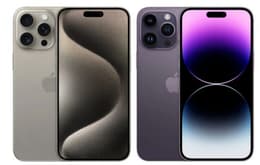

Asus Zenfone 9 vs iPhone 14 Pro

Asus Zenfone 9
Asus Zenfone 9
See options
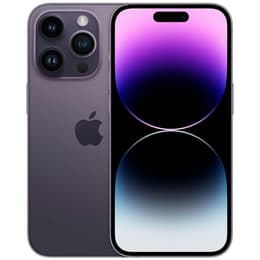
iPhone 14 Pro
iPhone 14 Pro
Starting at

Refurbished price:A$617.00

Versus A$1,749.00 new

See options

The Asus Zenfone 9, released in July 2022, and the iPhone 14 Pro, launched in September 2022, are both high-performance smartphones from different ecosystems. While the Zenfone 9 offers a compact Android experience, the iPhone 14 Pro provides Apple's premium iOS features, including an advanced camera system and a dynamic display interface. Both devices aim to deliver a capable smartphone experience, but they cater to different user preferences in terms of size, operating system, and specific functionalities.

Scores

Durability

The practical lifespan of a smartphone is influenced by its initial release date, software support, and physical resilience.

  • Release Timeline: The Asus Zenfone 9 was announced in July 2022 and released in September 2022, while the iPhone 14 Pro was released slightly later in September 2022. This means the iPhone 14 Pro has a marginally newer starting point for its lifecycle.
  • Software Longevity: Asus typically provides around two years of major Android OS updates and security patches for the Zenfone 9. Apple, on the other hand, is known for offering longer software support, often extending to five or six years of iOS updates for its devices, suggesting a longer period of receiving new features and security enhancements for the iPhone 14 Pro.
  • Physical Durability: Both devices feature an IP68 rating for dust and water resistance, indicating protection against immersion in water. The Zenfone 9 uses Corning Gorilla Glass Victus for screen protection, while the iPhone 14 Pro incorporates Apple's Ceramic Shield front cover, alongside a surgical-grade stainless steel frame, contributing to its overall robustness.

Release year

2022

2022

Compatible with latest Update

Yes

Yes

Operating system

Android

iOS

Foldable

No

No

Performance

Both the Asus Zenfone 9 and the iPhone 14 Pro are equipped with powerful internal components designed for demanding tasks, though they approach performance from different operating system perspectives.

  • Processing Capabilities: The Asus Zenfone 9 features a current-generation processor that allows it to handle intensive applications and multitasking smoothly. The iPhone 14 Pro is powered by Apple's A16 Bionic chip, which provides strong performance for daily use, gaming, and complex tasks.
  • System Responsiveness: Users of both devices can expect fluid navigation and quick app loading times. The Zenfone 9 offers RAM configurations of 8GB or 16GB, which supports efficient multitasking. The iPhone 14 Pro comes with 6GB of RAM, optimized by iOS for smooth operation across various applications.
  • Battery Behavior: The Asus Zenfone 9 houses a 4300 mAh battery, which generally provides good endurance, often lasting a full day or more with typical usage. The iPhone 14 Pro has a 3200 mAh battery, capable of lasting a full day with normal use, though some reports indicate its battery life might not be a significant improvement over its predecessor. Both support fast charging, with the Zenfone 9 including a 30W charger and the iPhone 14 Pro supporting up to 20W wired charging, as well as MagSafe and Qi wireless charging.

Memory (GB)

6 GB

6 GB

Screen quality

The display is a primary interaction point for any smartphone, and both devices offer high-quality viewing experiences with distinct characteristics.

  • Display Technology and Clarity: The Asus Zenfone 9 features a 5.9-inch Full HD+ AMOLED display, providing vibrant colors and deep blacks. The iPhone 14 Pro comes with a 6.1-inch Super Retina XDR OLED display, known for its high contrast and precise color reproduction. Both displays offer sharp visuals suitable for various content.
  • Brightness and Refresh Rate: The Zenfone 9's display has a 120Hz adaptive refresh rate and can reach a peak brightness of 1100 nits, ensuring smooth scrolling and good visibility indoors and in moderately bright outdoor conditions. The iPhone 14 Pro features ProMotion technology with an adaptive refresh rate up to 120Hz, which can scale down to 1Hz for power efficiency, and boasts a high peak outdoor brightness of 2000 nits, making it highly legible even in direct sunlight.
  • Viewing Experience: The Zenfone 9's smaller screen size contributes to its compact form factor, making it suitable for one-handed use. The iPhone 14 Pro introduces the Dynamic Island, an interactive area that replaces the traditional notch, offering a unique way to display alerts and background activities. It also features an Always-On Display, allowing essential information to be visible without fully waking the screen.

Resolution

1080 x 2400

1179 x 2556

Screen type

Super AMOLED

LTPO Super Retina XDR OLED

Audiovisual

Both smartphones offer advanced camera systems, but they differ in their hardware configurations and photographic approaches.

  • Rear Camera Systems: The Asus Zenfone 9 is equipped with a dual-camera setup, featuring a 50MP main sensor with 6-axis gimbal stabilization and a 12MP ultrawide lens. The iPhone 14 Pro boasts a triple-camera system, including a 48MP main sensor with second-generation sensor-shift optical image stabilization, a 12MP ultrawide lens, and a 12MP telephoto lens with 3x optical zoom. The Zenfone 9's main camera outputs detailed images, but some users have noted inconsistencies in processing, such as oversharpening. The iPhone 14 Pro's 48MP main sensor typically outputs 12MP images by default, leveraging pixel-binning for improved light gathering, but also offers a 48MP ProRAW option for greater detail.
  • Low-Light and Video Performance: The Zenfone 9's main camera performs well in low-light conditions, and its gimbal stabilization is particularly effective for video recording, supporting up to 8K at 24fps. The iPhone 14 Pro also excels in low-light photography, with its larger sensor and improved software processing contributing to clearer images. It offers advanced video capabilities, including 4K at 60fps, Cinematic mode up to 4K HDR at 30fps, and Action mode for stabilized footage.
  • Front Camera and Audio: Both devices feature a 12MP front camera. The Zenfone 9's front camera includes autofocus, which can be beneficial for selfies and video calls. The iPhone 14 Pro's front camera also features autofocus and delivers sharp images with improved dynamic range. For audio, the Zenfone 9 includes stereo speakers and a 3.5mm headphone jack. The iPhone 14 Pro provides stereo speakers for media consumption.

Main camera

50 megapixels

48 megapixels

Front camera

12 megapixels

12 megapixels

Miscellaneous

Beyond core performance and display, several practical features differentiate these two devices, impacting daily usability and connectivity.

  • Connectivity and Ports: Both the Asus Zenfone 9 and iPhone 14 Pro support 5G cellular connectivity and modern Wi-Fi standards (Wi-Fi 6 for iPhone 14 Pro, Wi-Fi 6/6E for Zenfone 9), ensuring fast wireless data speeds. The Zenfone 9 retains a 3.5mm headphone jack, a feature not present on the iPhone 14 Pro. The Zenfone 9 uses a USB-C port, while the iPhone 14 Pro continues to use Apple's Lightning port.
  • Biometric Security and Design: The Zenfone 9 incorporates a side-mounted fingerprint sensor integrated into the power button, which also supports gesture controls. The iPhone 14 Pro relies on Face ID for secure facial recognition. In terms of physical design, the Zenfone 9 is notably compact and lightweight at 169g, with dimensions of 146.5 x 68.1 x 9.1 mm, featuring a polymer back and aluminum frame. The iPhone 14 Pro is slightly larger and heavier at 206g, with dimensions of 147.5 x 71.5 x 7.9 mm, constructed with a surgical-grade stainless steel frame and a glass back.
  • Additional Features: The iPhone 14 Pro includes features like Emergency SOS via satellite and Crash Detection, enhancing safety. Both devices offer NFC for contactless payments.

Weight

169 oz

206 oz

Screen size (in)

5.9

6,1

Network

5G

5G

SIM card

Dual Physical SIM

Physical SIM + eSIM

Carrier compatibility

Unlocked

Unlocked

Connector

USB-C + Jack 3.5mm

Lightning

The Asus Zenfone 9 and iPhone 14 Pro each offer a compelling smartphone experience, tailored to different user priorities. User feedback for the Zenfone 9 often highlights its compact size, powerful performance for its form factor, and generally good battery life. Some common criticisms include occasional camera inconsistencies, particularly with oversharpening, and charging speed variations. The iPhone 14 Pro is frequently praised for its advanced camera system, especially its low-light capabilities and video features, the innovative Dynamic Island, and its powerful processor. However, some users have expressed concerns about its battery life not being a significant upgrade over previous Pro models and the continued use of the Lightning port.

Users prioritizing a highly compact Android device with strong performance and a headphone jack may find the Asus Zenfone 9 well-suited to their needs. Its smaller display and lightweight design make it ideal for one-handed use. Conversely, users who prioritize a premium camera experience, a highly optimized operating system with long-term software support, and advanced display features like the Dynamic Island and Always-On Display will likely lean towards the iPhone 14 Pro. Both devices represent robust choices in their respective ecosystems, offering distinct advantages. For those considering a more sustainable choice, quality-assured refurbished options for both models are available, providing an eco-friendly alternative to purchasing new.

See all articles

Our recent comparisons