
Smartphones
Compare models
Differences at a glance
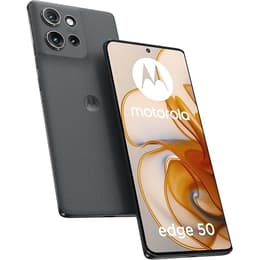
The Google Pixel 7, released in October 2022, and the Motorola Edge 50, launched in August 2024, are both Android smartphones designed to offer a balanced user experience. While the Pixel 7 emphasizes computational photography and a streamlined software experience, the Motorola Edge 50 focuses on a vibrant display, robust build, and versatile camera system. Both devices operate on the Android platform, providing access to a wide ecosystem of applications and services.
Colour
Storage
When considering the long-term usability of a smartphone, factors like release timeline, software support, and physical resilience are important. The Google Pixel 7, launched in October 2022, benefits from Google's commitment to software updates, typically receiving three major Android version upgrades and five years of security updates from its release date. This means it is expected to receive Android 16 and 17, with security patches extending into late 2027.
The Motorola Edge 50, being a newer device with an August 2024 release, starts its software support cycle later. Motorola generally provides 2-3 major Android updates and 3-4 years of security updates for its Edge series. This suggests a slightly shorter, but more current, software support window compared to the Pixel 7's remaining lifespan.
Release year
Compatible with latest Update
Foldable
The performance of a smartphone is crucial for daily tasks, app usage, and multitasking. The Google Pixel 7 is powered by Google's Tensor G2 processor, paired with 8GB of RAM and storage options of 128GB or 256GB. This configuration allows the Pixel 7 to handle everyday applications and navigation smoothly, with a focus on efficient processing for AI-driven features like advanced photography and speech recognition. While capable for casual gaming, extended sessions with graphically intensive games may lead to some warmth.
The Motorola Edge 50 features a Qualcomm Snapdragon 7 Gen 1 AE (Accelerated Edition) processor, available with 8GB or 12GB of RAM and 256GB or 512GB of internal storage. This newer processor is designed to provide responsive performance for a variety of tasks, including multitasking and running demanding applications. While it offers a capable experience for daily use, some reviews suggest its raw benchmark performance might be average compared to some competitors in its segment.
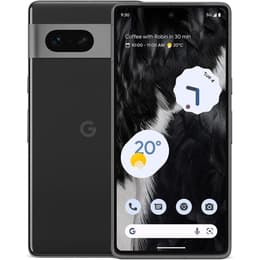
The display is a primary interface for any smartphone, influencing everything from media consumption to daily interactions. The Google Pixel 7 features a 6.3-inch OLED display with a Full HD+ resolution of 2400x1080 pixels, resulting in a pixel density of 416 pixels per inch. It offers a 90Hz refresh rate, providing a smoother visual experience than standard 60Hz displays, particularly noticeable during scrolling and animations. The OLED technology ensures deep blacks and vibrant colors.
The Motorola Edge 50 boasts a larger 6.7-inch pOLED display with a higher 1.5K resolution of 1220x2712 pixels, contributing to a sharper image with a pixel density of 446 ppi. A key advantage of the Edge 50 is its adaptive refresh rate, which can go up to 120Hz or even 144Hz depending on the region and content, offering an even more fluid visual experience. It also features a higher peak brightness of 1600 nits, making it more visible in bright outdoor conditions compared to the Pixel 7.
Resolution
Both the Google Pixel 7 and Motorola Edge 50 offer capable camera systems, though with different strengths. The Pixel 7 features a dual-camera setup on the rear, comprising a 50-megapixel main sensor with optical image stabilization (OIS) and a 12-megapixel ultrawide lens. Google's strength lies in its computational photography, which processes images to produce natural colors, sharp details, and impressive low-light performance. Video recording is supported up to 4K at 60 frames per second. The front camera is a 10.8-megapixel ultrawide lens.
The Motorola Edge 50 comes with a more versatile triple-camera system on the back, including a 50-megapixel main sensor with OIS, a 13-megapixel ultrawide lens that also functions for macro photography, and a 10-megapixel telephoto lens with 3x optical zoom and OIS. This telephoto lens provides greater flexibility for capturing distant subjects without significant loss of detail. The front-facing camera is a higher-resolution 32-megapixel sensor. Video recording is available at 4K 30 frames per second.
Front camera
Beyond the core features, several practical elements contribute to the overall user experience of a smartphone. The Google Pixel 7 supports modern connectivity standards, including 5G for fast mobile data, Wi-Fi 6E for enhanced wireless internet speeds, and Bluetooth 5.2 for connecting accessories. It features a USB-C 3.2 port for charging and data transfer. For security, it includes an under-display optical fingerprint scanner and face unlock. The device measures 155.6 x 73.2 x 8.7 mm and weighs 197 grams, with a build that combines glass on the front and back with an aluminum frame.
The Motorola Edge 50 also offers comprehensive connectivity with 5G, Wi-Fi 6E, and Bluetooth 5.2. It uses a USB-C port for charging and data. Security features include an in-display fingerprint scanner and face unlock. The Edge 50 is notably slimmer and lighter, measuring 160.8 x 72.4 x 7.79 mm and weighing 180 grams. Its design incorporates a vegan leather, glass, or plastic back with an aluminum frame, offering a distinct tactile experience.
Weight
Screen size (in)
SIM card
Carrier compatibility
User feedback for the Google Pixel 7 often highlights its exceptional camera performance, particularly its ability to capture detailed and color-accurate photos in various conditions, thanks to Google's advanced image processing. Users also appreciate its clean Android experience and timely software updates. Common criticisms sometimes point to its battery life being average compared to some competitors, requiring a mid-day top-up for heavy users. Some users have also noted that while its processor handles daily tasks well, it might not offer the same raw performance as some flagship chipsets during intensive gaming sessions.
For the Motorola Edge 50, users frequently praise its vibrant and smooth display, often highlighting the high refresh rate and brightness for an immersive viewing experience. Its premium design, often featuring vegan leather, and robust durability with MIL-STD-810H certification are also well-received. While its camera system is considered versatile with the inclusion of a telephoto lens, some reviews suggest its overall camera performance, particularly in challenging conditions, might not consistently match the Pixel 7's computational photography prowess. Battery life is generally seen as good, often lasting a full day or more.
Users prioritizing a consistently excellent camera for everyday photography and a pure Android software experience with long-term updates may find the Google Pixel 7 well-suited to their needs. Conversely, users who value a larger, brighter, and smoother display, enhanced physical durability, and the versatility of a dedicated telephoto camera might lean towards the Motorola Edge 50. Both devices offer a compelling Android experience, and choosing between them often comes down to these specific priorities. Exploring quality-assured refurbished options for either model can provide an eco-friendly alternative for consumers.