
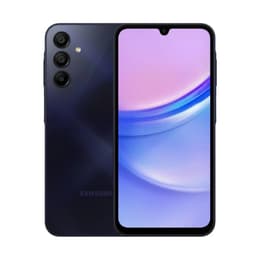

Asus Zenfone 9 vs Galaxy A15 5G

Asus Zenfone 9
Asus Zenfone 9
See options
Galaxy A15 5G
Galaxy A15 5G
Starting at

Refurbished price:A$257.00

Versus A$329.00 new

See options

The Asus Zenfone 9, released in 2022, and the Samsung Galaxy A15 5G, launched in late 2023 or early 2024, are both Android smartphones designed for different user priorities. While the Zenfone 9 focuses on delivering high-end performance in a compact form factor, the Galaxy A15 5G emphasizes a larger display and extended battery life for everyday use. Both devices operate on the Android platform, with the Galaxy A15 5G benefiting from a more recent Android version out of the box.

Scores

Durability

When considering the longevity of these devices, several factors come into play, including their release timelines, software support, and physical durability.

  • Release Timeline: The Asus Zenfone 9 was released in July/September 2022, while the Samsung Galaxy A15 5G followed later, launching in December 2023 or early 2024. This newer release date for the Galaxy A15 5G generally translates to a longer period of software support from its manufacturer.
  • Software Longevity: The Zenfone 9 launched with Android 12 and is upgradable to Android 13 and potentially Android 14, offering several years of updates. The Galaxy A15 5G, launching with Android 14, is expected to receive a longer duration of major Android updates and security patches, aligning with Samsung's commitment to extended software support for its A-series devices.
  • Physical Durability: The Asus Zenfone 9 features an IP68 rating for dust and water resistance, indicating a higher level of protection against environmental elements. It also uses Gorilla Glass Victus for its front display and an aluminum frame. The Galaxy A15 5G has a plastic frame and back, with a glass front protected by Dragontrail Pro or Gorilla Glass 5, but typically lacks an official IP rating.

Release year

2022

2023

Operating system

Android

Android

Foldable

No

No

Performance

The performance capabilities of these two smartphones cater to different user expectations, primarily influenced by their internal components and design philosophies.

  • Processing Power: The Asus Zenfone 9 is equipped with a high-performance processor, allowing it to handle demanding applications, intensive multitasking, and graphic-heavy games with smooth and responsive operation. Users report a very fast and snappy experience with no lag or slowdowns in the interface. The Galaxy A15 5G features a capable octa-core processor that competently manages everyday tasks such as web browsing, email, and media playback. However, some users might experience minor lag when switching between multiple applications.
  • Memory and Storage: The Zenfone 9 offers generous RAM options, including configurations with 8GB and 16GB, which contribute to its strong multitasking capabilities. It comes with internal storage options of 128GB or 256GB, but does not support expandable storage. The Galaxy A15 5G provides RAM options ranging from 4GB to 8GB and internal storage of 128GB or 256GB, with some regions offering a 64GB variant. A key advantage of the A15 5G is its support for expandable storage up to 1TB via a microSD card.
  • Battery Behavior: The Zenfone 9 houses a 4300 mAh battery, which, combined with its efficient processor and smaller screen, provides good battery life, often lasting a full day of heavy use. The Galaxy A15 5G is equipped with a larger 5000 mAh battery, designed to offer extended usage and is frequently praised for its long-lasting power, often exceeding a full day even for active users.

Memory (GB)

6 GB

8 GB

Screen quality

The visual experience on both devices is shaped by their display technologies, sizes, and refresh rates, catering to different preferences for clarity and smoothness.

  • Display Technology and Clarity: Both smartphones feature Super AMOLED displays, known for their vibrant colors and deep blacks. The Zenfone 9 offers a 5.9-inch screen with a 1080 x 2400 resolution, resulting in a high pixel density that delivers sharp and detailed images. The Galaxy A15 5G has a larger 6.5-inch display with a 1080 x 2340 resolution, providing a spacious viewing area with clear visuals.
  • Brightness and Smoothness: The Zenfone 9's display can reach a peak brightness of 1100 nits, ensuring good visibility even in bright outdoor conditions. It also boasts a 120Hz adaptive refresh rate, which provides very smooth scrolling and fluid animations. The Galaxy A15 5G offers up to 800 nits of brightness in High Brightness Mode (HBM), which is sufficient for most outdoor scenarios. Its 90Hz refresh rate delivers a noticeably smoother experience compared to standard 60Hz displays.
  • Viewing Experience: The Zenfone 9's compact 5.9-inch screen is ideal for users who prefer one-handed operation and a more pocketable device, while still offering a good viewing experience for media. The Galaxy A15 5G's larger 6.5-inch display provides a more immersive experience for watching videos, browsing, and gaming, making it suitable for users who prioritize screen real estate.

Resolution

1080 x 2400

1080x2340

Audiovisual

The camera systems on both phones offer distinct capabilities for capturing photos and videos, catering to different photographic needs and preferences.

  • Rear Camera Systems: The Asus Zenfone 9 features a dual-camera setup with a 50MP main sensor that includes a unique 6-axis gimbal stabilization system, which significantly enhances stability for both photos and videos, especially in motion. It is complemented by a 12MP ultrawide camera. The Galaxy A15 5G comes with a triple-camera array, including a 50MP main camera, a 5MP ultrawide lens, and a 2MP macro sensor, offering versatility for different types of shots.
  • Photography Performance: The Zenfone 9's main camera is noted for its ability to produce clear and stable images, even in challenging conditions, thanks to its gimbal stabilization. Its low-light performance is generally good. The Galaxy A15 5G's 50MP main camera is competent for everyday photography, capturing good detail in well-lit environments. However, its ultrawide and macro lenses offer more basic functionality.
  • Video and Audio Quality: The Zenfone 9 supports high-resolution video recording, including 8K at 24fps and 4K at various frame rates, benefiting from its advanced stabilization. It also features stereo speakers with good audio output. The Galaxy A15 5G records video at Full HD (1080p) at 30fps. Its single down-firing speaker provides adequate sound for media consumption, though it may lack depth.

Miscellaneous

Beyond core performance and display, several practical features and design elements differentiate these two smartphones, impacting daily usability and connectivity.

  • Connectivity and Ports: Both devices support 5G connectivity, ensuring access to faster mobile networks. The Zenfone 9 includes Wi-Fi 6/6E and Bluetooth 5.2, offering advanced wireless performance. It also retains a 3.5mm headphone jack and uses a USB-C port. The Galaxy A15 5G supports Wi-Fi 5 and Bluetooth 5.3. It also features a 3.5mm headphone jack and a USB-C port.
  • Biometric Security and Design: Both phones incorporate side-mounted fingerprint sensors for secure and convenient unlocking. The Zenfone 9 is known for its compact dimensions (146.5 x 68.1 x 9.1 mm) and lighter weight (169 g), making it easy for one-handed use and pocketability. It features an aluminum frame and a textured glass back. The Galaxy A15 5G is larger (160.1 x 76.8 x 8.4 mm) and heavier (200 g), with a design that includes a plastic frame and back.
  • Additional Features: The Zenfone 9 does not offer expandable storage or wireless charging. The Galaxy A15 5G, however, supports microSD card expansion up to 1TB, which is beneficial for users needing more storage.

Weight

169 oz

200 oz

Screen size (in)

5.9

6.5

Network

5G

5G

SIM card

Dual Physical SIM

Physical SIM

Carrier compatibility

Unlocked

Unlocked

User feedback for the Asus Zenfone 9 frequently highlights its appeal as a compact Android flagship, praised for its powerful performance in a small form factor, impressive battery life for its size, and the inclusion of a 3.5mm headphone jack. The gimbal stabilization on its main camera is also a common point of appreciation. Criticisms often revolve around the absence of wireless charging and expandable storage, and some users note it can get warm under sustained heavy loads.

The Samsung Galaxy A15 5G is generally well-regarded for its exceptionally long-lasting 5000mAh battery, vibrant Super AMOLED display, and Samsung's commitment to providing extended software updates. Users find it a competent device for daily tasks, offering a reliable experience. Common concerns include its plastic build materials, average speaker quality, and potential for minor performance slowdowns during intensive multitasking.

Users prioritizing a powerful, compact device with advanced camera stabilization and a premium build will find the Asus Zenfone 9 well-suited to their needs. Its high-end processor and smaller size make it ideal for those seeking flagship performance in a pocket-friendly package. Conversely, users who value a larger display, extensive battery life, and expandable storage for media and files will likely lean towards the Samsung Galaxy A15 5G. It serves as a practical and reliable option for everyday communication and content consumption. Both devices offer distinct advantages, and considering a quality-assured refurbished option for either model can be an eco-friendly alternative for consumers.


See all articles

Our recent comparisons