
Compare models
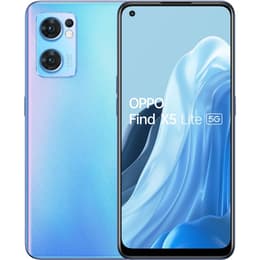
Galaxy Z Fold5 vs Oppo Find X5 Lite
- 1-year warranty
- Free standard shipping
- Free 30-day returns
Differences at a glance
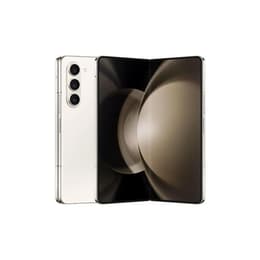
The Samsung Galaxy Z Fold5 (2023) and the Oppo Find X5 Lite (2022) represent two completely distinct smartphone concepts. While the Galaxy Z Fold5 is an innovative folding device designed for multitasking with a tablet-sized inner screen, the Oppo Find X5 Lite is a traditional, lightweight slab phone focused on everyday essentials. These models operate on different generations of Android software and cater to entirely different user preferences regarding form factor and daily usability.
Available Models
Colour
Storage (GB)
Scores
Durability
Device longevity and durability depend heavily on release year, physical construction, and software update policies for each smartphone model.
- Software Support: The Galaxy Z Fold5 benefits from an extended multi-year update commitment typical of recent flagship releases, whereas the Oppo Find X5 Lite operates on an earlier software schedule with a shorter remaining window for major system upgrades.
- Physical Build: The Galaxy Z Fold5 incorporates specialized folding hinge mechanics and reinforced outer glass designed to withstand daily folding actions, while the Oppo Find X5 Lite uses a conventional rigid glass-and-plastic body structure.
- Practical Lifespan: Users can expect extended software usability from the newer folding model, though conventional slab phones like the Oppo alternative generally present fewer mechanical wear points over years of continuous handling.
Release year
2023
2022
Compatible with latest Update
Yes
No
Operating system
Android
Android
Foldable
Yes
No
Performance
Processing power and multitasking capabilities differ significantly, influencing how smoothly each handset handles intensive applications and daily routines.
- Speed and Responsiveness: The Galaxy Z Fold5 utilizes a current-generation high-tier processor that launches demanding games and heavy productivity tools instantly, while the Oppo Find X5 Lite relies on a mid-range processor well-suited for standard web browsing, messaging, and streaming.
- Multitasking Handling: Equipped with a larger pool of system memory, the Galaxy Z Fold5 maintains multiple split-screen apps active simultaneously without stuttering, whereas the Oppo Find X5 Lite handles standard background app switching adequately with its baseline memory configuration.
- Battery Behavior: Battery endurance varies based on screen usage habits, with the folding model managing power across two distinct displays and the Oppo model providing reliable daily power for single-screen tasks.
Screen quality
Display technology defines the primary visual experience, showcasing a stark contrast between a transforming dual-screen setup and a standard single panel.
- Display Type: The Galaxy Z Fold5 features a flexible folding interior panel alongside an outer cover screen, both utilizing advanced organic light-emitting technology, while the Oppo Find X5 Lite employs a traditional flat panel with vibrant color reproduction.
- Refresh Rate: Smooth scrolling and fluid motion are enhanced by a high adaptive refresh rate on the folding device, compared to a standard fixed high refresh rate on the Oppo alternative.
- Outdoor Visibility: Both screens reach sufficient brightness levels for comfortable reading under direct sunlight, though the larger canvas of the folding model provides significantly more workspace for documents and media.
Resolution
1812 x 2176
1080 x 2400
Screen type
Foldable Dynamic AMOLED 2X
AMOLED
Audiovisual
Multimedia and optics configurations cater to different styles of photography, video recording, and audio playback during daily use.
- Camera Systems: The Galaxy Z Fold5 incorporates a versatile multi-lens rear array that adapts well to various zoom and wide-angle scenarios, while the Oppo Find X5 Lite features a dependable main sensor accompanied by standard supporting lenses for casual snapshots.
- Video and Low-Light: The processing capabilities of the folding flagship allow for refined video stabilization and clear night photography, whereas the Oppo model handles everyday indoor and outdoor recording reliably under balanced lighting.
- Audio Output: Stereo speakers on both devices deliver clear sound for hands-free calls and media consumption, though the Oppo model retains a traditional headphone jack for wired audio accessories.
Main camera
50 megapixels
64 megapixels
Front camera
4 megapixels
32 megapixels
Miscellaneous
Practical daily features, connectivity standards, and physical dimensions shape the ergonomics and portability of each smartphone.
- Portability and Weight: The Galaxy Z Fold5 offers a dual-screen experience that folds into a thicker, heavier profile, whereas the Oppo Find X5 Lite maintains a remarkably slim and lightweight slab footprint that rests easily in one hand.
- Connectivity: Both models support modern cellular networks and local wireless standards for fast data transfer, though newer Bluetooth and Wi-Fi revisions on the folding model ensure broader compatibility with contemporary peripherals.
- Security Sensors: Secure unlocking is handled via responsive fingerprint recognition on both handsets, complemented by facial scanning features.
Weight
253 oz
173 oz
Screen size (in)
7.6
6.43
Network
5G
5G
SIM card
Physical SIM + eSIM
Dual Physical SIM
Carrier compatibility
Unlocked
Unlocked
What the community thinks
Choosing between these two smartphones depends heavily on your preferred device format and daily computing habits. Users prioritizing maximum workspace, advanced multitasking capabilities, and a larger folding screen layout will find the Galaxy Z Fold5 well-suited to their needs. Conversely, users who prefer a lightweight, traditional phone design with straightforward everyday performance will lean toward the Oppo Find X5 Lite. For buyers exploring sustainable technology, opting for a quality-assured refurbished option provides an eco-friendly alternative that extends device lifecycles without compromising performance standards.
Reviewing these core differences helps clarify which model aligns with your personal workflow. Whether you choose the expansive productivity of a folding display or the simple ergonomics of a standard smartphone, evaluating your primary daily requirements ensures a satisfying long-term decision.