
Galaxy S21 5G vs Motorola Edge 30 Pro

Galaxy S21 5G
Galaxy S21 5G
Starting at

Refurbished price:A$318.00

Versus A$1,369.00 new

See options
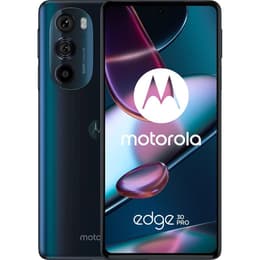
Motorola Edge 30 Pro
Starting at

Refurbished price:A$289.72

Versus A$2,709.00 new

See options

The Samsung Galaxy S21 5G, released in January 2021, and the Motorola Edge 30 Pro, launched globally in February 2022, are both Android smartphones that offered high-end features at their respective times. While the Galaxy S21 5G presented a compact flagship experience with a focus on camera versatility and a vibrant display, the Motorola Edge 30 Pro aimed for raw performance and a very high refresh rate screen. Both devices run on the Android operating system, with Samsung's One UI offering a feature-rich experience and Motorola providing a near-stock Android interface with its own enhancements.

Scores

Durability

When considering the long-term usability of these devices, their release timelines and software support policies are key factors.

  • Release Timeline: The Samsung Galaxy S21 5G was introduced in January 2021, making it an older device compared to the Motorola Edge 30 Pro, which arrived in February 2022. This difference in launch dates impacts their remaining software support cycles.
  • OS Support and Longevity: Samsung typically provides a longer period of major Android operating system updates and security patches for its flagship devices. The Galaxy S21 5G is expected to receive four major OS updates and five years of security updates from its release, meaning its major OS update cycle is nearing its end in 2025. In contrast, the Motorola Edge 30 Pro was promised two major OS updates and three years of security updates, which means its official software support concluded earlier than the Galaxy S21 5G. Users prioritizing extended software longevity might find the Galaxy S21 5G to have a slightly longer practical lifespan in terms of receiving the latest Android features and security.
  • Repairability: The Galaxy S21 5G generally has a moderate repairability score, with some sources indicating it is relatively easy to disassemble, though the battery can be challenging to remove due to strong adhesive. Information on the specific repairability score for the Motorola Edge 30 Pro is less readily available, but its construction with a plastic frame and glass panels suggests a standard level of repair complexity.

Release year

2021

2022

Compatible with latest Update

Yes

Yes

Operating system

Android

Android

Foldable

No

No

Performance

Both smartphones deliver capable performance, though they approach it with different hardware and user experiences.

  • Processor Capabilities: The Motorola Edge 30 Pro features a newer generation processor, which translates to a noticeable advantage in handling demanding applications, intensive multitasking, and graphically rich games. Users will experience very fluid navigation and quick app loading times. The Galaxy S21 5G, while still offering strong performance for everyday tasks and most applications, uses a slightly older generation processor. While it handles daily usage smoothly, it may show more strain during prolonged heavy use or with future, more demanding software.
  • Multitasking and Storage: Both devices offer ample RAM options, typically 8GB or 12GB, which is sufficient for keeping multiple applications open and switching between them without significant slowdowns. Storage options are also generous on both, ranging from 128GB to 256GB, with some configurations of the Edge 30 Pro offering up to 512GB, providing plenty of space for apps, photos, and media.
  • Battery Behavior: The Motorola Edge 30 Pro is equipped with a larger 4800mAh battery compared to the Galaxy S21 5G's 4000mAh unit. In real-world usage, the Edge 30 Pro generally provides solid all-day battery life for moderate users, though heavy use, especially with the 144Hz display, might require an evening top-up. The Galaxy S21 5G's battery life is often described as good but can be a concern for heavy users, sometimes requiring more frequent charging.

Memory (GB)

8 GB

8 GB

Screen quality

The visual experience on both phones is vibrant, but they differ in key display characteristics.

  • Display Technology and Clarity: Both devices feature OLED display technology, which delivers deep blacks and high contrast. The Samsung Galaxy S21 5G uses a Dynamic AMOLED 2X panel, known for its color accuracy and brightness. The Motorola Edge 30 Pro uses a pOLED/AMOLED display, also offering rich colors. Both screens provide Full HD+ resolution (2400x1080 pixels), ensuring sharp text and clear images for typical viewing distances.
  • Refresh Rate and Smoothness: The Motorola Edge 30 Pro stands out with its 144Hz refresh rate, offering an exceptionally smooth scrolling and gaming experience. The Galaxy S21 5G features an adaptive 120Hz refresh rate, which also provides a very fluid experience and dynamically adjusts to save power. While both offer high refresh rates, the Edge 30 Pro's 144Hz can feel marginally smoother to some users.
  • Brightness and Size: The Galaxy S21 5G's display can reach a peak brightness of 1300 nits, making it highly visible even in bright outdoor conditions. The Motorola Edge 30 Pro offers up to 700 nits of brightness, which is generally good but may be less comfortable in direct sunlight compared to the S21 5G. In terms of size, the Edge 30 Pro has a larger 6.7-inch screen, providing a more expansive viewing area, while the Galaxy S21 5G is more compact with a 6.2-inch display.

Resolution

1080 x 2400

1080 x 2400

Screen type

Dynamic AMOLED 2X

OLED

Audiovisual

The camera systems on these devices offer different strengths and capabilities for capturing photos and videos.

  • Rear Camera Systems: The Samsung Galaxy S21 5G features a versatile triple camera setup: a 12MP wide-angle lens with optical image stabilization (OIS), a 64MP telephoto lens with OIS offering 3x hybrid optical zoom, and a 12MP ultrawide lens. This configuration provides flexibility for various shooting scenarios, including good zoom capabilities. The Motorola Edge 30 Pro also has a triple rear camera system, consisting of a 50MP wide-angle lens with OIS, a 50MP ultrawide lens that doubles as a macro camera, and a 2MP depth sensor. It lacks a dedicated telephoto lens, relying on digital zoom for distant subjects.
  • Photography Performance: The Galaxy S21 5G is known for producing detailed photos with good dynamic range and consistent color across its lenses, though some users find Samsung's processing can lead to slightly oversaturated images. Its low-light performance is generally strong, especially with Night Mode. The Motorola Edge 30 Pro's main camera performs well in good lighting conditions, offering good detail and color reproduction. However, its low-light performance is often noted as a weaker point, with images sometimes showing more noise and less detail compared to top-tier flagships.
  • Video Recording and Front Camera: Both phones are capable of recording high-resolution video. The Galaxy S21 5G can record up to 8K at 24fps and 4K at 30/60fps. The Edge 30 Pro also supports 8K video recording at 30fps and 4K at 30fps, but its ultrawide camera does not support 4K video. For selfies, the Galaxy S21 5G has a 10MP front camera with Dual Pixel AF, providing clear and detailed self-portraits. The Motorola Edge 30 Pro features a high-resolution 60MP front camera, which can capture very detailed selfies, though some user reports suggest the quality might not always match the high megapixel count, particularly in challenging lighting.

Main camera

12 megapixels

50 megapixels

Front camera

10 megapixels

60 megapixels

Miscellaneous

Beyond core performance and display, several other features contribute to the overall user experience of these smartphones.

  • Connectivity and Ports: Both devices support 5G connectivity for fast mobile data. The Motorola Edge 30 Pro offers Wi-Fi 6E and Bluetooth 5.2, providing slightly newer wireless standards for potentially faster and more stable connections. The Galaxy S21 5G supports Wi-Fi 6 and Bluetooth 5.0. Both utilize a USB-C port for charging and data transfer, with the Edge 30 Pro also supporting DisplayPort 1.4 and its 'Ready For' desktop-like experience. Neither phone includes a traditional 3.5mm headphone jack.
  • Security and Sensors: The Galaxy S21 5G features an in-display ultrasonic fingerprint sensor for biometric authentication. The Motorola Edge 30 Pro uses a side-mounted fingerprint sensor, integrated into the power button. Both methods offer reliable unlocking.
  • Build Materials and Durability: The Galaxy S21 5G has a plastic back and a Gorilla Glass Victus front, offering good scratch and drop resistance for the display. It also boasts an IP68 rating for significant dust and water resistance, meaning it can withstand submersion. The Motorola Edge 30 Pro features a glass front (Gorilla Glass 3) and back (Gorilla Glass 5) with a plastic frame. It has an IP52 rating, indicating splash resistance but not full water immersion protection.
  • Dimensions and Handling: The Galaxy S21 5G is the more compact device, measuring 151.7 x 71.2 x 7.9 mm and weighing around 169-171g, making it easier for one-handed use. The Motorola Edge 30 Pro is larger and heavier at 163.1 x 75.95 x 8.8 mm and 196g, which might appeal to users who prefer a larger screen and a more substantial feel.

Weight

169 oz

196 oz

Screen size (in)

6.2

6,7

Network

5G

5G

SIM card

Physical SIM + eSIM

Dual Physical SIM

Carrier compatibility

Unlocked

Unlocked

User feedback for the Samsung Galaxy S21 5G often praises its vibrant AMOLED display, compact design, and versatile camera system, particularly its telephoto capabilities. Some common criticisms include its battery life for heavy users and the plastic back, which some perceive as less premium. The Motorola Edge 30 Pro is frequently lauded for its exceptionally smooth 144Hz display, powerful performance, and fast charging speeds. However, its camera performance, especially in low light, is often cited as an area for improvement, and some users have reported heating issues with its processor and concerns about Motorola's software update policy.

Users prioritizing a more compact device with a highly capable and versatile camera system, including optical zoom, and a longer software support window, may find the Samsung Galaxy S21 5G to be a suitable choice. Its IP68 water resistance also offers greater peace of mind for outdoor use. Conversely, individuals who value raw processing power, an ultra-smooth display for gaming and general navigation, and very fast wired charging might lean towards the Motorola Edge 30 Pro. Its larger screen also provides a more immersive media consumption experience. Both devices offer compelling features, and for those looking for a more sustainable choice, quality-assured refurbished options for both models are available, providing an eco-friendly alternative to purchasing new.

See all articles

Our recent comparisons