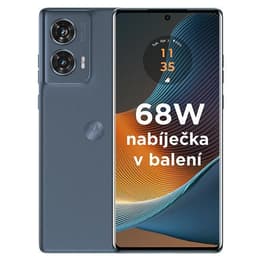
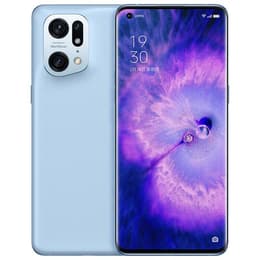

Motorola Edge 50 Fusion vs Oppo Find X5 Pro

Motorola Edge 50 Fusion
See options
Oppo Find X5 Pro
Oppo Find X5 Pro
Starting at

Refurbished price:A$639.00

Versus A$1,769.00 new

See options

The Motorola Edge 50 Fusion, released in April 2024, and the Oppo Find X5 Pro, launched in February 2022, are distinct smartphones from different generations. While both offer a premium Android experience, they cater to varying user priorities through their core specifications and design philosophies. The Motorola device focuses on a balanced experience with a high refresh rate display and a newer software foundation, whereas the Oppo model emphasizes high-end performance and advanced display technology.

Scores

Durability

The longevity of a smartphone is influenced by its build quality, software support, and the availability of updates.

  • Release Timeline: The Motorola Edge 50 Fusion is a newer device, released in May 2024, giving it an inherent advantage in terms of its lifecycle. The Oppo Find X5 Pro, released in February 2022, is an older model.
  • Software Support: The Motorola Edge 50 Fusion launched with Android 14 and is expected to receive three major Android OS updates, extending its support to Android 17, along with four years of security updates. The Oppo Find X5 Pro, initially on Android 12, is anticipated to receive updates up to Android 15 or 16, with around four to five years of security patches. This means the Motorola device will likely receive software support for a longer duration from the current date.
  • Physical Durability: Both devices feature an IP68 rating for dust and water resistance, indicating a high level of protection against environmental elements. The Motorola Edge 50 Fusion uses Gorilla Glass 5 for screen protection, while the Oppo Find X5 Pro features the more robust Gorilla Glass Victus on its front display.

Release year

2024

2022

Compatible with latest Update

Yes

Yes

Operating system

Android

Android

Foldable

No

No

Performance

Performance is a key differentiator, impacting how smoothly applications run and how the device handles demanding tasks.

  • Processing Power: The Oppo Find X5 Pro is equipped with a more powerful processor, which translates to a highly responsive experience for intensive applications, advanced multitasking, and graphically demanding games. The Motorola Edge 50 Fusion provides smooth and reliable performance for everyday tasks and multitasking, handling most applications without noticeable delays.
  • Memory and Storage: Both devices offer configurations with 8GB or 12GB of RAM, suitable for efficient multitasking. However, the Oppo Find X5 Pro utilizes faster UFS 3.1 storage, contributing to quicker app loading and data transfer speeds, compared to the UFS 2.2 storage found in the Motorola Edge 50 Fusion. Storage options for the Motorola device range from 128GB to 512GB, while the Oppo model offers 256GB and 512GB variants.
  • Battery Behavior: Both smartphones are equipped with a 5000 mAh battery capacity. Users of the Motorola Edge 50 Fusion often report excellent battery longevity, with some experiencing up to two days of use on a single charge. The Oppo Find X5 Pro also offers good battery life, typically lasting a full day even with heavy usage.

Memory (GB)

12 GB

12 GB

Screen quality

The display is a primary interface for user interaction, and differences in technology and specifications can significantly affect the visual experience.

  • Display Technology and Resolution: The Motorola Edge 50 Fusion features a 6.7-inch pOLED display with a Full HD+ resolution (1080 x 2400 pixels). The Oppo Find X5 Pro comes with a 6.7-inch LTPO2 AMOLED display, offering a higher WQHD+ resolution (1440 x 3216 pixels). The higher pixel density of the Oppo device results in sharper images and text.
  • Refresh Rate and Brightness: The Motorola Edge 50 Fusion boasts a 144Hz refresh rate, providing a very smooth scrolling and animation experience. The Oppo Find X5 Pro has a dynamic 120Hz refresh rate, which can adjust based on content to optimize power consumption while still offering fluid visuals. Both phones offer high peak brightness levels, with the Motorola reaching 1600 nits and the Oppo reaching 1300 nits, ensuring good visibility in bright outdoor conditions.
  • Color and Viewing Experience: Both displays support 10-bit color, offering a wide range of vibrant and accurate colors. The Oppo Find X5 Pro's LTPO2 technology allows for more granular control over the refresh rate, potentially leading to better power efficiency. Both devices feature curved displays, contributing to an immersive viewing experience.

Resolution

1080 x 2400

1440 x 3216

Screen type

P-OLED

LTPO2 AMOLED

Audiovisual

Camera capabilities are a significant factor for many users, with both hardware and software playing crucial roles in image and video quality.

  • Rear Camera Systems: The Motorola Edge 50 Fusion includes a dual-camera setup with a 50 MP main sensor featuring optical image stabilization (OIS) and a 13 MP ultrawide lens that also functions for macro photography. The Oppo Find X5 Pro features a triple-camera system, comprising a 50 MP main sensor with OIS, a 50 MP ultrawide sensor, and a 13 MP telephoto lens offering 2x optical zoom.
  • Photography Performance: The main camera on the Motorola Edge 50 Fusion performs well in various lighting conditions, capturing images with good clarity. The Oppo Find X5 Pro's main camera, enhanced by a dedicated imaging NPU and a partnership with Hasselblad, delivers excellent detail and handles low-light scenarios effectively, though some users note occasional color oversaturation. The Oppo's ultrawide camera is generally strong, but its 2x telephoto zoom is considered less capable compared to some competitors.
  • Video and Audio: Both phones are capable of recording 4K video. The Motorola Edge 50 Fusion supports 4K at 30 frames per second. The Oppo Find X5 Pro offers 4K video recording at both 30 and 60 frames per second, with strong video stabilization, particularly in 1080p modes. Both devices feature stereo speakers, with the Motorola Edge 50 Fusion supporting Dolby Atmos for an enhanced audio experience.

Main camera

50 megapixels

50 megapixels

Front camera

32 megapixels

32 megapixels

Miscellaneous

Beyond core specifications, several practical features contribute to the overall user experience and daily convenience.

  • Connectivity and Ports: Both smartphones support 5G connectivity, ensuring access to faster mobile networks. The Motorola Edge 50 Fusion supports Wi-Fi 5 (802.11ac) and Bluetooth 5.2. The Oppo Find X5 Pro offers the newer Wi-Fi 6 (802.11ax) standard, potentially providing faster and more stable wireless connections, along with Bluetooth 5.2. Both devices utilize a USB Type-C port for charging and data transfer.
  • Biometric Security and Design: Both phones incorporate an in-display fingerprint sensor for secure and convenient unlocking. The Motorola Edge 50 Fusion is notably lighter at approximately 175 grams and thinner at 7.9mm, contributing to a more comfortable in-hand feel. It features a plastic frame with options for a silicone polymer (eco-leather) or plastic back. The Oppo Find X5 Pro is heavier at 218 grams and slightly thicker at 8.5mm, featuring more premium build materials such as a ceramic or eco-leather back and an aluminum frame.
  • Additional Features: The Motorola Edge 50 Fusion includes stereo speakers with Dolby Atmos support. The Oppo Find X5 Pro also has stereo speakers and features like fast wired and wireless charging.

Weight

175 oz

218 oz

Screen size (in)

6.7

6.7

Network

5G

5G

SIM card

Dual Physical SIM

Physical SIM + eSIM

Carrier compatibility

Unlocked

Unlocked

Connector

USB-C

USB-C

The Motorola Edge 50 Fusion and the Oppo Find X5 Pro offer distinct propositions for smartphone users. The Motorola Edge 50 Fusion is frequently praised for its attractive, lightweight design, vibrant 144Hz pOLED display, and impressive battery life that often extends beyond a single day. Users appreciate its capable main camera and smooth everyday performance. Common observations suggest that while its processing power is solid for its segment, it may not match the raw performance of higher-tier devices, and its software update policy, while decent, is not as extensive as some competitors.

Conversely, the Oppo Find X5 Pro is lauded for its stunning, high-resolution AMOLED display, powerful processing capabilities, and very fast charging speeds. Its main camera system, bolstered by a dedicated imaging chip and Hasselblad tuning, generally produces excellent results, particularly in challenging lighting. However, some users have noted that its telephoto camera's zoom capabilities are less impressive compared to other flagship devices, and the ultrawide can sometimes be inconsistent.

Users prioritizing a lightweight, stylish device with a very smooth display and strong battery life for daily use may find the Motorola Edge 50 Fusion to be a suitable choice. It offers a balanced experience for those who value design and a high refresh rate. On the other hand, individuals seeking a device with a top-tier, high-resolution display, superior processing power for demanding applications and gaming, and an advanced main camera system might lean towards the Oppo Find X5 Pro, provided they are less reliant on extensive telephoto zoom. Both devices represent compelling options, and considering a quality-assured refurbished option for either model can be an eco-friendly alternative.


See all articles

Our recent comparisons