
iPhone 13 Pro vs Oppo Find X5 Pro

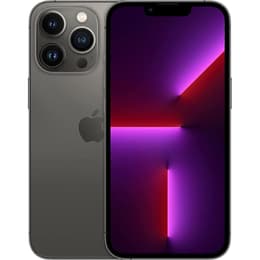
iPhone 13 Pro
iPhone 13 Pro
Starting at

Refurbished price:A$560.00

Versus A$1,539.00 new

See options
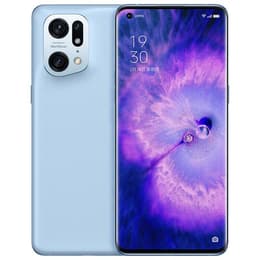
Oppo Find X5 Pro
Oppo Find X5 Pro
Starting at

Refurbished price:A$641.00

Versus A$1,769.00 new

See options

Ratings

The iPhone 13 Pro, released in September 2021, and the Oppo Find X5 Pro, launched in March 2022, are both high-end smartphones that offered premium experiences in their respective release years. While the iPhone 13 Pro operates on Apple's iOS ecosystem, the Oppo Find X5 Pro runs on Android, providing distinct user interfaces and app experiences. Key differentiators between these devices include their camera systems, display technologies, and charging capabilities.

Scores

Durability

When considering the longevity of these devices, several factors come into play, including their release timelines, software support, and repairability.

  • Release Timeline: The iPhone 13 Pro was released in September 2021, making it approximately six months older than the Oppo Find X5 Pro, which launched in March 2022. This difference in release date can influence the duration of future software support.
  • Software Support: Apple typically provides iOS updates for its iPhones for about 5-7 years from their release. Based on this, the iPhone 13 Pro is expected to receive major iOS updates until at least 2027, and potentially into 2028, with security updates extending beyond that. Oppo's update policy for the Find X5 Pro generally includes 3 years of Android OS updates and 4 years of security updates, meaning its official software support window may conclude sooner than the iPhone's.
  • Repairability and Durability: The iPhone 13 Pro features a Ceramic Shield front cover and IP68 water and dust resistance, contributing to its physical resilience. However, its iFixit repairability score was 5 out of 10, indicating some challenges for third-party repairs. The Oppo Find X5 Pro also boasts IP68 water and dust resistance and uses Corning Gorilla Glass Victus for screen protection, encased in a ceramic body.

Release year

2021

2022

Compatible with latest Update

Yes

Yes

Operating system

iOS

Android

Foldable

No

No

Performance

Both smartphones deliver robust performance suitable for demanding applications and multitasking, though they achieve this through different hardware architectures.

  • Processing Power: The iPhone 13 Pro is equipped with a powerful chip that handles intensive applications, high-fidelity gaming, and complex video editing tasks with smooth responsiveness. Users can expect consistent performance even with multiple apps running simultaneously. The Oppo Find X5 Pro features a current-generation processor that also provides a fluid user experience, excelling in gaming and heavy multitasking without noticeable slowdowns.
  • Multitasking and Storage: The iPhone 13 Pro typically comes with 6GB of RAM, which is optimized within the iOS ecosystem to manage numerous applications efficiently. Storage options range from 128GB up to 1TB, catering to various user needs. The Oppo Find X5 Pro generally offers 12GB of RAM, providing ample capacity for extensive multitasking and running many applications in the background. It is commonly available with 256GB of internal storage, with some regions offering 512GB.
  • Battery Behavior: The iPhone 13 Pro's battery is designed to last a full day for most users, with some reporting it lasting until late evening even with heavy use. It supports fast charging, reaching a significant charge in about 30 minutes with a compatible adapter. The Oppo Find X5 Pro houses a larger battery capacity, often providing a full day of use. A notable feature is its very fast wired charging, capable of fully charging the device in under an hour, and it also supports rapid wireless charging.

Memory (GB)

6 GB

12 GB

Screen quality

Both devices offer high-quality displays that provide vibrant visuals and smooth interactions, though with some differences in size and specific technologies.

  • Display Technology and Clarity: The iPhone 13 Pro features a 6.1-inch Super Retina XDR OLED display, known for its deep blacks, vibrant colors, and excellent contrast. It has a resolution of 2532x1170 pixels, resulting in a sharp 460 pixels per inch (ppi). The Oppo Find X5 Pro sports a larger 6.7-inch LTPO2 AMOLED display, offering a WQHD+ resolution of 3216x1440 pixels, which translates to approximately 525 ppi, providing a very detailed viewing experience.
  • Brightness and Refresh Rate: The iPhone 13 Pro's display can reach a typical brightness of 1000 nits and a peak HDR brightness of 1200 nits, ensuring good visibility in various lighting conditions. It features ProMotion technology, offering an adaptive refresh rate that scales from 10Hz to 120Hz for smooth scrolling and gaming while conserving battery life. The Oppo Find X5 Pro's display has a peak brightness of 1300 nits, making it highly visible outdoors. Its adaptive refresh rate also ranges from 1Hz to 120Hz, dynamically adjusting to content for power efficiency and fluidity.
  • Color and Viewing Experience: The Oppo Find X5 Pro's display is marketed as a "1 Billion Colour Bionic Display," capable of rendering a vast spectrum of colors for a rich visual experience, supporting HDR10+. Both displays offer excellent color accuracy and wide viewing angles, making them suitable for media consumption and general use.

Resolution

1170 x 2532

1440 x 3216

Screen type

Super Retina XDR OLED

LTPO2 AMOLED

Audiovisual

Both smartphones offer advanced camera systems designed to capture high-quality photos and videos, each with its own strengths and unique features.

  • Rear Camera Systems: The iPhone 13 Pro features a versatile triple 12MP camera system, including Wide, Ultra Wide, and Telephoto lenses. The Wide camera has a large sensor and sensor-shift optical image stabilization (OIS) for improved low-light performance, while the Telephoto lens offers 3x optical zoom. The Oppo Find X5 Pro boasts a triple camera setup with two 50MP sensors for its main and ultrawide cameras, alongside a 13MP telephoto lens with 2x optical zoom.
  • Low-Light and Video Capabilities: The iPhone 13 Pro excels in low-light photography with its Night mode and Deep Fusion technologies, and offers Cinematic mode for video, which provides a shallow depth of field effect. It also supports ProRes video recording for professional-grade footage. The Oppo Find X5 Pro emphasizes its low-light video and photography capabilities, enhanced by its dedicated MariSilicon X NPU (Neural Processing Unit) and a collaboration with Hasselblad for color calibration. Users report strong performance in challenging lighting conditions for both photos and videos.
  • Additional Camera Features: The iPhone 13 Pro introduced macro photography, allowing users to capture close-up details. It also includes Photographic Styles for personalized image looks. The Oppo Find X5 Pro features a 32MP front-facing camera, which is higher resolution than the iPhone's 12MP front camera.

Main camera

12 megapixels

50 megapixels

Front camera

12 megapixels

32 megapixels

Miscellaneous

Beyond core performance, several practical features and design elements differentiate these two premium smartphones.

  • Connectivity and Ports: Both devices support 5G connectivity and modern Wi-Fi standards (Wi-Fi 6 for Oppo, likely Wi-Fi 6 for iPhone 13 Pro). The iPhone 13 Pro uses Apple's proprietary Lightning port for charging and data transfer. In contrast, the Oppo Find X5 Pro features a USB-C port, offering broader compatibility with accessories. Neither phone includes a traditional 3.5mm headphone jack.
  • Biometric Security and Design: The iPhone 13 Pro relies on Face ID for secure facial recognition. The Oppo Find X5 Pro utilizes an in-screen fingerprint sensor for biometric authentication, alongside facial recognition. In terms of physical design, the iPhone 13 Pro has a flat-edged design with a stainless steel frame and a ceramic shield front. The Oppo Find X5 Pro features a ceramic body with curved edges, which some users find aesthetically pleasing and comfortable to hold, though it can be prone to fingerprints.
  • Dimensions and Weight: The iPhone 13 Pro is a more compact device, weighing 204 grams and measuring 146.7 x 71.5 x 7.65 mm. The Oppo Find X5 Pro is larger and slightly heavier at 218 grams and dimensions of 163.7 x 73.9 x 8.5 mm. This size difference impacts one-handed usability and pocketability.

Weight

203 oz

218 oz

Screen size (in)

6,1

6.7

Network

5G

5G

SIM card

Physical SIM + eSIM

Physical SIM + eSIM

Carrier compatibility

Unlocked

Unlocked

Connector

Lightning

USB-C

The iPhone 13 Pro and Oppo Find X5 Pro both offer compelling smartphone experiences, each with a distinct set of advantages that cater to different user preferences. Users often praise the iPhone 13 Pro for its consistent performance, robust software ecosystem, and excellent camera capabilities, particularly its Cinematic mode and macro photography. Its battery life was also a significant improvement over previous models, often lasting a full day. Some common criticisms for the iPhone 13 Pro included its proprietary Lightning port and the repairability challenges for third-party services.

The Oppo Find X5 Pro is frequently lauded for its stunning, high-resolution display, exceptionally fast wired and wireless charging speeds, and its strong low-light camera performance, especially for video, aided by its dedicated imaging chip. User feedback sometimes points to its telephoto camera offering less zoom range compared to some competitors and its ceramic back being a fingerprint magnet.

Users prioritizing a compact device with a long software support window and a highly integrated ecosystem may find the iPhone 13 Pro well-suited to their needs. Those who value a larger, higher-resolution display, extremely fast charging, and a more open Android ecosystem with advanced low-light video capabilities might lean towards the Oppo Find X5 Pro. Both devices represent strong choices in the premium smartphone segment, and considering a quality-assured refurbished option for either model can be an eco-friendly alternative.

See all articles

Our recent comparisons