
Motorola Edge 50 Fusion vs Motorola Moto G53

Motorola Edge 50 Fusion
See options
Motorola Moto G53
Motorola Moto G53
Starting at

Refurbished price:A$203.77

Versus A$975.00 new

See options

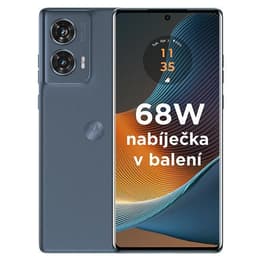
The Motorola Edge 50 Fusion, released in May 2024, and the Motorola Moto G53, launched in December 2022, are both smartphones from Motorola, yet they cater to different user expectations. The Edge 50 Fusion positions itself with a focus on an enhanced display and camera system, alongside a more robust build. In contrast, the Moto G53 emphasizes core smartphone functionalities with a smooth display experience for its segment. Both devices operate on the Android platform, offering a familiar user interface.

Scores

Durability

When considering the longevity of these devices, their release timelines and software support are key factors.

  • Release Timeline and Software Support: The Motorola Edge 50 Fusion, being a newer device from 2024, is expected to receive software updates for a longer period compared to the Moto G53, which was released in late 2022. The Edge 50 Fusion launched with Android 14, while the Moto G53 started with Android 13. This difference in launch year typically translates to an additional year or more of major Android version updates and security patches for the Edge 50 Fusion, extending its practical lifespan for users who prioritize the latest software features and security.
  • Physical Durability: The Edge 50 Fusion features an IP68 rating for dust and water resistance, indicating a high level of protection against environmental elements. Its display is also protected by Corning Gorilla Glass Victus 5, offering enhanced scratch and drop resistance. The Moto G53, while solidly built with a plastic frame and back, does not typically carry an official IP rating, suggesting less resistance to dust and water exposure.
  • Repairability: While specific repairability scores can vary by region and component availability, both Motorola devices generally offer a design that allows for component replacement, though the curved display of the Edge 50 Fusion might present a more complex repair for screen damage compared to the flatter panel of the Moto G53.

Release year

2024

2022

Compatible with latest Update

Yes

Yes

Operating system

Android

Android

Foldable

No

No

Performance

The performance of a smartphone is largely determined by its internal components, influencing how smoothly applications run and how efficiently tasks are handled.

  • Processing Power: The Motorola Edge 50 Fusion is equipped with a more capable processor, which allows for smoother multitasking and more responsive handling of demanding applications and games. Users will likely experience quicker app loading times and a more fluid overall interface. The Moto G53, with its processor, handles everyday tasks adequately, such as web browsing, social media, and light gaming, but may show some hesitation with more intensive applications or when many apps are open simultaneously.
  • Storage and RAM: The Edge 50 Fusion offers higher RAM configurations, up to 12GB, and faster internal storage technology (UFS 2.2), contributing to better performance in data-intensive operations and app switching. The Moto G53 typically comes with 4GB or 6GB of RAM and UFS 2.1 storage, which is suitable for general use but can be a limiting factor for power users.
  • Battery Behavior: Both devices feature a 5000mAh battery capacity. The Edge 50 Fusion supports 68W fast charging, allowing for rapid power replenishment. The Moto G53 supports 10W or 18W charging, which is slower but still provides a full day of use for many users.

Memory (GB)

12 GB

8 GB

Screen quality

The visual experience is a significant differentiator between these two Motorola smartphones, primarily due to their display technologies and specifications.

  • Display Technology and Resolution: The Motorola Edge 50 Fusion features a 6.7-inch pOLED display with a Full HD+ resolution (1080 x 2400 pixels). This technology delivers deep blacks, high contrast, and vibrant colors, enhancing the viewing experience for media consumption. The Moto G53 comes with a 6.5-inch IPS LCD panel with an HD+ resolution (720 x 1600 pixels). While it offers a decent viewing experience, it does not match the color depth or contrast levels of an OLED screen.
  • Refresh Rate and Brightness: Both devices offer a 120Hz refresh rate, contributing to smoother scrolling and more fluid animations. However, the Edge 50 Fusion can reach a peak brightness of 1600 nits, making it highly visible even in bright outdoor conditions. The Moto G53's display typically reaches around 450 nits, which is adequate for indoor use but may struggle more under direct sunlight.
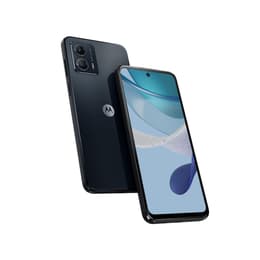
  • Screen Design: The Edge 50 Fusion incorporates a curved 'Endless Edge' display, which provides an immersive feel and a modern aesthetic. The Moto G53 has a flat display with slightly thicker bezels, offering a more traditional smartphone screen design.

Resolution

1080 x 2400

720x1600

Screen type

P-OLED

IPS LCD

Audiovisual

The camera systems on both phones are designed to capture everyday moments, with distinct capabilities and performance characteristics.

  • Rear Camera System: The Motorola Edge 50 Fusion features a dual-camera setup with a 50MP main sensor (with Optical Image Stabilization) and a 13MP ultrawide lens that also supports macro photography. This combination allows for detailed photos in various conditions and offers versatility for wider shots and close-ups. The Moto G53 also has a 50MP main camera, but it is paired with a 2MP macro sensor. It lacks an ultrawide lens, limiting its flexibility for capturing broader scenes.
  • Photography Performance: The Edge 50 Fusion's main camera performs well in various lighting conditions, producing sharp and detailed images, and its ultrawide lens offers consistent color performance. The Moto G53's main camera can take good photos in well-lit environments, but its performance, particularly in low light, may not be as strong, and the 2MP macro lens offers limited utility.
  • Front Camera and Video: For selfies, the Edge 50 Fusion is equipped with a 32MP front camera, capable of capturing detailed self-portraits. The Moto G53 has an 8MP front camera. The Edge 50 Fusion supports 4K video recording at 30 frames per second, while the Moto G53 records at 1080p at 30 frames per second.

Main camera

50 megapixels

50 megapixels

Front camera

32 megapixels

8 megapixels

Miscellaneous

Beyond the core features, several practical elements contribute to the overall user experience of these smartphones.

  • Connectivity and Ports: Both devices support 5G connectivity, ensuring access to faster mobile networks. The Edge 50 Fusion includes Wi-Fi 6 and Bluetooth 5.2, offering modern wireless standards. The Moto G53 supports Wi-Fi 5 and Bluetooth 5.1. Both phones feature a USB-C port for charging and data transfer. The Moto G53 also retains a 3.5mm headphone jack, which is absent on the Edge 50 Fusion.
  • Biometrics and Sensors: The Edge 50 Fusion incorporates an optical under-display fingerprint sensor for secure unlocking. The Moto G53 uses a side-mounted fingerprint sensor integrated into the power button. Both devices include standard sensors like accelerometers, gyroscopes, and proximity sensors.
  • Design and Build Materials: The Edge 50 Fusion features a slim and lightweight design with a vegan leather back and an aluminum frame, contributing to a premium feel. The Moto G53 has a plastic back and frame, which is durable but offers a different tactile experience.

Weight

175 oz

183 oz

Screen size (in)

6.7

6.5

Network

5G

5G

SIM card

Dual Physical SIM

Dual Physical SIM

Carrier compatibility

Unlocked

Unlocked

The Motorola Edge 50 Fusion and Motorola Moto G53 offer distinct propositions for smartphone users. The Edge 50 Fusion, a more recent release, generally receives praise for its vibrant pOLED display, capable camera system with OIS, and premium design with IP68 water resistance. Users appreciate its fast charging capabilities and smooth performance for daily tasks. However, some users have noted concerns regarding the fragility of its curved screen and occasional software lags after updates. Performance for very demanding games might also not be its strongest suit.

The Moto G53, while an older model, is often commended for its impressive battery life, a 120Hz refresh rate display (despite its lower resolution), and a clean Android software experience. Its solid build is also a frequent positive point. On the other hand, common criticisms include the lower resolution of its LCD screen, the limited utility of its macro camera, and its processor's struggles with more intensive applications. The absence of an ultrawide camera is also a notable difference.

Users prioritizing a modern design, a superior display for media, enhanced camera versatility, and higher durability will find the Motorola Edge 50 Fusion well-suited to their needs. Its extended software support also makes it a compelling choice for those seeking longer device longevity. Conversely, users who prioritize extended battery life, a smooth scrolling experience for everyday use, and a more traditional flat screen design may lean towards the Motorola Moto G53. Both devices represent solid options within their respective segments, and considering a quality-assured refurbished option for either model can be an eco-friendly alternative.

See all articles

Our recent comparisons