
Motorola Edge 30 Pro vs Motorola Moto G53

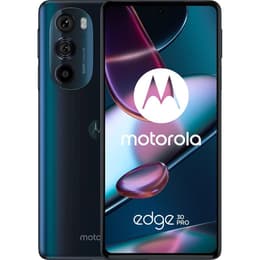
Motorola Edge 30 Pro
Starting at

Refurbished price:A$288.72

Versus A$2,709.00 new

See options
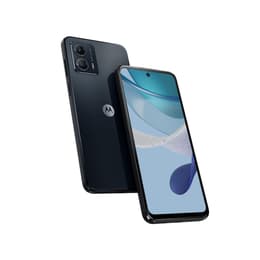
Motorola Moto G53
Motorola Moto G53
Starting at

Refurbished price:A$203.77

Versus A$975.00 new

See options

The Motorola Edge 30 Pro, released in February 2022, and the Motorola Moto G53, launched in late 2022 to early 2023, are both Android smartphones from Motorola. While both devices offer a clean Android experience, the Edge 30 Pro is positioned as a higher-performance device with a focus on advanced display and processing capabilities, whereas the Moto G53 provides a more accessible 5G experience with strong battery life.

Scores

Durability

When considering the long-term usability of these devices, several factors come into play, including software support, physical durability, and ease of repair.

  • Software Longevity: The Motorola Edge 30 Pro launched with Android 12 and was expected to receive two major OS upgrades, bringing it up to Android 14. The Moto G53, released later with Android 13, has already been updated to Android 14 and is expected to receive security patches until January 2026. This suggests the Moto G53 may have a slightly longer period of active software support from its release date.
  • Physical Durability: The Edge 30 Pro features a glass front, often Gorilla Glass 3 or 5, and a glass back, with a plastic frame, offering an IP52 rating for splash resistance. The Moto G53 typically uses a glass front with a plastic back and frame, also featuring an IP52 water-repellent design. Both devices offer a similar level of protection against splashes and dust.
  • Repairability: The Motorola Edge 30 Pro has a repairability score of 6.5 out of 10, indicating a moderate ease of repair for components like the screen and battery. While a specific repairability score for the Moto G53 is not widely published, Motorola generally designs its phones with repair in mind, and repair services are available for the Moto G53.

Release year

2022

2022

Compatible with latest Update

Yes

Yes

Operating system

Android

Android

Foldable

No

No

Performance

The performance capabilities of these two Motorola smartphones differ significantly, impacting how they handle various applications and multitasking demands.

  • Processing Power: The Edge 30 Pro is equipped with a high-end processor, enabling it to handle demanding applications, intensive multitasking, and graphic-heavy games with smooth and responsive performance. Users report a very fast and zippy experience for daily use. In contrast, the Moto G53 features an entry-level 5G-capable processor that performs adequately for everyday tasks such as web browsing, social media, and light gaming. However, it is not designed for heavy gaming or highly intensive applications.
  • Multitasking and Storage: The Edge 30 Pro offers configurations with 8GB or 12GB of RAM and storage options up to 512GB, allowing for extensive multitasking and ample space for applications and media. The Moto G53 comes with 4GB, 6GB, or 8GB of RAM and up to 128GB of internal storage, which is expandable via a microSD card. This makes the Moto G53 suitable for users with moderate storage needs who appreciate the flexibility of expandable storage.
  • Battery Behavior: The Edge 30 Pro has a 4800 mAh battery with 68W fast charging, 15W wireless charging, and 5W reverse wireless charging capabilities. While it offers solid battery life for a full day of moderate use, heavy users might require an evening top-up, and some users have noted potential heating issues under heavy load that can affect battery performance. The Moto G53 features a larger 5000 mAh battery, which, combined with its less demanding processor and lower-resolution display, contributes to excellent endurance, often lasting well over a day or even two days for some users. However, its charging speed is slower at 10W.

Memory (GB)

8 GB

8 GB

Screen quality

The visual experience on these two Motorola devices is shaped by their distinct display technologies and specifications.

  • Display Technology and Clarity: The Motorola Edge 30 Pro features a 6.7-inch pOLED display with a Full HD+ resolution (1080 x 2400 pixels), delivering deep blacks, vibrant colors, and sharp visuals. It also supports HDR10+ for enhanced contrast and color reproduction. The Motorola Moto G53, on the other hand, uses a 6.5-inch IPS LCD panel with an HD+ resolution (720 x 1600 pixels). While it offers a large viewing area, the lower resolution means content may not appear as sharp or detailed as on the Edge 30 Pro.
  • Refresh Rate and Smoothness: Both devices offer a high refresh rate for smoother interactions. The Edge 30 Pro boasts a 144Hz refresh rate, providing exceptionally fluid scrolling and animations, particularly beneficial for gaming and fast-paced content. The Moto G53 also features a 120Hz refresh rate, which significantly enhances the smoothness of the user interface and general navigation compared to standard 60Hz displays.
  • Brightness and Outdoor Visibility: The Edge 30 Pro's OLED display offers good brightness, though some reviews suggest it might not be bright enough for optimal visibility in very sunny outdoor conditions compared to some other high-end devices. The Moto G53's IPS LCD panel generally provides adequate brightness for indoor use, but its performance in bright outdoor environments may be more limited due to the nature of LCD technology and its typical brightness levels.

Resolution

1080 x 2400

720x1600

Screen type

OLED

IPS LCD

Audiovisual

The camera systems on the Motorola Edge 30 Pro and Moto G53 cater to different photography needs and expectations.

  • Rear Camera Systems: The Edge 30 Pro features a versatile triple-camera setup, including a 50MP main sensor with optical image stabilization (OIS), a 50MP ultrawide sensor that also functions for macro photography, and a 2MP depth sensor. This configuration allows for detailed wide-angle shots and creative close-ups. The Moto G53 has a dual-camera system with a 50MP main sensor and a 2MP macro sensor, but it lacks an ultrawide lens.
  • Photography Performance: In good lighting conditions, the Edge 30 Pro's main camera produces good photos with decent focus and vibrant colors. However, user feedback indicates that its camera performance, particularly in low light and for moving subjects, can be inconsistent and may not meet the expectations of a high-end device, with some users reporting grainy and noisy images. The Moto G53's main camera is considered decent for everyday users, capable of capturing quality photos with balanced HDR and sharpness in good light. However, it struggles in low-light environments, producing softer and grainier images.
  • Front Camera and Video: The Edge 30 Pro boasts a high-resolution 60MP front camera, capable of recording 4K video, which is suitable for high-quality selfies and video calls. The Moto G53 comes with an 8MP front camera, which performs adequately for daylight selfies and video calls. For video recording, the Edge 30 Pro supports 4K and even 8K video capture, offering more advanced options for content creators. The Moto G53 is limited to 1080p video recording at 30 frames per second. Both devices offer stereo speakers, with the Edge 30 Pro featuring Dolby Atmos tuning for an enhanced audio experience.

Main camera

50 megapixels

50 megapixels

Front camera

60 megapixels

8 megapixels

Miscellaneous

Beyond the core specifications, several practical elements differentiate the user experience of these two Motorola smartphones.

  • Connectivity and Ports: The Edge 30 Pro supports advanced connectivity with 5G, Wi-Fi 6E, and Bluetooth 5.2, along with NFC for contactless payments. It features a USB-C 3.1 port with DisplayPort 1.4 support, allowing for video output, but it omits a 3.5mm headphone jack. The Moto G53 also offers 5G connectivity, Wi-Fi 5, Bluetooth 5.1, and NFC. It includes a USB-C 2.0 port and retains the traditional 3.5mm headphone jack, which is convenient for users with wired audio accessories.
  • Biometric Security: Both devices incorporate a side-mounted fingerprint sensor for secure and convenient unlocking. They also support face recognition for an alternative unlocking method.
  • Design and Handling: The Edge 30 Pro measures 163.1 x 76 x 8.8 mm and weighs 196g, featuring a glass front and back with a plastic frame. Its design is often described as feeling premium. The Moto G53 is slightly more compact and lighter at 162.7 x 74.7 x 8.2 mm and 183g, with a plastic back and frame. While both are large devices, the Moto G53's lighter build may contribute to a more comfortable single-handed experience for some users.

Weight

196 oz

183 oz

Screen size (in)

6,7

6.5

Network

5G

5G

SIM card

Dual Physical SIM

Dual Physical SIM

Carrier compatibility

Unlocked

Unlocked

The Motorola Edge 30 Pro and Motorola Moto G53 cater to different user priorities, each excelling in distinct areas based on user feedback and specifications.

The Edge 30 Pro is frequently praised for its powerful processing capabilities, delivering a fast and responsive experience for demanding applications and gaming. Its vibrant OLED display with a high 144Hz refresh rate is also a significant highlight, offering smooth visuals and deep colors. Users appreciate its fast charging and the inclusion of wireless charging. However, common criticisms often point to its camera performance, particularly in low light, which some users find to be inconsistent or not on par with other devices in its category. Some users have also noted potential heating under heavy load and a battery life that, while solid, might require an evening top-up for very intensive use.

Conversely, the Moto G53 receives commendation for its exceptional battery life, often lasting well over a day or two, making it a reliable companion for extended use. Its 120Hz display provides a smooth scrolling experience, and the inclusion of a 3.5mm headphone jack is a practical advantage for many. Criticisms for the Moto G53 typically revolve around its lower-resolution HD+ display, which some users find less sharp than Full HD+ panels. Its camera performance, especially in challenging lighting, is considered adequate for casual use but not outstanding. The slower charging speed is another point of consideration.

Users prioritizing high performance, a superior display for media consumption, and advanced features like wireless charging and faster data transfer speeds may find the Motorola Edge 30 Pro well-suited to their needs. This device is ideal for professionals, mobile gamers, or individuals who frequently use demanding applications. On the other hand, users who prioritize extended battery life, a smooth everyday experience, and practical features like a headphone jack, without needing top-tier processing power or camera capabilities, may lean toward the Motorola Moto G53. This makes it a strong option for students, commuters, or those seeking a dependable daily driver. Both devices, available as quality-assured refurbished options, offer an eco-friendly alternative for consumers looking to make informed and sustainable choices.


See all articles

Our recent comparisons