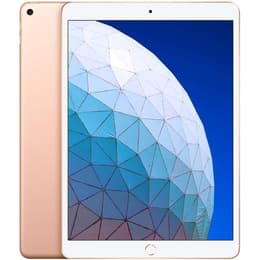
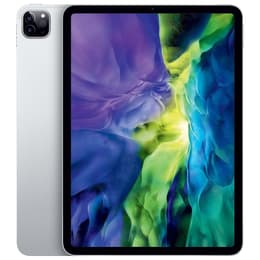
iPad Air 3 (2019, A12 series) vs iPad Pro (2020, A12 series)

iPad Air 3 (2019, A12 series)
Starting at

Refurbished price:A$247.00

Versus A$739.00 new

See options
iPad Pro (2020, A12 series)
Starting at

Refurbished price:A$753.00

Versus A$899.00 new

See options

Ratings

The iPad Air (3rd generation), released in 2019, and the iPad Pro (4th generation), launched in 2020, are both Apple tablets designed for different user needs. While they share the same operating system, iPadOS, and a familiar design language, the iPad Pro 2020 introduces several advanced features that differentiate it from the iPad Air 2019, including a more sophisticated display, an enhanced camera system, and a versatile USB-C port.

Scores

Durability

When considering the longevity of these devices, their release timelines and software support are key factors. The iPad Pro 2020, being a year newer, is likely to receive major iPadOS updates for a slightly longer period than the iPad Air 2019.

  • Release Timeline: The iPad Air 2019 was released in March 2019, while the iPad Pro 2020 followed in March 2020. This one-year difference means the Pro model will generally benefit from an additional year of software support.
  • Software Longevity: Both devices are built to last, offering several years of reliable performance. However, the iPad Pro 2020's newer hardware and more advanced features may keep it relevant for demanding tasks for a longer duration, potentially extending its practical lifespan for users who push their devices.
  • Repairability: Both iPad models generally offer similar repairability profiles within the tablet category. While specific component replacements can vary, neither device is designed for easy user-level repairs.

Release year

2019

2020

Compatible with latest Update

Yes

Yes

Operating system

iPadOS

iPadOS

Minimum system requirements (iPadOS)

iPadOS 18

iPadOS 18

Performance

The performance capabilities of these two iPads are a significant differentiator, particularly for users with demanding workflows. The iPad Pro 2020 offers notable enhancements in processing power and memory.

  • Processor Capabilities: The iPad Air 2019 is equipped with the A12 Bionic chip, which provides smooth performance for everyday tasks, media consumption, and many productivity applications. The iPad Pro 2020 features the A12Z Bionic chip, an enhanced version of the A12 Bionic, which includes an additional GPU core. This translates to improved graphics performance, making the Pro model better suited for graphically intensive applications, advanced gaming, and professional creative work.
  • Multitasking and Responsiveness: The iPad Air 2019 comes with 3GB of RAM, which is sufficient for general multitasking. In contrast, all configurations of the iPad Pro 2020 include 6GB of RAM, providing a more substantial buffer for running multiple demanding applications simultaneously and reducing app reloading, leading to a smoother overall user experience for heavy multitaskers.
  • Storage Options: The iPad Air 2019 is available with up to 256GB of internal storage. The iPad Pro 2020 offers more generous storage options, starting at 128GB and going up to 1TB, catering to users who require extensive space for large files, projects, and media.

Memory (GB)

3 GB

6 GB

Processor

Apple A12 Bionic

Apple A12Z Bionic

Screen quality

The display is a central component of any tablet, and both models offer high-quality viewing experiences, though the iPad Pro 2020 introduces a key advancement.

  • Display Technology and Clarity: Both iPads feature a Liquid Retina IPS LCD display with True Tone and P3 wide color support, ensuring accurate colors and comfortable viewing. The iPad Air 2019 has a 10.5-inch display with a resolution of 2224 x 1668 pixels, resulting in a clear visual experience. The iPad Pro 2020 is available in 11-inch (2388 x 1668 pixels) and 12.9-inch (2732 x 2048 pixels) sizes, offering slightly larger viewing areas and comparable pixel density.
  • Refresh Rate: A notable difference lies in the refresh rate. The iPad Air 2019 features a standard 60Hz refresh rate. The iPad Pro 2020, however, includes ProMotion technology, which provides an adaptive refresh rate up to 120Hz. This results in smoother scrolling, more fluid animations, and a more responsive feel, particularly noticeable during fast-paced content or when using the Apple Pencil.
  • Brightness: The iPad Air 2019 offers a maximum brightness of 500 nits. The iPad Pro 2020 provides a slightly higher peak brightness of 600 nits, which can be beneficial for outdoor use or in brightly lit environments.

Resolution

2224 x 1668

2388 x 1668

True Tone

Yes

Yes

Promotion

No

Yes

Screen type

Retina display

Liquid Retina display

Pixel density

264ppp

264ppp

Brightness

500 nits brightness

600 nits brightness max

Sound quality

Speakers

Stereo speakers

Four speaker audio

Audiovisual

While tablets are not typically primary photography devices, their camera systems are increasingly important for video calls, document scanning, and augmented reality applications. The iPad Pro 2020 offers a more comprehensive camera setup.

  • Rear Camera System: The iPad Air 2019 features a single 8-megapixel rear camera capable of recording 1080p HD video. The iPad Pro 2020 significantly upgrades this with a dual-camera system, including a 12-megapixel wide lens and a 10-megapixel ultra-wide lens, alongside a LiDAR Scanner. This allows for more versatile photography, including wider shots, and enables 4K video recording.
  • Front Camera and Biometrics: Both models include a 7-megapixel front-facing camera suitable for video calls. However, the iPad Air 2019 uses Touch ID for secure authentication, while the iPad Pro 2020 incorporates a TrueDepth camera system for Face ID, allowing for facial recognition and advanced features like Animoji and Memoji.
  • Audio Experience: The iPad Air 2019 is equipped with stereo speakers. The iPad Pro 2020 enhances the audio experience with a four-speaker audio system, providing a more immersive sound for media consumption and video conferencing.

Miscellaneous

Beyond core performance and display, several practical elements contribute to the overall user experience and device utility.

  • Connectivity: The iPad Air 2019 supports Wi-Fi 5 (802.11ac) and Bluetooth 5.0. The iPad Pro 2020 steps up to Wi-Fi 6, offering faster wireless speeds and improved performance in congested network environments, while also retaining Bluetooth 5.0.
  • Port Type and Accessories: The iPad Air 2019 utilizes the Lightning port, which is compatible with a range of existing accessories. The iPad Pro 2020 features a USB-C port, offering greater versatility for connecting to external displays, storage devices, and a wider ecosystem of peripherals. The Air supports the 1st generation Apple Pencil and Smart Keyboard, whereas the Pro supports the 2nd generation Apple Pencil and the Magic Keyboard, which includes a trackpad.
  • Physical Characteristics: The iPad Air 2019 has a 10.5-inch display and weighs approximately 456g (Wi-Fi model). The iPad Pro 2020 comes in 11-inch (around 471g) and 12.9-inch (around 641g) models. The Pro models are slightly thinner but can be heavier, especially the larger 12.9-inch version, which impacts portability and one-handed use.

Weight

464 oz

471 oz

Width

17.41 in

17.85 in

Height

25.06 in

24.76 in

Depth

0.61 in

0.59 in

Screen size (in)

10.5

11

Network

Wi-Fi + 4G

Wi-Fi

Carrier compatibility

Unlocked

Without SIM Port

Wi-Fi version

Wi-Fi 6 802.11a/b/g/n/ac

Wi-Fi 6 802.11ax

Bluetooth version

Bluetooth 5.0

Bluetooth 5.0

Face ID

No

Yes

Touch ID

Yes

No

Connector

Lightning connector

USB Type-C

Both the iPad Air 2019 and the iPad Pro 2020 offer robust tablet experiences, each catering to different user priorities. User feedback often praises the iPad Air 2019 for its balanced performance and solid feature set for general use, making it a reliable choice for everyday tasks and media consumption. Some users appreciate its traditional design, including the home button and headphone jack. Criticisms sometimes point to its older port type and the first-generation Apple Pencil support as limitations for more advanced users.

The iPad Pro 2020 is frequently lauded for its powerful performance, the fluidity of its ProMotion display, and its versatile USB-C connectivity, which expands its utility for professional workflows. Its advanced camera system, including the LiDAR scanner, is also a highlight for those interested in augmented reality or high-quality tablet photography. Common user concerns for the Pro model often revolve around its specialized features being beyond the needs of average users, and its larger form factors for the 12.9-inch model.

Users prioritizing a capable tablet for general productivity, media consumption, and light creative tasks may find the iPad Air 2019 well-suited to their needs. It provides a strong performance foundation and a familiar user experience. Conversely, users who require top-tier performance for demanding applications, advanced creative work, a smoother display experience, and the flexibility of the USB-C ecosystem will likely lean toward the iPad Pro 2020. Considering a quality-assured refurbished option for either model can be an eco-friendly alternative to purchasing new, allowing users to make informed and sustainable choices.


See all articles

Our recent comparisons